
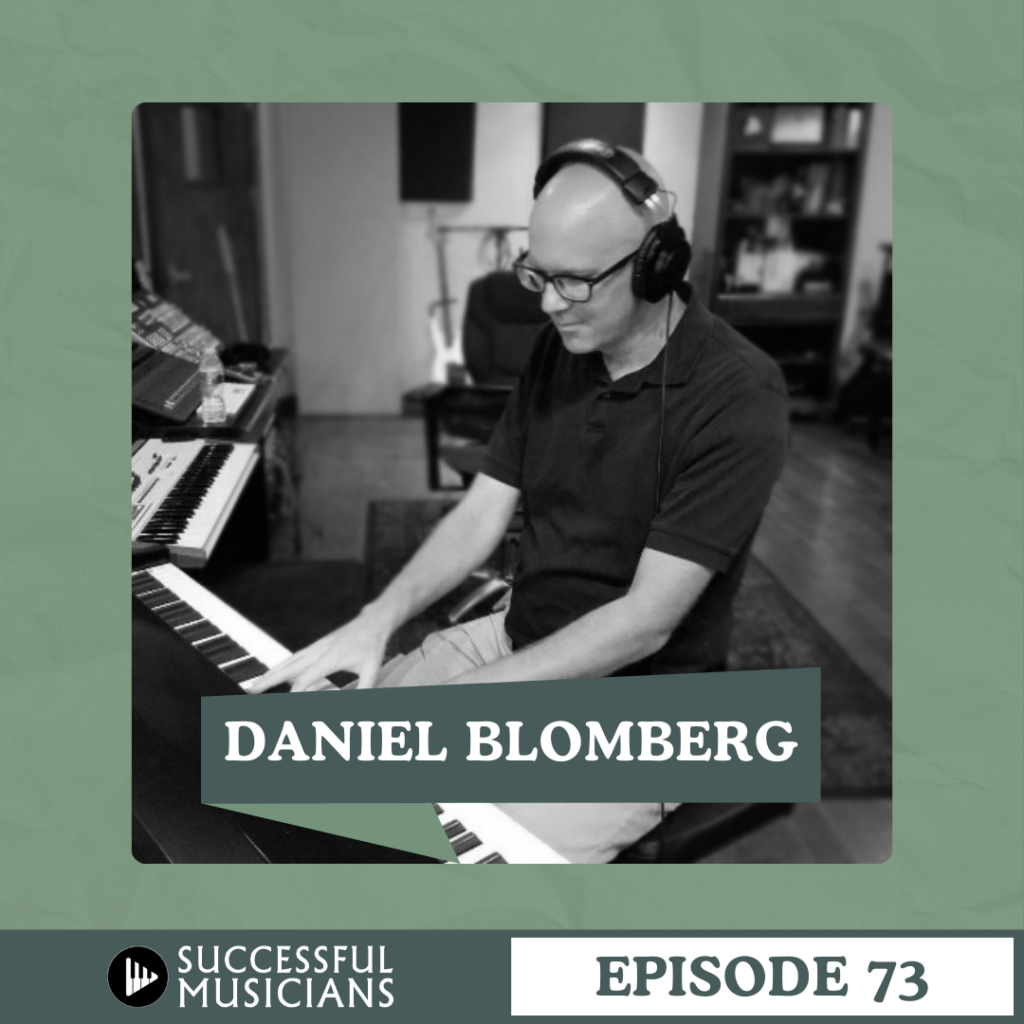
Successful Musician Podcast Episode 73
Interviewee: Daniel Blomberg
Interviewer: Jason Tonioli
Jason Tonioli (00:01)
Welcome to the podcast today. My special guest is Daniel Blomberg. You are a Swedish composer that I have been watching for many, many years now. But you’ve been in the United States for multiple years helping, I feel like behind the scenes of dozens and dozens and dozens of writers and helping them sound amazing. Daniel, your songs have been like… I don’t even know how many songs you’ve had that have been over the million mark on YouTube and with the streaming, but it’s been so cool to watch what you do for people to help their song ideas become reality. So welcome to the show. I’m so excited to have you here in chat.
Daniel Blomberg (00:39)
Thank you so much, Jason. I’m super happy to be here.
Jason Tonioli (00:42)
So your career path has been very unique. Like I said, you are from Sweden and you’re now here in the US and you’ve been here for quite a while. But you’ve kind of carved out a little niche of helping songwriters do that.Tell us how in the world do you go from Sweden to come decide you want to be a musician? I mean, that’s just not normal, grow up in a little Swedish village and all of a sudden I’m going to move to the United States and do songwriting.
Daniel Blomberg (01:10)
Yeah, that was, wow. I do feel like it’s been kind of a crazy journey and Lord willing, it’ll continue to merge and be what it needs to become, right? But I do feel like I was extremely lucky or like the Lord had his hand in where I grew up. I was born in a little village called Bergkvara in Southeastern Sweden.
Sorry, not born, I grew up there. I was born in Helsingborg, which is right across from the castle where a hamlet supposedly, now, is located, with Elsinore, Denmark. So on the Swedish side of that is where I was born. And then when I was three, my parents moved back to my mother’s hometown. And the crazy thing about this little place is that it’s this little, there’s about 8,000 people in four villages and there’s this amazing music culture there. Sweden in general has a great music culture, but I lucked out by just having music teachers that specialized in the things that I needed to learn, like the music technology and arranging and, you know, piano vocals, like the kind of things. If I grew up somewhere else, I wouldn’t have had access to those things. There were five to 10 really amazing vocalists that I got to accompany growing up in high school, et cetera. I moved down to a bigger city, Malmo, Sweden. And in Sweden, you get to pick a major in 10th grade instead of in university. So the last three years of my pre-university schooling, half my classes were music classes. And so I just really, really lucked out.
Jason Tonioli (02:41)
Wow. That’s amazing. Then you ended up coming at what, how did, why would you leave that amazing place where you hear all these music people and then let’s come, come to the U S where you know, it’s tough sometimes here.
Daniel Blomberg (02:48)
Yeah. I really, really, really wanted to go to BYU. And so I ended up at BYU and learned a lot of things, including that the world was bigger than just my little oyster and music wasn’t the only thing that mattered. And I actually ended up double majoring in music and history. And then I had a minor in Russian. And then I ended up moving back to Europe after meeting my wife and having our first two children in the U.S. We had number three in England while I was doing grad school there in not music, international relations and development studies, focus on Russian foreign policy. And then I was out of music for the next eight to 10 years. We moved back to Sweden, moved out on an island in the middle of the Baltic Sea, and worked for the Swedish government. And then all of a sudden there were stirrings. My wife and I started feeling like we need to be doing something different for their lives. I landed a job in the Middle East. Also not in music, just as a university professor. And, while we were waiting for that, we went, we came back to Utah and spent the summer here, which is where my wife, Katherine’s family lives. And, during that summer, we both felt like it’s time to get back into music. And we never thought that day would ever come. I thought my music major would be the end of it. And I was going to have a stable, job and calm, not crazy entrepreneurial lifestyle. And I ended up teaching music every single semester at that university in Jordan in the Middle East. And I thought, well, that was it. That’s what the Lord meant when he said you need to get back into music. That was not it. We moved back to the U.S. in 2017. And by 2018, we had started a music business.
I reconnected with a college friend, Dave Zimmerman, who runs a recording studio in Provo. And I reconnected with another college friend, Shawna Edwards, who of course by then was already a household name. And we started making music and it’s been seven and a half years now and I’m deeply in the trenches of music producing and get to do this every day.
Jason Tonioli (04:56)
That’s amazing. That’s the dream. If you look at a younger person that’s maybe a sophomore in high school or college and they’re sitting in that class thinking, do I do this music thing? If you were to be able to rewind that clock back and go give yourself some advice, I I’m guessing that you’ve had those life experiences that you had all over the world have played a huge part in how you hear music even, but I mean, what advice would you have for yourself if you were going to go back and talk to yourself when you were studying music originally?
Daniel Blomberg (05:25)
Yeah. Two things, one, don’t believe the lies inside your own head. Like there’s so much mindset to this. There’s so much I can’t learn how to play fast. I can’t do that. That’s not my thing. Other people do that. I don’t do that. No. The laws of the universe apply to everyone and the gravity is the same for every person, right? It’s a matter of putting in the time, practicing and believing that you can do it. So that’s the first thing, don’t believe all the mindset bugs.
The second one is to learn about music business and business in general as early as possible. I was in my mid thirties when we got back to the US and I realized if I’m going to feed my family, there were seven of us, my wife and I and our five kids. I need a solid entrepreneurial education. And luckily connected with Kim Flynn and did a year long entrepreneur study with her. And, that changed everything for me, because as a musician today, I believe you can probably have two main options of who you can become. You can be a teacher or you can be an entrepreneur. And if you’re to be an entrepreneur, then study the business skills, like learn the eight things that every entrepreneur needs to know. Sales, marketing, business finance, customer service, admin, leadership, product development, and then your chosen craft. So music.
Jason Tonioli (06:49)
I find it interesting that the very last thing you said is your chosen craft. I mean, that’s kind of like the music part that everybody thinks, oh, I’m a musician. I’m making music. I’m writing music. And the reality is, the people that just skipped to that step eight or whatever number that was, I would say 99 % of them end up not being very successful. If you’re looking at it from a financial standpoint, they may make some amazing music, but I think oftentimes you miss it, if you haven’t dedicated any time to learning the other things that are about being a successful entrepreneur. You don’t have the money to go record at the level you wanted to. You don’t have money to go pay for a recording studio. You don’t have money to play for those players or to hire the orchestrator or whatever type of music it is. It almost just limits what you can do even though you might be the most talented musician that exists in the world.
Daniel Blomberg (07:30)
Right. Absolutely. And I know you’ve seen those, those sweet fruits in your ventures. So we’re, I mean, I think we can agree that music, your level of musicianship will not be the determining factor in whether you make it in music. That’s just the truth. And, and I’ve embraced that fact and I’ve, I’ve come to see the wisdom of building a full out experience for both our clients and for the people that listen to them. like, this is about service. This is not just about you making money. This is about serving people at a bigger level. And I mean, honestly, when I was in my early thirties and lived in Sweden and no one knew who I was as a musician, I wasn’t a worse musician or a better musician now versus then. The only difference is the business skills and the mindset skills.
Jason Tonioli (08:32)
Yeah. As I look back on my career, I thought I wanted to major in music and I remember my first couple of days at the college and, and you were required to take kind of the music one-on-one theory type of class. And I’m sitting in there and there’s like 80 other people sitting in this class and we got to half notes learning about whole notes and half notes. I didn’t even make it to eighth notes for the day. Like we’re talking like an hour long class.
Daniel Blomberg (08:44)
Ahahaha!
Jason Tonioli (08:59)
I’m sitting here just dying inside. So next class, I went to the professor and I was trying to have such a good attitude. And I think we did make it to eighth notes on the second day. And then we didn’t talk about it, they brought up rests. Like this is an eighth note and this is a rest. I’m just like, ah, and there were people that that was probably the right place to be. And I just went to the professor. says, I like orchestrating. So I want to write for orchestras and do film scores. And I’m doing this and I’m published and you know, and Can I skip this?
Daniel Blomberg (09:01)
Wow. ⁓
Jason Tonioli (09:28)
He didn’t, he didn’t care. You know, I’m sure he’s a very nice person. So I just said, is there any way that I can maybe get something more out of this class? Could I teach for five minutes or help you in some way for five minutes during classes or coach somebody or I’m looking for some way to find something positive out of this class. And, and I said, I really just want to do this orchestration class. Said, well, you can’t take that till your third year. And I, and I kind of just, I was so discouraged.
And I remember walking, like he was just as offended as anybody who didn’t like his half notes that he taught. And I still remember walking out of there, just discouraged thinking, I am not going to spend three years to be able to have the privilege to come learn about orchestration from this id**t. Basically that thinks he knows all and that I’m not worthy of learning any other music works outside of you have to follow my path. Like he’s, you know, they say, this is how this is the way.
Daniel Blomberg (10:00)
Wow, ouch.
Jason Tonioli (10:24)
You know, and I’m thinking, uh-uh. And that literally, I think at that moment, I thought part of me was dying inside and I was going to give up my music dream. And I walked across the campus and I went and they switched my major and went into business. And that decision and that little part of, you know, what I thought was the end of my music career was literally the best thing I ever did for my music career. Which is crazy.
Daniel Blomberg (10:26)
Mm-mm.
for your music career. I love that. That is
so true. Yeah. I am so grateful for the eight to 10 years out of music that gave me the experiences I needed to come back and actually make something out of my music. That’s it. Yeah.
Jason Tonioli (10:59)
Yeah. It’s one of those where I think it just opens doors and part of me struggles sometimes when you have like true creative people who are like so much like focused on, oh, I’m just going to make music and it’s all, you know, worm hugs and, you know, butterflies or whatever. I mean, you’ve got really creative people and I apologize to anybody listening that I’ve just offended.
But the reality is, I mean, there really is that mindset of like, I don’t want to learn the business. I don’t want to learn anything about that. And I think if you truly are wanting, unless you’re like part of that 0.1 % of the population of musicians or, like you think of like elite athletes, you realize everybody thinks, oh, I want to be an NBA player or a football player. And you realize once you get at higher levels that unless you’re part of that 0.1%, you’re just, you’re not going to be able to compete and be in that world. There’s lots of ways to use your talent and be part of that world, but you know, only a handful of people are going to be the famous Andrea Bocelli singing in front of everybody and that’s okay, you know.
Daniel Blomberg (12:01)
Right, yeah. And he has a whole team around him that helped him become who he is, right? Yeah.
Jason Tonioli (12:05)
Absolutely. Absolutely. So yeah, no, that’s, that’s so interesting. We have a very similar path and story. Other than that I didn’t live in Europe and do that, but I worked in banking for, for a dozen years. That was my career path as I was coaching other people, on marketing and learning marketing and getting to spend a lot of other people’s money, which is great, ⁓ when you don’t have to do your own.
Daniel Blomberg (12:19)
That’s right. No, that’s a great way to learn.
Jason Tonioli (12:30)
And then ended up leaving and doing a software path, which was starting a software company and essentially being an entrepreneur and, you know, living or dying, whether you made money or not. So, ⁓ so, so tell me with, so you essentially, I’ve watched you over the years and you have found this way to help aspiring songwriters in a lot of cases come to you with, maybe it’s, mean, you tell me, give me some examples, but I know people come with like lyrics or like this little idea of a melody sometimes and sometimes people write all the songs out. And oftentimes when you’re new in the song writing world, you’re not very good at it. Like any of us that have started until you’ve probably written a hundred songs, you probably haven’t had a really great one. You just, you have to stay at it and go and go and go and go. And it gets better as you go. But I know you’ve brought in a lot of brand new people that have this like inspiration or idea and how do you take them from
Daniel Blomberg (13:22)
Yeah, it’s funny. Yeah, it’s funny. Like the way it started was when I came back to the US and started working with Dave, he had people whose songs weren’t really studio ready. And so he could send them to me to give them some songwriting coaching. And within a month, Dave and I were like, let’s produce together. And just that synergy in the studio where both of us, he is a lot more of an audio engineer type of music producer, and I’m a much more of an arranger type of producer. And so we get to work with our own strengths, but have a synergy of each other’s feedback. And that’s just been really powerful. A lot of people I actually on purpose started working with, with hobbyist songwriters, because those were the first few people that Dave sent me to help. And I found that, wow, we really hit it off.
And most likely there were other musicians when I started building a website and seeing, you know, I want to work with hobbyists. They’re like, this is a terrible idea. You’re turning people away. And I’m like, good. If you’re not turning people away, you’re not reaching your target audience. They have to like everyone who has, you know, thousands of marketing messages thrown at them every day. If you’re not speaking to your people, then they’re not going to recognize you. And so once I had a few hobbyist songwriters, plus the fact that I was working with Shawna Edwards and people started noticing, he’s Shawna Edwards’ arranger. Then, you know, like other people started coming along and then you’re no longer limited to your initial niche because they talk to their friends. But you have to, it’s like, if you have this…wet blanket between you and customers, then you’re not gonna use a really dull hammer to try to hammer through that blanket. You’re gonna take a sharp knife and cut through that blanket. That’s how niche I felt like my marketing messaging had to be. And so I just needed to cut through and reach one segment. And so we reached those hobbyist clients. And the way we started, the thinking was,
And when I say we, it’s my wife, Katherine and I who were thinking around this from the very beginning that if we could get to the point where anyone, if they just had two lines of lyric on a napkin and we could help them take it from there to a fully YouTube ready produced song and just have all the pieces in place that would help them.
whether they had that or a fully written song and we just needed to record and produce for them. If we could have all the people, all the know-how and all that in place for them when they came, then we’d have a pretty punchy and powerful concept. And so that’s kind of what we built it around.
Jason Tonioli (16:08)
Awesome. Something special. And I think what’s been really cool to watch is the quality of what you’ve been able to produce for people. It’s world-class. mean, you’ve got, you know, all different, I mean, you’ve got choirs coming in and you’re bringing kid choirs and adult choirs and, and you’ve had, you know, string play. I mean, I know the level of some of the things you guys have worked on and it’s, it’s just been really cool to, you know, a lot of times people think songwriters and you’re like, I got my guitar or I got my piano here. You know, come into my little home studio and record, but you guys are doing world-class level stuff. And that’s, that’s been awesome to see you take these hobbyist musicians and essentially help them be rock stars, essentially that they wouldn’t have access to anywhere.
Daniel Blomberg (16:44)
Thank you so much. Well, everyone has a team. I heard it was so sad. Someone said after completing a music major, I can’t go into this. I can’t do this professionally because I don’t know how to mix and master. I’m like, what? I don’t know. I’m terrible at mixing and mastering. If Dave Zimmerman does that every like, why would I even bother? I am almost 46 years old, it makes no sense for me to invest years to become decent at this when I have a world-class engineer at my side. And, you know, I have no desire to get any better at that because it’s just, I would much rather spend my time becoming a better arranger and orchestrator. And, you know, and…
I can make a living as a musician. I can charge 150 bucks an hour as a musician. And I don’t know how to mix or master. It’s a lie. And there are so many lies out there about what we can and cannot do. So first of all, no one knows everything. I know one person, James Stevens, a former director of VocalPoint. He could do every single step of the process himself. Everyone else needs a team. And that’s what I tell her clients. So you just do your thing and get as good as you can at that, and then you let other people do it. I’m not a great lyricist. We have a team member. If someone needs lyrics help, I get them lyric help thanks to that team member. I no longer write out my own sheet music or our clients sheet music. I have a team member who does that. It just lets other people help you and it will propel you so much faster to where you wanna go.
Jason Tonioli (18:28)
Well, and as you say that, I think a lot of people have this, it’s a mindset where, well, I can’t afford to do that. And I guess the question is, you know, I can’t afford to hire people. Exactly. You can’t afford not to. And I think there’s that really difficult place to just somehow find a way to recognize, okay, it’s going to cost me more. You know, put a value on your time, even if you’re only worth
Daniel Blomberg (18:37)
And that’s true. But you also cannot afford not to do it.
Jason Tonioli (18:55)
$10 an hour in your mind my guess is for you to be able to learn to mix and master. It’s gonna take you 10,000 hours times that by $10 an hour or even if you know if that’s all you were worth Wow, you’re you’re a hundred thousand. Is it worth a hundred thousand dollars for you to go learn that? Exactly.
Daniel Blomberg (19:04)
Right. Yep. Yeah. Yeah, no, exactly. Yeah, no. And so many decisions can be made like that. Run the numbers. Like what does it cost me to not do this? What opportunity costs am I giving up? We have one life to live, you know? What’s in there? So, and, wow.
Jason Tonioli (19:25)
No, I think that for me, was one of the game changers as well as finally when you realize, need to, know, hiring the first person or the first assistant or whatever, think is that first mindset, like Cliff, you have to jump off. Even if it’s somebody overseas that you’re paying, you know, two or $3 an hour for that, know, if it was that level even, like you just, think the key is, are you willing to invest in that person? The other thing I think that I see a lot of musicians struggle with is
Daniel Blomberg (19:38)
Yeah.
Jason Tonioli (19:54)
Just the whole idea of even investing $10 or $5 towards some sort of traffic generator, whether that’s on Facebook. I mean, there’s all, there’s hundreds of ways you can generate an audience, but I run across musicians all the time that aren’t even willing to invest a cup of coffee amount of money into themselves. And I guess from a mindset standpoint, if you don’t believe in your music enough to spend $5 or $10, you know, it’s probably, you know, you may feel like you’re called to do it, but
Daniel Blomberg (20:03)
Yeah, right.
Jason Tonioli (20:24)
You know, probably not, you know. ⁓
Daniel Blomberg (20:27)
Right, and being willing to fail. I mean, failure is incredible, like a bad decision is so much better than no decision. And that, I think that’s on the subject of having a team. I think there’s three ways of making sure that you do make progress on your path. One of them is, you hire a coach. And one of them is you get a friend or a family member to keep you accountable.
Jason Tonioli (20:30)
Absolutely.
Daniel Blomberg (20:56)
Or the third one, which is really, really good, is you hire an employee or a contractor. Again, it can be two hours a week or five hours a week or 10 hours a week, whatever, whatever it needs to be for you. And you get a college student. You can even get a, you know, sometimes you can get free labor. You hire an intern that gets university credit for helping you with the startup. And, you know, they can be marketing majors. They can be music majors. We’ve had great experiences with music majors from BYU that have come and given us great help. And we’ve taught them some things and they’ve taught us some things and it’s just been a great value exchange. And in one case, we hired one of them because he was so good. We can’t live without this guy. So.
Jason Tonioli (21:35)
That’s awesome. But I think that the key is just being willing to do, going outside of just yourself, I think is probably the biggest lesson in scaling yourself and duplicating what you can do and providing yourself more time to do what you’re great at.
Daniel Blomberg (21:49)
Yes, yeah, exactly. And I think that’s, I mean, that’s just human. I see so many clients that have a great song. And by the time we finish recording it, that sadly will be the end of it because the other things are too scary. Marketing’s too scary, like putting yourself out there. And it’s so easy to say, you know, other aspects of life are more important right now. I’ll get back to it later. Which, you know,
I’m never gonna say your family doesn’t need you if that’s what you’re truly feeling, absolutely. But you also have to check when I am retreating into something else because it’s more comfortable, more familiar. I mean, we just launched our sheet music store a couple of months ago and it’s like every new venture, I’m fighting that, you
Here’s a new thing, I haven’t done that before. Oh, what’s that? Oh shoot, that was a mistake. Like it’s not comfortable to learn something new. And if you wanna serve people at a higher scale, you gotta fight against that. I remember when we started business coaching for musicians back in like, I wanna say 2022, I thought, okay, I figured out sales. I know how to sell, I know I have a high value product. And all of a sudden I was selling something I never sold before and I had to go back and have the same discussions with my, you know, my internal self doubt and all that stuff. Like, maybe I suck. Maybe this is worthless. I knew it wasn’t worthless, but my subconscious didn’t know that. So you just are willing to, you know, fight those battles.
Jason Tonioli (23:26)
And I think most of them, there’s so many people that don’t ever overcome that self doubt. And so they never actually finish, you know, they never put themselves out there to serve other people. And I mean, you talked about selling, but I heard a whole lot more of comments about I’m here to serve people or I’m here to help. I mean, it’s, and I think that’s the attitude as an entrepreneur and as a musician that you need to think about is how do I better serve my audience and help them to be successful at what?
Daniel Blomberg (23:52)
Totally, and sales is a service.
Jason Tonioli (23:55)
Absolutely.
Daniel Blomberg (23:55)
Like in enlightened entrepreneurship, sales is serving, marketing is a ministry, and income is just a tool in the hands of impact and influence.
Jason Tonioli (24:07)
Yeah, absolutely. I think one of the thoughts I’ve been having a lot lately is, as a musician, have your fans and you may be bringing people to the shows or you may be bringing people into your website. And if you think about yourself like a store, imagine you’re a retail shop. If you had a hundred people walk in the door to your store and they then all turned around and left. If you were the owner of that store, what would you do?
You probably wouldn’t, you wouldn’t sit in your office and go hide in your office behind a computer screen and watch on the cameras would be like, Oh man, why aren’t these people buying? You’d probably go out on the floor and ask them, you’re like, okay, what, what is it that we could do, what do I need to do to help you? You know, do you not like the color of these clothes? Do you know, if you’re a restaurant or chef, if everybody’s sending you, your food back and the dessert was crappy, like get out there and say, well, okay, what, is it you didn’t like or what, what can I do better to serve you? And I, and I think, you know, as musicians,
Daniel Blomberg (24:34)
No. Yeah, get some feedback, yeah, for sure.
Jason Tonioli (25:03)
You want to have your own unique flavor and personality, but I think it’s so important not only to You’ve got to listen to your people and figure out who your people are you talked about that earlier And when you can find who those people are don’t forget that feedback loop you might not like what you hear all the time and It doesn’t mean you have to listen to them and believe what they tell you either, but that feedback Aggregated out, you know, whether it be on a spreadsheet or a notepad or whatever that is, that’s gold. And I think as a musician, if you’re not capturing that and thinking about how I can better serve you, you know, what did I miss? You know, you came into my website, you came into my store. What did we miss? You know, what I need to do differently.
Daniel Blomberg (25:34)
Yeah, no, absolutely. Yeah, no, exactly. Absolutely. Yeah, I think, you know, the first, and I know you’re a big Russell Brunson fan, just like I am, but if I were new and starting, I would read a lot of books. I believe that the solution to most of our problems is $20 away because someone had the same problem, figured it out and wrote a book about it. And that, you know, that saves you thousands of dollars in coaching fees when you realize that. And then of course, of course, coaching is really, really important, but you don’t have to buy every coaching program because some of the things you can solve on your own with a book. And so the books that I would read if I were just starting out as a musician are one about general business. It’s called Playing Big, The Unsexy Way of How to Succeed in Business by Kim Flynn. And then I would read Dotcom Secrets by Russell Brunson and the Continue Russell series. And I think that would be my way to get ahead and just know what you’re dealing with and understand, okay, this is who I need to learn to become in order to reach my highest capacity in serving other people. And then, you know, then there’s a hundred books after that to tweak.
Jason Tonioli (26:51)
Well, and I think the book thing is great, but one other thing that I would throw in there on top of that is a lot of these people who’ve written the books, the Russell Brunson’s, for me, like Jeff Walker’s launch book is another one that I would put right up there with Russell. I mean, there’s so many good books, but there’s podcasts. These guys will jump on a podcast episode, it’s kind of like this, and they will literally talk through what’s going through their brain. And I think for a lot of these guys, those ideas are what end up in the book. So essentially you have an ability to sit in on a session like this and you’re listening to some really smart people. They may be charging $100,000 an hour for coaching and you just have to listen in and learn from somebody else’s success or mistake. A lot of times they’ll share their mistakes and that’s gold. And those podcasts are free. And a lot of them get posted on YouTube as well.
Daniel Blomberg (27:19)
Yeah, absolutely. That’s so true. ⁓ Absolutely. Yeah. I love that.
Jason Tonioli (27:44)
And there are tools now where you can take the audio and you can even do transcripts and then feed that into like an AI coach if you want to have like, you know, pick somebody’s brain of like, okay, well, what would Russell Brunson tell me if he was sitting across the table from me? And I don’t know whether the AI would be exactly right, but it’s going to be dang, it’s going to be awesome, you know? So anyway, well, Daniel, so you have got a new website you’ve got up, you’ve got some new music books which I think are awesome. I love the fact that you’re finally coming out from behind the Wizard of Oz curtain of just helping people in the background and putting your own stuff out there which is amazing to see. But what if people wanted to go learn more about you and the things that you’re doing. We’re gonna put some stuff in the show notes but where should they go if they’re just listening here.
Daniel Blomberg (28:18)
Ha ha ha ha ha! Thank you.
Yeah, if you’re looking for an arranger producer, blumbergmusicproductions.com is our website, short and snappy, thank heavens for show notes. And if you want to learn about the sheet music or the song books that I released, I’ve got three out now, Sacred Christmas, volumes one and two, and then He Is Risen, which is an Easter album. And those are all on upliftmusic.com. Uplift Music is our sheet music website where we sell my stuff and a whole lot of other people’s stuff.
Jason Tonioli (28:56)
Awesome. Well, Daniel, this has been fun. Thank you so much for sharing time with us and just sharing wisdom. I love just getting on calls like this and talking. I feel like I’m talking business and marketing and it’s so fun when you find somebody who totally gets it. If I would have just known this when I was younger, I would have been 10 times further than I am now. ⁓ So thank you.
Daniel Blomberg (29:13)
Yeah, so true, amen, 100%.
Jason Tonioli (29:22)
Thank you for sharing. If you’re listening out there, there was gold dropped multiple times today from Daniel, go learn from this, go listen to this episode again. Subscribe down below. I’m sure there’s a subscribe link. There are so many good interviews with just some amazing music people on this podcast that the successful music podcast. Go, this is gold. It’s free. You can, you can get access to this and you can get yourself fast forwarded way faster than us learning the hard way over 20 plus years of figuring this out along the road. So thank you again, Daniel.
Daniel Blomberg (29:46)
Thank you so much, Jason.