
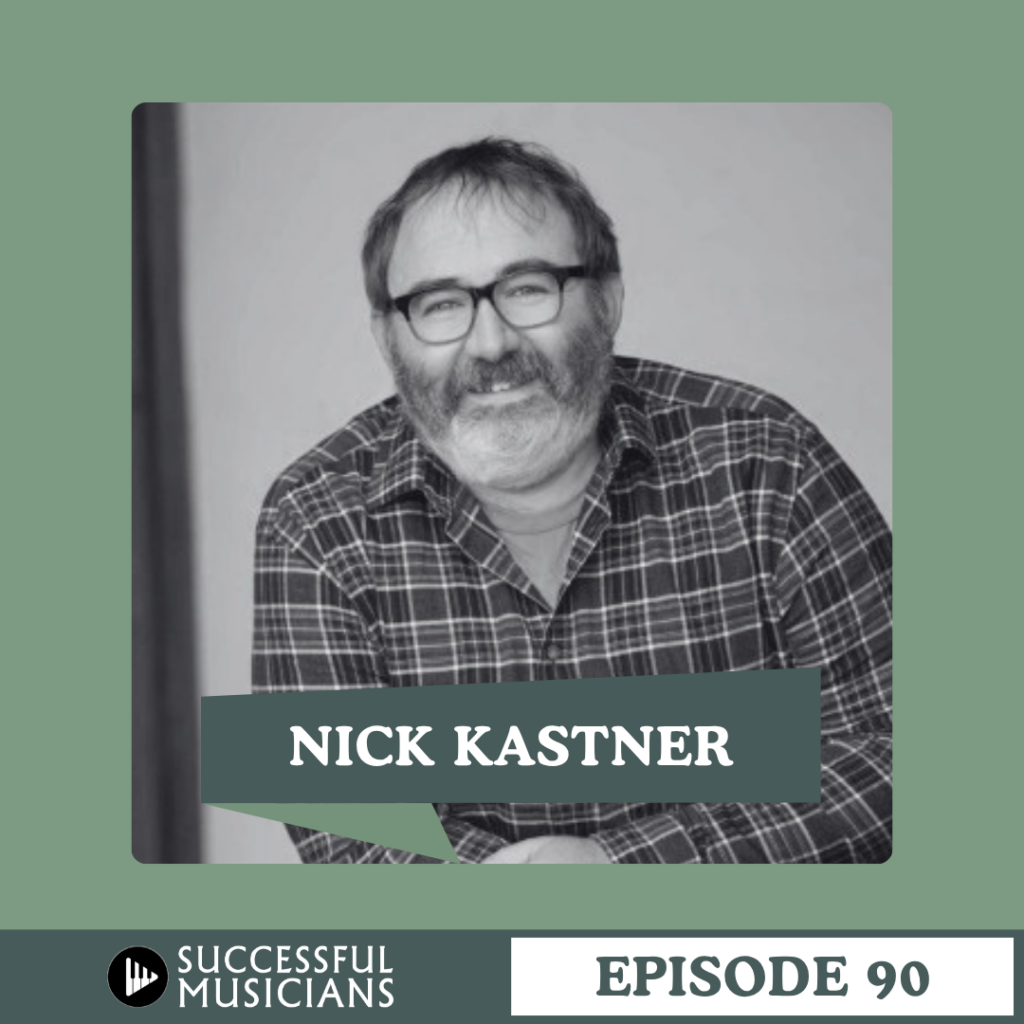
Host: Jason Tonioli
Guest: Nick Kastner
Produced by: The Successful Musician Podcast
Jason Tonioli
Welcome to the podcast today. My name is Jason Tonioli, and I have one of my favorite people from way back in my career with me today, Nick Kastner. Nick and I actually went to banking school together and met on the campus at Northwestern way back when we thought we were gonna be bank marketing people for our whole careers. And both of us have kind of had crazy career paths, I guess. Nick ended up leaving banking, but you ended up at a university teaching digital marketing for years. But
Nick
Yeah. Yeah. So I yeah, agency to banking or agency to university to agency. Yeah. So
Jason Tonioli
And the reason I wanted Nick on this podcast, one, he’s an expert at marketing, which I think all musicians need. But Nick, when I met him, he was playing in a band, and they just opened for Bon Jovi. And so, imagine rock and roll with a ska trumpet guy up there. he his music is fantastic. And so, Nick, I think at heart is a is a true musician that would love to do that for fun more often. Now I think you’re the band booster for your kids’ high school. But
Nick
Yeah. Right.
Jason Tonioli
Nick has been teaching like and he’s actually writing a book on marketing, but I think Nick, from a university perspective and a musician perspective, can bring some really interesting things for musicians to think about. So Nick, I know you’ve got all kinds of cool pr credentials and you’ve got letters at the end of your name now to say that you’re smart, but musicians should absolutely listen to this and probably play this podcast back multiple times because we are gonna go into some really interesting things to just help you be successful when it comes to being a musician that you may not have thought about. So, Nick, welcome. I’m so glad you’re here.
Nick
No, thank you for having me. I you know, when you reached out, I was I was excited one that you had a podcast that I didn’t know about, but two, I haven’t we haven’t talked to forever. So, I was just excited to, you know, catch up.
Jason Tonioli
Twenty years, I don’t think we’ve been on a call together. This is this is awesome. So, I want you to just start let’s just start out. how in the world did you end up let’s rewind back when you were a younger kid doing music and you probably thought you were gonna be a famous band person as a trumpet player, right? But how d how did that all start?
Nick
Yeah, well Yeah, so I got into just like a bunch of kids do, got into a high school band and started in middle school as a trumpet player and ended up in high school, high school jazz band, all the things and I had some friends that were in a ska punk band and so in the late nineties that was a really big thing and you know, I was introduced to it and we started playing with the band and we started playing with some fairly big acts that were in that music scene and just continued through college. And so that’s I mean, I thought my original path, I have tons of funny stories, but my original path, I thought I was gonna do music ed or music business.
And so, in high school, I was playing with the band, wanted to major in music education. I got into music ed in the programming, and of course, as a music ed major, you have to take 19 hours a semester to survive, you know, so you’re just killing yourself. And I was monitoring in business, and I eventually just got tired of it.
My freshman year, I was going to a small university, I was band president, jazz band president, you know, all the things because they’re trying to get this program started. And I just finally was like; I can’t I can’t do this. So flipped my major in marketing but still played in the band. And really thought I was gonna do music ed or music business. And so, I started looking at internships. And the first internship I applied for was for a large top 40 radio station in Atlanta. And they offered me the job, but I asked them, okay, what is it that you want me to do? And they said, well, in Atlanta it was right after the ninety-six Olympics, and they wanted me to be to help. With a concert series that called On the Bricks. It was free. And they would bring in major acts every weekend. And they had a state at the station, they had a monkey, like a pet monkey. And that was their mascot. A real monkey. No, no, real monkey. And they wanted me to basically be the monkey handler at all the concerts. And of course, me being me, it’s an hour and a half from my school to go there. And it’s like, okay, how much are you gonna pay me? They’re We’re not gonna pay you. And I was like, wait, what?
Jason Tonioli
Like a real a real monkey, not just a stuffed animal.
Nick
And I had an opportunity at a bank of all things to take an internship in marketing. And so that’s how I ended up in bank marketing was I turned down the monkey internship to be in bank marketing. so I did that so I got into bank marketing, still played in the band. Of course I’m the you know, the guy dressed in the suit and still wearing the red leopard skin shoes, you know, all of those things. And that’s where we met. course, right?
So I was in banking and bank marking school and we applied for a contest again top 40 station won the contest with a cover song, cover version of my girl. that was a punk version with horns and open for bon Jovi. And so over time, I mean we did warp tour, we did Bonjo, I mean open for Bon Jovi. We played with I mean we were sponsored by Crunk Energy Drink at one point. Which is kind of an interesting story. So Little John had a energy drink that was competitor, Red Bull. man, those just a lot of crazy things we did. but I eventually, of course, I ended up having kids and they took priority over my music. And so I kind of let the band go and started working in agency and have been in marketing sort of ever since. with that said, you know, we were catching up before this and I’m I’m now actually during the pandemic I started writing songs again and writing melodies again and about to record again sometime this fall with some friends. And it’s funny how music kind of finds you. So even if you are out of music, it like chases you back down.
But I started working here at Forum almost nine years ago and we have a cut so a couple of clients now in the music industry. So, I work with Alan and Heath. So, some of you that are in music probably know that name. they manufacture the DLive mixing console and number of other products. we do work for Danley Sound Labs. So Danley’s a loudspeaker, subwoofer manufacturer. They do everything from stadiums to studio. And so, you know, it’s been really neat how I kind of got back in the industry in kind a sideways way. and through Danley I’ve gotten to meet, you know, I interviewed Carl Verhyen. I’ve interviewed Michael Martian, who he is actually one of the producers the guy who produced We Are the World, you know, with Michael Jackson. and I think he’s he also won a Grammy with Christopher Cross and you know he’s been around for a long time. but it was really cool how all that happened and
Jason Tonioli
Hm.
Nick
What two weeks ago I met Dave Rat. So Dave Rat is the sound engineer for let’s see, Red Hot Chili Peppers. he was sound engineer for Rage Against Machine. And he also helped start this little festival you called Coachella. So, you know, it’s just really funny how all you know all that stuff kinda happens, but yeah, so I have been music adjacent for a long time. Now, as you said, I teach high brass. For a local high school during band camp. And I am the president of the band boosters at my daughter’s high school. So there you go. Yeah, that’s that’s what happened.
Jason Tonioli
So, you’re you’ve been in an ad agency world for the past nine years and you’re teaching digital marketing at the university for a long time. And I know you taught at the bank marketing school for a little bit as well doing digital marketing. The one thing I’ll just throw this in there when I when we were at marketing school for the bank the banking world I still remember there was two or three people that were kind of you could just kind of know who the smartest people in the room was. We’d have you there’s eighty or a hundred people in those classes and there’s you know, there’s some nice people and then there’s some people that you’re like, man, that person’s brilliant. I need to get to know them. And you were you were one of those three that I had on my list of likes, man, I wanna be like Nick when I grow up and be smart enough to do what he’s doing.
Nick
I appreciate that, you know, and based on what you’re doing, I kinda wish I was you right now. So
Jason Tonioli
Well, come record with us at the studio and we’ll have some fun for sure. but so, l I’m just curious when it comes to as you look at musicians in general, because you’ve kind of been full circle. I think a lot of people start out in music and they think, I wanna have a career in music. And you your path ended up taking you away from music. And, you know, I lasted two days at my university in the music program and went over to the marketing school. You lasted, it sounds like a semester or two. But
Nick
Yeah, for sure. Jason Tonioli (09:12.24) If you could go back and like give advice to yourself or other people that were kind of thinking, Man, I really enjoy music, what would you advise I mean, maybe you already do this where you’re actually teaching a college class to kids. I mean, is there is there any advice you would have wished somebody would have given you knowing what you know now?
Yeah, I mean, I think part of it was the way I grew up. You know, I grew up in a you know, a lower income family and, you know, knowing that how hard it can be to be a musician, you know, it’s an it’s a lot of work and it takes a lot of practice. And I was okay with the practice. It just didn’t realize the pressure you would have as a, you know, music academic, you know, to get all the things done and do all the things. So, I would have just if I had to go back to tell myself, I would have said, don’t give up. You know, ’cause there are days where I absolutely love my job. And I get to do tons of creative things and still get to do things in the music industry. And I mean, there’s all kinds of great things I still get to do. And very, very blessed. but there’s also days where I’m like, you know, if I would have been a band director or if I would have done music full time, that would have been really cool. Cool. I wouldn’t have had this stress or this pressure. so, I think that’s the that’s the challenge. But I mean, even the music industries changed. You know, I think it used to be, you know, you would release an album, you would release a couple of singles, and you would, you know, take off. And now, I mean, the expectation is theirs, you know, a new song every month or every two months, or there’s you know, there’s just the pressure is different or the expectation is different. And so, I think it’s absolutely okay to do what you love. And I would encourage students or people in music that are questioning whether or not they should do it to keep going at it. But I also think if y you know, there’s for some people, it’s not for everyone. Like for some people, music can be a hobby, for some people music can be a career. And sometimes it’s the eighty percent luck, you know. Sometimes you just you have to hit it right. you know, one of the funniest things that happened to us as a band is we were we had a couple of songs that were doing well online, like in the early two thousands, and we had someone from the BBC call us and they said, We’re working on a show. we think one of your songs.
And it was actually about a former girlfriend of mine, which is really funny. But they’re like, we think one of your songs would be a great fit for the show. we would love to have you, you know, do submit this song. And we, of course, were very interested, but they said you have to join whatever the music publishing group is in the UK. And we, of course, were going, okay, we could we might be able to do that. What does that look like? And well, you have to get a, you know, a music attorney and go through the process and we are college students, we are broke. And so we made the phone call, called an attorney, and they’re like, well, it’s gonna be like five or six thousand dollars for you to do this. And we did not have five or six thousand dollars to do that. So we turned it down and it just so happened that show is called The Office. So you know we lost this huge opportunity because we didn’t we weren’t financially prepared for it. but I mean those are like the little things that you have to think about that sometimes happen and sometimes it’s a blessing when you lose an opportunity. You know, there are things that would not have happened in my life if we would have done that, versus, you know, you know, look looking back now, I mean, I could see where even doing that could have been a regret, you know. So I think it’s okay. It’s okay to do what you love. And it’s okay if you can make it a full time gig and it’s okay if you can’t. But I think it’s just a matter of, you know, trying to figure out where you are and You know, I would not encourage people to ever give up, but I would also say, you know, I have friends today that are have been successful and have not, and they’re all okay. You know. So either way, whi whichever way works for you.
Jason Tonioli
Yep. Well, and then you say have been successful. So I’m curious with mean, ’cause you’re not working in music anymore. That’s not you mean for a lot of years you haven’t done music as a as a job. What would you describe as someone who is a successful musician? I mean, how would you describe that today? Or just even a successful person too. So a successful musician and a successful person.
Nick
I would say they’ve found their joy, right? It doesn’t have to be it’s not about money and it’s not about any of those things. you know, they’re happy in the way that they operate, right? I’ve got a few friends who have done quite well in the music industry, both in finding their joy and financially, right? It just i they’re all different. But then I, you know, like the team at Danley that I get to work with all the time, those guys love what they do. Like they do some crazy stuff. The guy who founded Danley, Tom or the co-founder, Tom Danley, he’s a former he used work for NASA as a contractor. And the stuff that is just in that guy’s brains like from an engineering standpoint just will blow your mind. And hearing what they produce and, you know, those sorts of things. They love what they do. And I think that’s success for them. So, I don’t think it has to be defined by money. I think it’s more defined by joy. So
Jason Tonioli
I think you echo what almost everybody on this podcast tells us is you know finding happiness, finding joy. and it doesn’t matter what direction. Like I think the thing that as you get older you realize that there’s different directions that you go and there’s probably you become grateful for those paths that you take, even though a lot of those a lot of those bumps along the way aren’t very fun. And you know, sometimes you may go off the road and feel like you crashed the car sometimes too. But
Nick
Yeah.
Jason Tonioli
Once you’ve crashed a car, y you come out feeling you’re a little bit smarter and you’re a little more knowledgeable. so lot of life lessons. What when it comes to marketing, so you teach these marketing classes at the university level. when it comes to music or just musicians in marketing, you know, that independent artist that you guys were like probably an unsigned group, if you were in that role today, what w what advice would you have about marketing and, you know, finding your voice and identity? Just curious from a marketing guy’s perspective, what you’d coach, if it was your kid now that’s wanting to do music and be an independent artist, what would you what would you talk to him about?
Nick
I yeah, I think you have to define who you are and stick to it. You know, you have to know who you are so other people know who you are. I took my daughter two weeks ago to see Alex Warren. So your audience probably knows who Alex Warren is. and what amazed me, because I was not I’m old now, so I wasn’t super familiar with I knew some of his songs, but not all of his songs. And what amazed me about him is like he talks about how he’s an orphan. Like a lot of his songs are about him as an orphan. And he has just taken off in popularity. And it just amazes me and the reason why is because he knows exactly who he is. And so, you know, he’ll t he will sing about his wife. He will sing about, you know, his childhood and growing up without parents and, you know, but those things speak to people. And so I think defining who you are And letting other people know who you are is part of the battle of marketing. It’s part of the battle as a musician. And, you know, I think the brand, right? It’s just that’s what I would say the brand. Like knowing who you are and being able to sing that song carefully and consistently to other people is really important. I mean, you’ve done that, right? So
Jason Tonioli
Yeah. When and with knowing who you are, I think there’s there’s always gonna be times that come in your life where you’ll have to decide which side of the fence are you gonna be on. You know, are you that person you said you were gonna be, or are you gonna compromise your values or can’t you know, are you are you gonna do things that I think, you know, whether it’s music or just life in general, w you all get we get faced with hard choices sometimes and those types of choices define who we are in a lot of ways, but and also define who we are not. And I and I think one of the things is I’ve I’ve as I get older and older in this game is oftentimes people will have regrets about decisions they made. You know, whether that’s, you know, music’s just one thing, but I mean family, I mean, you look at the divorce rate or th just, you know, careers paths, you know, just mistakes that people make. And I think having that integrity and just being able to live with yourself and live with those choices probably play as much a role in success as not. And just knowing you were true to who you were, right?
Nick
Yeah, for sure. Yeah.
Jason Tonioli
Do you I’m I’m just curious, do have any like examples that like come to mind, you know, of hard choice, whether it’s you or other people you don’t have to like call anybody out? I mean, is any examples you have of, you know, that have defined who somebody was or, you know, in your life even?
Nick
Yeah, I mean me. you know, my you know, we’re talking about my music path earlier. you know, my parents were divorced when I was seven. And so for me, when I got in the middle school band, like I felt like music defined me. You know, that was that’s what I had and I cling to that throughout my entire high school career. And of course when I had to change my major, when I made the decision to change my major, that was a really hard decision. But, you know, I think looking back on it, it was the right decision. But, you know, when you’ve when you’ve kind of buried yourself in it, it’s it becomes really difficult to do that. But I had to realize like even now, even, you know, at forty four, you know, trying to be being very aware that I’m still making sure I’m defining who I am. Right. And so making sure people understand what I stand for. So
Jason Tonioli
Yeah. Well and I think being who you are and just and just sticking to it is sometimes hard. And I think you know, just as society in general Technology changes val values sometimes try to change or pe you know, and I don’t want to get into politics or you know, but I think as we get more mature, I think you just you look at certain things a little differently than maybe we did 20 years ago or 30 years ago as a teenager when we thought we knew everything. But I think I mean they talk about old people being having a little bit more wisdom. I think sometimes you just learn to maybe you don’t jump in and tell somebody exactly what the answer is. You just watch and kind of let some of the lessons.
Nick
Yeah.
Jason Tonioli
Mm-hmm.
Nick
It would always drive me crazy. My grandpa would never tell me who he was gonna vote for. He would not do it. And I was like, Why won’t you tell me? ‘Cause I you know, in college I was, you know, real fiery about where I was politically and he was like he just laughed at me. He thought it was so funny and now I’m looking at it going, I get it now. You know. So
Jason Tonioli
Well and I think the beauty I mean with your grandpa, I mean you don’t wanna I’ve got family members that were the same way and I you know, I in some ways I was looking to see how they voted to kind of shape who I was gonna be or, you know, try and help me form my values. But as I’ve been exposed to a whole lot of different people, I find the political thing drives me crazy because I think in a lot of ways you have about eighty percent of the population that we pretty much all agree on the same things and then somehow like the ten percent on both ends of the crazy and we’ve all got that crazy
Nick
Yeah.
Jason Tonioli
Uncle, aunt, sister, family member or the family, that you know, you just somehow you’re like, man, can we just like move into this middle area where we actually agree on everything? And I think just in life in general, I think it’s sometimes dangerous to try to
Nick
Yeah. Yeah.
Jason Tonioli
go fringe too far because I think as you live more life you realize there’s a lot of layers to an onion. There’s a lot of depth to stories and I think even you know to have grace for some of those politicians on either side. I mean I know where I fall but I think I can at least have empathy and try to understand where somebody’s coming from. And I think if we would just have that approach to things throughout all of our career and all the people we interact with, the world would be such a better place if you could just sit down and talk with them. I remember what we did this retreat down to Costa Rica a couple of years ago with a bunch of musicians and we had we had all ends of the spectrum and it was kind of right after COVID. So I mean you had eat let’s like you know add flames to the fire, right? But we had all these long bus rides together as we were going rafting or doing the fun things or going to the you know where we were going to have this mastermind at. And you started realizing when you can talk with somebody for a couple hours how much alike you actually Really are, even though when I first look at somebody, you’re like, okay, they’re gonna be this person, you got pink hair, you get you’re dancing around with unicorns or whatever. And I actually had both of those on this trip, and they were some of my very favorite people who you know, if you were looking at a picture, you would have never thought you’d get along. So when it when it comes to I guess just success in general, it as you’ve looked at people who have been successful,
Nick
Respect. Yeah.
Jason Tonioli
in achieving that joy and happiness. Is there any like similarities or things that those people do or that they lean in on and do more than others? Is there any secret sauce that you’ve seen and observed yourself?
Nick
So I’ve listened to your a couple of other episodes of your podcast and one thing that I find true is that the people that let the little things go You know, the ones that don’t dwell in the negativity of whatever happened in the moment or whatever happened in the day. You know, so a and I know as a musician, there would be days where I felt like, Okay, we are awesome. You know, we did everything right today. We sounded great today. And then we would have days where, you know, we would get off stage and I remember like What are we even doing? Like this is all. You know, and looking back on it, I just never gave myself grace. And I think that’s part of it is, you know, giving other people grace too. And you do have to let the little stuff go. You can’t you can’t dwell in it. You can’t sit in it. You just you have to be able to keep moving. And I think that’s true both professionally, ev you know, whether you’re a musician or not. I think that’s a huge part of what you kinda have to you have to learn to do. And I’m still I’m still learning that. But I mean that’s just part of you know, part of making sure that you can stay in the joy. So
Jason Tonioli
Well I know you’ve been studying dashboards and scorecards and you know, all these metrics and North Star things that I mean I want you to dive in a little bit on just kind of that phil you know that idea of having a measure for success. And that’s one of the reasons I was really excited to have you on the show is because I feel like people try to create these measures for themselves, but then sometimes they don’t even know what success is going to look like for them. So I talk a little bit about dashboards and I mean you’re writing a whole book about you know metrics and so g give us some good insight on that and you know what you’re you’ve been writing this book about.
Nick
Yeah, so the impetus of the book is I’ve been teaching a help start a regional university’s digital marketing program. So they I convinced the dean when I worked at the university that they needed to do something in digital marketing. And she’s like, Well let’s try a course and so we tried the course and that took off and I said, Why don’t we start a concentration in the topic? And she agreed to that and you know, let me help kind of craft the direction for the curriculum and she gave me a lot of leeway, which I really appreciate. appreciated and was very blessed because of that. But one of the classes is digital analytics. And I started doing research for a book. You know, they trying to find a book for the class and they were all terrible. Like there was just it was all written by academics. you know you asked somebody how to do website analytics and it was very rudimentary. None of it ever applied to real life. very confusing. And so I made the decision that okay, one day I’m gonna write a book on this topic and so that day is you know, we I’ve been working on it for two years. because you have to think in the world of digital, all things change so fast. And so, you know, I would write it and then have to change it and write it and have to change it. And I finally just found a way to kind of streamline things so it made sense, even if things changed a little bit.
Jason Tonioli
Mm-hmm.
Nick
But the idea really was, you know, there needs to be a practical guide. One, for you to understand what all these metrics mean, and then how do you figure out what matters? So A lot of, you know, i even if you’re if you’re a musician today and you know you care about social media views and you care about engagements and likes and comments and shares and saves and all those things. Or if you are, you know, in business and you care about those things, you know, really the end game is you have to figure out what matters. And so the best way to do that is really to start with strategy first. You know, what is it you’re trying to do? It doesn’t matter what industry you’re in, musician or not, what are you actually trying to accomplish? And then instead of going ahead and starting exercising the strategy for that, right? So you say, okay, I want to drive views for a video. Okay, well, you can have other influencers share it. You can pay them to share it. You can you can actually run paid ads against it. Those are all things you could do to drive interest to a social post of a song or something that you’re doing. Well, rather than just jumping in and doing that, why not say, okay, here’s what I want to do, here’s my objective, and let me talk about how we’re going to measure that. Then once you know how you’re going to measure it, then you v then you actually exercise the tactics. And so that’s really you know, trying to teach students that, or even, you know, entry level business staff, or even, you know, people that have been in business a long time, those things are really what I’m hoping the book does. There’s a lot of eight chapters of just metrics. Like, you know, here’s what you do in Facebook, here’s what you do in Instagram, here’s what you do in TikTok. But then the very end of it really focuses in on, okay, you know what all that stuff does now. Now you need to figure out what actually matters to you. So that’s kind of how it happened. you know, I hope I hope people find it valuable. I am close to we’re designing the cover now close to releasing the book probably sometime this fall. So
Jason Tonioli
That’s awesome. Well, and when you say metrics that matter, I th I think as a musician, I mean, I’ve got several hundred songs that are out there. I mean, I can log into my artist.spotify account and I can see all kinds of where my listeners are at. I can see how many times the song’s been played. You can go into YouTube and they’ve got, you know, hund probably a hundred columns or things that I can measure. and I and I think the hard part is, you know, when you talk about identity or what matters to you in finding the joy is Finding that thing that is gonna move the needle. I mean money oftentimes is that goal, but and I think the hard part is if you just chase money, you’re never gonna be happy. You’re never gonna have enough of it. But if you have the goal that’s what’s the next thing above that, what would you do with the money that’s you know that you can work towards? Then you can back, you know, maybe you want to buy an island in the Caribbean and so okay, I gotta get a hundred million dollars or whatever. Well, the things that are gonna matter in order to hit that goal are gonna be a whole lot different than if it’s one of those where I want people to sing this in. Their car, if that’s your song, you know, or I want to help people that are, you know, orphans that I want to connect with them and help them fill an identity, like that example you were given. I think that’s that’s such a key thing for musicians and business owners to decide on. Because I oftentimes you have, you know, most businesses they end up working their butt off all year round, right? And they finally file taxes. And I know some people that like have shoeboxes of receipts and they find out they go to their accountant and say, well, how do we do? You know, they run their business like, okay, I have enough money to pay the bills this month and they have no direction, no key performance metrics that are gonna tell whether they were actually did a good job or not. Like
Nick
Yeah.
Jason Tonioli
So how often, I mean, with all of these dashboards and I mean you’ve done all this research on there, do you have is there a certain percentage of people that you would say track or don’t track or have some metric? You know, is it like eighty percent of the population that’s doing business or doesn’t even have a dashboard to know whether they’re you know they don’t even keep score other than their financial statements.
Nick
Yeah, it’s usually by industry, right? There’s some that do a better job than others. you know, and it’s funny, there are some stats out there about how that works for the individual industries, but the challenge is, you know, w from you know, aga I work for an agency, right? So, here at Forum, you know, we sit down with businesses all the time and they’re like, We want to do marketing and we’ll and they will say, Well, what kind of marketing do you wanna do? And we’ll have to say, and or what’s your objective rather? And they’ll be like, We don’t know. We just wanna do marketing. And that doesn’t make any sense, right? There’s no you don’t just do marketing. So
Jason Tonioli
Some somebody told us we need to spend ten percent of our sales budget on marketing. Do you want our money? Like w what do you want to do with them? Go take your take your employees on a vacation to Disneyland and you probably I mean that could do just as good as some of the marketing things that you know somebody could sell you, right?
Nick
Yeah, yeah, you need a Right, right.
Nick
For sure, yeah. Yeah.
Jason Tonioli
What I mean when it comes to mistakes, I mean, what if I was a client coming in and you were consulting me, I guess I’m just curious what questions would you ask? me as a I’m a pla piano playing musician. I have lots of music books, I have songs on the streaming channels. What would you suggest or ask me, I guess, if we were in that meeting? Nick (31:37.24) So I would ask, I really, I honestly the questions that I would ask are more around what do you want to accomplish? Who’s your target audience? and really talk about your current assets, right? What do you have right now that’s working, what do you have that’s not working? And then we would work with you to help if you don’t know those things, because that happens a lot, like they don’t know those.
Jason Tonioli
Yeah.
Nick
We would work to trying to help you find those things. So, but I mean that’s where we usually start is just trying to figure out, okay, who you are, who’s your audience and then what is it that you want them to know about you.
Jason Tonioli
Yeah. I see one of and this is across all industries, because I’ve worked in I’ve had owned ad agencies in the past as well. It’s it’s amazing to me how poorly some people are at getting a list of their customers and then just communicating with them. You know, whether it’s a phone call or email, you know, even just a simple email to just talk to somebody or keep them updated on how you’re doing or just let them know you still exist. You know, back in our my banking days, I one of our biggest campaigns, this was twenty-five years ago, is we would send out postcards to people who we who had done a mortgage loan with our mortgage officers. I couldn’t get my mortgage officers actually pick up the phone and call somebody to just check in to see how they’re doing, you know, how their dog’s doing, or six months after the like even a week later to check on them, you know, we’d send out
Nick
For sure.
Jason Tonioli
postcards, but at least there was something going out and we had a system in place It amazes me with musicians, they’ll go perform all at all these gigs. I just I just I’ve talked to some people where they’re doing you know they may do a hundred gigs performing all around the country and they have, you know, if you ask them, well, how many how many fans do you have on your email list? I think we got like twelve hundred people on our email list. Will you send anything to them? Well, no, we’re that we’re gonna get to that, you know. It’s like, okay, well what’s going on? Like if these are your customers and these are your target audience, as you call it, or these are your people.
Nick
Yeah. Jason Tonioli (33:40.49) What are you gonna do to have them love you still? Like it’s kind of like going on that first date with somebody, and maybe you had a good time on that date, but you know, one night stands don’t usually turn into lasting relationships that you know turn into businesses. Sometimes they come with bad surprises, but you know, you gotta be careful with if it’s your customers and your long-term business, if that’s your goal, what are you doing?
Yeah. Yeah, and I would say too, it’s funny cause we’ve talked about this before, but you know, some industries have great salespeople, and some don’t. And even those that do have good salespeople still don’t know what to do. Like it’s just, you know, you do have to so if you are a musician You know, manage the way you manage your email list, the way you manage your social media followers. Like you have to remember the people that are on those two things are already fans. And so, you have to make sure that you manage them accordingly. Cause otherwise they’re gonna go somewhere else or they’re gonna get content from somewhere else. So, you know, you have to make sure that you stay on that communication ball, and you can’t get off of it. And I think that’s really hard for some people because they want, they want to be able to market and then quit. Or like to start and quit. there’s a statistic from Nielsen that says for every quarter that you do not do marketing or advertising, you lose two percent of future revenue. And for every year that you have not continued to do marketing, it takes you three to five years to recover that. And so if you’re not actively doing something or communicating with your audience and you kinda have this stop and go strategy, like it just it’s not gonna work. And you know, so as a you know, whether you know, you’re you were like our old band, like we had an email list that we would reach out to every time we would have a show or every time we would have a list of shows or new music or whatever it may be. And the reason why is because you have to you just have to stay on the ball.
Jason Tonioli
Yeah. Well I Since you’re my only person that’s worked in the banking world, you’ll get this better. But I think this applies to so many people is when I was probably eight or nine years into my banking career, we were the bank was trying to figure out how do we go deeper with a relationship. I mean somebody has a checking account, a savings account, maybe a loan with you, but essentially the only time you’d see your customers if they were coming into deposits checks into the bank at the teller line. And, you know, the tellers typically are gonna rotate, you know, you don’t have I mean there’s some of those long Term tellers, but a lot of times that’s just a musical chairs with staffing because you’re gonna move up into some manager position. And so essentially the only touch that these banks would have with their customers would be some teenage kid in college, and yet that relationship may have been worth may have been worth a hundred dollars, could have been worth a hundred thousand dollars to that bank, yet somehow banks would leave that up to the teller to maintain and keep that customer happy. I remember working with a lot of the business bankers and our mortgage Officers, and one of the cool tools that we actually helped create with another one of our software vendors was we call it SmartPops. I actually did my banking paper on this. So it was essentially if you were to walk up to me at the teller line, Nick, I would have possible cross-solving solutions that might help you. And it was just basically a list that we could say, okay, Nick doesn’t have online banking, or Nick doesn’t have, you know, his mortgage might be seven and a half percent, and rates are at four and a half percent. So we could probably say. him two thousand dollars a month and the funny thing is those tellers I could not get them to have a conversation with somebody even though Nick if I could save Nick two thousand dollars a month on his house payment that he’d been paying on for forever because rates had dropped I couldn’t make that happen however let me just finish this so we created we created the software because I had all the I knew who all these people were that we could help and we had a
Jason Tonioli
This little pop up that would go on the screen and so this technology at the time this was like fifteen years ago, there was a spyware that a collections agency had worked with the so it was the bank collection department had worked with a software vendor and they said, Hey, I got Brutus upstairs that’s in the collection department trying to track down this guy that won’t pay on his car loan or whatever it is. Is there a way I could watch on the teller’s screen to see if Brut this other guy walked in to pay his car loan? And if so, could I send a pop-up onto Brutus’s collection up three st three floors up? Could I send and notify him so he can run downstairs and just happen to run into this guy? And so It was they shared this idea and I’m like, my gosh, if I could identify who the people were I could have that teller actually have a meaningful conversation that would make sense. And realistically, even though I can’t get him to save Nick $2,000, if I popped up and says, hey, Nick could maybe say drop his interest rate by 2%, and this is what it could mean, give him the script. All of a sudden my tellers about 25% of the time would read the script. And we started out soft with a birthday, like Nick’s birthday is this week. Can you get a candy bar from under your thing there and just say, Hey Nick, happy birthday. We love you as a customer. And all of a sudden These tellers started cross-solving problems that made sense. And I think the hard part is a music if I apply this to music people, think about you have these fans or these customers, if you want to call them customers, they like you already, like you said. What is it you could do to help them be happier, to make their day? I mean, if it’s just a wish them a happy birthday, send them a little video of you saying happy birthday and that you remembered it. Like that’s huge. Like you just connected in some way that is gonna turn into money down the road.
Nick
I mean Patreon, right? I mean Patreon’s the way to do it, you know? So I’ve got a friend who starts has a podcast and he went from, you know, nowhere with his podcast to like the number two in the world in the in his niche. And he just recently started Patreon and he’s been shocked about how many people signed up just for a free sticker and to get a bonus episode once a month. You know, like those sort of things are, you know, ac s just a little bit closer access or allow them to feel like they’re getting closer access to you. You know, and it means so much to people. It really does. So yeah, but no, you were talking about the teller story. The funny thing. So around the same time, I was doing the same thing. So we had a very similar system. And I interviewed tellers because the
Jason Tonioli
Yeah. Well
Nick
The marketing director at the time is like, Can you just sit down? ‘Cause I was in charge of research. He’s Can you sit down with all the tellers and like figure out why they will not use this software? And so I did, and they all of the responses were, because you don’t pay us more. Every one of them. They just wanted money. You’re asking us to do more work, so pay us more I mean.
Jason Tonioli
Yeah. I man, that’s a whole that’s an HR podcast. We need to talk about that of and I you know, just getting people that I think one of the other keys to success that I’ve found is getting people around you that care about doing a great job and care about others. I think as we’ve you know, as you work in industry, you c you can tell when there’s that grumpy person or the grumpy tellers apparently that you had at your bank that, you know, it was all that you know, unless you pay me, I’m not gonna do it. It’s like, well
Nick
Yeah.
Jason Tonioli
Okay, that’s I would have probably fired them there on the spot if I could have. Right. You know, ’cause I mean that your customers are feeling the same thing on there, but I think as a musician or a business owner, just caring enough about your customers to ask some questions like that. I mean, the tellers were your customers and you got the answer, you didn’t like it, but I think if you just ask people how you can better serve them and help them
Nick
Yep.
Jason Tonioli
They’ll tell you, you know, that they want they want you to be s successful at helping them. They want a relationship with you. You just have to ask a lot of times and then fulfill on it. I’ve got I’ve got a good example you talked about, you know,
Nick
Yeah. Yeah.
Jason Tonioli
y as we were trying to get customers to be more profitable, but if I can better help them, the profitability and the money part comes. But as a musician I’ve got you know, so I sell piano sheet music and I sell you know, you try out a song and you like hopefully you’ll come back and you’ll buy another book of music or maybe you’ll go on Spotify or Apple Music and listen to my music and that’s great. That might be as far as you go with that. But you know, like next week I’m doing two concerts and I’ve got my friend from Ireland coming in to do concerts. And so we’ll have a group of about fifty people each night that come and are up close and personal, like it’s it’s gonna be an awesome, really intimate, you know, where you can almost be, you know, get spit put on you, I guess if you’re singing too loud. But I mean, you don’t get opportunities like that. And then, as you know, you talk about this Patreon, how do I get closer access? You know, I’m taking people on a trip to Ireland next year. So we’ve we’ve opened it up and we’ve planned a full trip to Ireland. I figured out how to get rent a cathedral, so it’s called this Kilkenny Cathedral, it’s got a Steinway piano. So I’m gonna be in this massive church with probably a group. Of 50 people on a bus. So I’ll have this empty church, but we’re gonna do a concert. And you know how cool that’s gonna be. And every person that comes on that trip is gonna be you know, like, my gosh, this is this is a bucket list type of thing. And I think as you know, as any business or any musician, like what is it that you can do to overdeliver for your people? And when you do that, they’ll They’ll be loyal for life. You’re gonna be friends. Like that needs to be the end goal. And unless you’re grumpy like a teller and you know that you had, and they don’t want to even have an in any interactions with people unless you get paid more to do it, right? So I’m I’m curious, any other is there any examples from the digital marketing world that are just like great examples that you think could be applied to just kind of how you think about marketing in general?
Nick
There’s some there’s some of that, yeah.
Nick
Yeah, I mean a lot of it I think we’ve discussed it is just connecting with your audience. You know, one thing that I go back and think about, and again, you know, we’ve talked about music. I remember when I was in college, my freshman year, and my high school band director retired the same year that I graduated. And he called me and said, Hey, I have some tickets to a concert at a local university. Do you want to go? And he said, I think they’re they were offered I forget how he got the tickets, but there was a private event for that university students before the concert and he somehow got access to it. And we actually got to sit in a room with like thirty or forty other students and him and some friends and got to hear like a private lesson with Herbie Hancock.
Jason Tonioli
Mm.
Nick
And so, you know, that was really and then we got the of course went to the concert that was at the university that night. But it was just really neat being able to do that and you know, thinking back on it, that to some people that it’s a big deal. You got to do all those things. But like with him, I mean, he did that because he valued us, right? He didn’t have to offer us those tickets. And
Jason Tonioli
Mm-hmm.
Nick
You know, those sort of things. Just lit I mean, there’s little things that you can do. They don’t have to be big gestures, but I mean you can make small things matter a lot if you really want to focus in on growing your audience. You know, I mean, even, you know, we mentioned Patreon, but just giving people a sticker. Like even if, you know, shipping out stickers or, you know, all those little things mean a lot to a lot of people.
Jason Tonioli
Yep.
Jason Tonioli
Well and I mean another example I did this a couple weeks ago is I went and I found who are who are my top one hundred best customers. And what you know, people that had like I’ve got a little metric on my website that shows a lifetime value how much money somebody spent. And it just you know, cap a lot of this stuff just happens automatically in the background, you just gotta look at it. But I just decided to pick up the phone and call some people and I literally just said, Hey, it’s Jason. I’m just calling to say thank you. I appreciate you that you listen to my music and that you’ve supported Yeah. I’m not selling you anything and I would it took people’s breath away just some t I mean I had people screaming at their husband across the room on one of the calls are like, my gosh, I can’t but just the fact that you care, I think you know, that can be applied to any business. To just mean you have people go buy, you know, tickets to the you know, NBA games or any you know, they take clients. That’s why they have all those booths upstairs, you know, those fancy suites. and they do that. But I think sometimes just picking up the phone and saying thank you goes f it means more than maybe
Nick
Yeah.
Nick
I mean, one thing we try to do here at Forum for our clients is if we know they’ve hit a milestone or their families hit a milestone or, you know, we have whoever the account manager is, you know, fill sign we have a these little cheers cards and basically we fill out the card and have everybody on the team sign them. You know, and so it’s just like, you know, congratulations that, you know, your daughter graduated high school or, you know, just those little things that they just mean a lot.
Jason Tonioli
Cool.
Jason Tonioli
Yep. And it’s one of those the trick is how do you scale certain things onto a so you can, you know, if you go from having ten clients to a hundred fans to a thousand fans, there are things and there’s softwares that can help you scale that so you can at least have some really cool touches along the way to make it feel personal. And then, you know, eventually you’ll have to start charging more money to get in that Herbie Hancock room to get the cool ticket. But those I mean that’s really the kind of the if you can take that customer through that journey, that’s that’s how you’re gonna be successful. And I think the dashboard and metrics stuff.
Nick
Yeah, yeah, right.
Jason Tonioli
That you’re talking about, if you can identify two or three of those key metrics or milestones that somebody’s gonna reach and then focus in on them, you’ll you’ll grow your revenue big time. just by a few little dials changing a little tiny bit make a huge difference. last question for you, Nick and I’m about out time. Best book you’ve ever read on that just is stuck with you if when it comes to like business book or marketing or something you think people listening to the podcast might check out.
Nick
Yeah. Yeah. Nick (47:39.34) Yeah, so two favorite books. I do not remember the author offhand, but in a book called Influence. So there’s a book called Influence and it’s I believe there’s twelve or thirteen different psychological facts about how you create influence.
Jason Tonioli
Yeah.
Jason Tonioli
Mm.
Nick
And so it’s effective in from a marketing standpoint and just how you kind of message things, but also just from a personal standpoint point too. So there that’s a really great book. And then Kroll’s Lean Analytics book, that actually was the book that kind of drove me to write a book on analytics. that book is it’s what now? Gosh, thirteen years old, but it’s still on my shelf. ‘Cause it calls out, you know, the one metric that matters and understanding, you know, empathy and stickiness and virality and all those things that we kinda deal with on the digital side today. So
Jason Tonioli
Yeah. Well the thing I love about just digital marketing, yes, the technology’s changing really fast, but the principles of like influencing people or you know, marketing if I mean they go back a hundred plus years, you know, you go back to some of the great, I mean there’s so many good stories about some of these original advertising agencies that would, you know, influence people that we could go down another rabbit hole on. But gosh, thank you so much for taking some time. It’s been fun that we need to not go twenty plush years before we catch up again. But
Nick
For sure. Yeah.
Jason Tonioli
Nick, if people want to check, I know you guys have got some really cool resources on your website or other places. If people want to go learn more about you or the forum and where you’re at and kind of the work you’re doing, where should they go?
Nick
Yeah, so our website’s forumspeaks.com, so forum speak s dot com. And we do have a handful of resources. We’ll be issuing a new white paper in a couple of weeks on generative engine optimization and all the things about AI. I also have a podcast called Sneakers and Strategies, and I’m sure that you’ll see more about my book and all those things on both those places later this year.
Jason Tonioli
Awesome. And we’ll put all the links that you wanna we’ll put them in the show notes for anybody that wants to just go find and then click it so you don’t have to remember it while you’re driving in your car if that’s where you’re listening. So Nick, thank you so much. This has been awesome. thank you.
Nick
Yeah, no thank you. Yeah, thanks for having me.