
Jason Tonioli
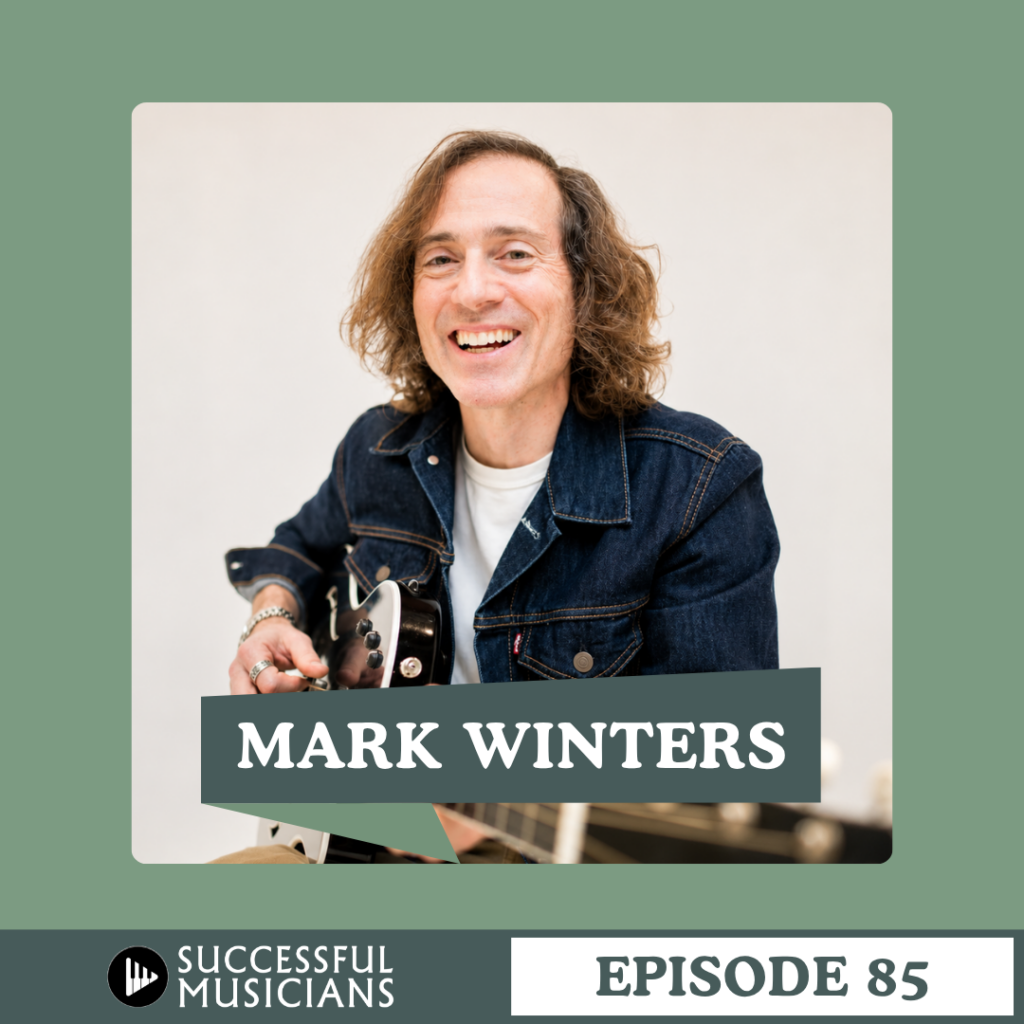
Hey guys, welcome to the podcast today. My name is Jason Tonioli. This is the Successful Musicians Podcast and my special guest today is Mark Winters. He is a fulltime musician now, but Mark was, we’ll call it, a rocket scientist that you had the real job and were probably doing things that your mom probably thought was a much better idea than being a musician growing up. But just to do a quick introduction, Mark’s got some amazing music. I would say as I listened to your music, Mark, it’s got kind of a Tom Petty, John Mayer flavor to it, but different in a good way. It was just kind of fun to kind of check it out. Fantastic music, but Mark, we’re going to, we’re going to dive in and talk a little bit about your kind of story. How did you end up going from rocket scientist to musician?
Mark Winters
Well, thanks for having me, Jason. You know, I think, and thanks for noticing the influences in my writing. You know, definitely two of the three or four people who are very instrumental in my journey as a musician. You know, I started off as an aerospace engineer, as you mentioned. I love applied physics, computational fluid dynamics, calculus, and differential equations. It just helps me understand the world around us.
I’m a very curious person. And so just kind of growing up throughout my life, I really enjoyed thinking and figuring out how things worked and figuring out how to take them apart and put them back together again. That pretty much dominated my childhood and my college years. And really hadn’t had much exposure to the arts, had a few little teeny, little spots of art that kind of crept into my life. My grandmother, when I was five, she, I don’t know, put a spell on me or something and I woke up in her sewing room and we were writing poetry together. This rambunctious, athletic, know, nerdy kid. I’m in there writing some poetry. And so, you know, I have this small voice in my head throughout my life where I’ve got a poetry pal and we’re writing poems together, but not really to other people and whatnot. But there, and when I got to be out in the world working as an aerospace engineer, I decided in 2011 that I was going to do something musical. You know, I didn’t grow up doing anything musical, but music always just moved me in the moment that made my emotions more real, more tangible with whatever I was doing. And so I put it on the list to do something musical for the year.
And about May of 2011, I decided that I was gonna pick up a guitar and sing a song for my wife for our anniversary. And I like to put myself out there. I’m kind of a little bit of an extreme personality. That’s how I do things just to motivate myself to put the effort in. And I bought a guitar from a local shop and got the guy to teach me to play a song and sing a song for my wife. I probably didn’t have a lot of time, only two months to go from zero. The owner of the shop asked me when we were checking out. So, what other instruments do you play? None. Have you ever played music before? Well, I played a recorder in elementary school and I sang Happy Birthday. Does that count? Exactly. So yeah, so then we put together a plan to do it incognito so my wife didn’t know what I was doing.
Jason Tonioli
Play your CD player, right, back then?
Mark Winters
And I surprised her at our favorite Italian restaurant and played a song for her. Boy, Jason, it lit me up so much singing a song to my wife. I’d never felt anything as emotional as that. And I became obsessed from that moment. I started learning everything I could, went on the journey of putting a little band together and playing some music and you know, along the way I found myself often changing the lyrics for songs that I was singing because I wanted to say something slightly different than the author of the song did and people started getting annoyed with me when I was singing a song that had I changed the lyrics on.
And that led me in 2018 to start writing my own music. And then I really cracked the book. Actually, I bought some online classes to teach myself music theory one and two. Udemy is a great place for video driven learning. And I bought a digital audio recording series from them as well and started teaching myself. And I really, really learned that I didn’t know anything. I knew nothing, right? Music is so vast. It was a phenomenal discovery for me. And that’s the origin. That’s how I came to be a musician.
Jason Tonioli
Well, when you were talking about changing the lyrics, I remember back when I was having piano lessons, this was when I was in eighth or ninth or maybe 10th grade, somewhere in there. And I would change the songs and I’m playing Beethoven or Rachmaninoff and I just thought it sounded better. So I’d change the songs and you know, that’s like the cardinal sin, I guess, for some piano pedagogy university professor person and my teacher.
Mark WInters
What?
Jason Tonioli
I don’t know, was kind of, was like lovingly said, you know, Jason, when you start writing your own music, then you can change the music. But until then you need to play what Beethoven wrote. So it’s just one of those where I don’t know, I feel I’ve always been one that feels like, you know, there’s music all around us and…
Mark Winters
I love you already, Jason. You’re my kind of guy. Like, I hate following the rules, right? Yeah.
Jason Tonioli
Like in that one moment or whatever that moment is you’re playing, you know, if it fills or if you happen to have a happy accident and you play something a little different, you play a wrong note, but you like it, well then gosh darn it, do it again. Play it over and over, like go with it, know? Metallica’s got some great licks, but you can do some really cool things with Metallica on the piano, can tell you.
Mark Winters
Yeah, yeah, and the two cellos, they do some rock on the two cello. They’re phenomenal, right? Or Jacob Collier, right? I mean, he re-melodizes things all the time. I love his improvisation. So yeah, think for me, I think, you know, sounds like maybe we share this sort of, there’s an inner voice in my head that has a way and that I feel like I need to do something in a way that I need to say things.
That’s, you know, for me, one of the drivers in my music creation. You my science nerdiness, you probably heard some of that in my tracks, right? So I kind of have some of that aerospace view of the world. And so when I write original songs, you know, some of that science creeps in there along with my poetry, but I’m driven. It’s like I’m trying to let the song out of me, right? That’s in there that I’m hearing.
Jason Tonioli
Yeah. So, you worked the real job and then a couple of years ago, you took the leap. Like, like you’re supposed to maybe do this as a teenager when you’re going to college and you tell mom that you’re going to go be a full-time musician and you did the real job, what most people would consider a really amazing career type of job. And then you’re now doing music full time. You told me you were going to do over 150 shows probably this year, which is amazing. So tell me more about that.
Mark Winters
Yeah, yeah, it’s like a flying leap. I don’t know. It’s one of those things, I guess I’ve been a very purpose-driven man growing up and the things that I do when I decide I want to do something, kind of like when I wanted to do something musical. I picked it and I got in there to do it. What I find is, just for myself, that innate amazing energy sharing that’s happening when I’m playing music with other people, that takes both the creative side of my mind and the scientific side of my mind and all of my energy and it focuses through this amazing lens and I’m able to share energy with people and it washes back on me and I just don’t know any other, I’ve done, you know surfing, rollerblading, motorcycle racing, whatever. I’ve done all kinds of crazy things, but nothing has lit me up like that. No amount of mathematical manipulations or learning or creation has really lit me up in that way. And so I started leaning more and more as I felt that more and more.
And as I started really finding my voice as a songwriter and I did my first really long tour. Last year I did a spring and a fall tour. I did about 120 shows last year, about 20,000 miles on each leg of the tour. And I was on fire out there. I learned so much. It was amazing. You think you’re ready and you’re playing sort of shows around your home base and you think you’re sort of ready as a professional musician and then you get out on tour and you learn all the crazy things that happen in all these crazy rooms. And you really, it’s like a forge. It forges you, it forges your skills, it forges your psyche. I think it makes you just that much more of a musician. I have so much respect for the professionals who are out touring and playing all the time. That’s such a rare set of skills to be able to do that and sustain yourself.
I’m really sort of rejoicing in two things. One, my wife didn’t marry an aerospace engineer that turned into a musician, right? She’s an amazing woman and when I first started playing music, she was right there with me, like you would for your spouse. Oh, you know, I’m going to go to all your shows and whatever. Yeah, it’s all great. But you know, after a while, the newness of it all wears off. She’s hearing the same songs and it gets to be drudgery. And so we had, I had a good friend of mine, Ken Gaines, who told me a great bit of advice. Do not expect your friends and family to be your fans. And it took me like a year for that to sink in because I mean, you create something.
Who’s the first person you want to share it with? Your friends and family. And so it took me a while because that’s where I wanted to go with all my music. So your friends and family may not even like your style of music or your voice or your playing or whatever, right? And so for me to sort of separate that out with my wife and to reestablish our relationship from here’s…
Here’s the old aerospace engineer, me, and here’s the new me, and keeping that togetherness going in a positive way. She was amazing, and we’ve really sorted through all those relationship dynamics. And I probably couldn’t have done it without her support, right? Because she really got behind me and helped me really realize this amazing journey that I’m on right now.
Jason Tonioli
Yeah, well, how does one, mean, 100, more than 100 shows in a year is pretty crazy. What if somebody was wanting to do a gig that much, what advice would you give them? I mean, is this something you’ve hired somebody to help you book these? You’re with an agency or you’re doing it yourself? What’s that process and what would you recommend to somebody who is interested in doing that many shows here?
Mark Winters
Yeah, so I would say two things. One, like the Foo Fighters do 200 shows a year, right? And Dave Grohl’s a hard working dude, right? I read a story about the Red Clay Strays. I don’t know if you’re familiar with those guys, John. They’re kind of up and coming, I guess, I think of them as Southern rock, but you know, they’re probably, the Country Music Association has adopted them, but they’re on fire right now.
They were doing 200 shows a year for 10 years before they actually found some success. So I study strategy as well as what makes people successful or what I think makes them successful. And I think just sort of finding your lane and knowing why you’re out touring, why are you there? I’m not there just to go play a bunch of cover shows in a pub, right? I mean, not that I haven’t played my fair share of those and you can enjoy those. But I’m there to connect with my people, right? Who are my people? Who likes some positive nerdy energy? And what am I doing to find those people? And how am I stacking my set list, et cetera? And so it kind of gets back to if you want to tour that much, I think if you can, if you have the energy and you have the schedule allowance to do that and the resources to do it.
You can cover your expenses and make a little bit of money as a starter person doing that many tour stops. You just have to be very thoughtful. You have to plan your route in a way that you don’t have too long of a drive between your tour stops. I have to, like I have a trailer, I’ll pull a small little trailer. That will be a great bit of advice. Grab a small trailer, bring a little bit of home with you.
Don’t make it a big SUV, a big tour bus, don’t let your eyes get bigger than your stomach, as my grandpa would say. Be smart, be fuel efficient. For me, I eat my own food. I shop at Costco like I would at home. I’m out on the road. I stay off grid three days out of a week, because I have the right trailer that has solar cells and propane and water. And so I’m kind of doing my thing along the way. And I think, you know, just being thoughtful about that. And, you know, I think just having that in mind as you’re starting to do the outreach. And so for me, I did a 10 stop tour, the starter tour for myself, just to figure out how to do it all. And then I played a showcase at South by Southwest and a tour company approached me.
to help me with my outbound. And so it’s a mix. I do quite a bit of outbound myself. They do a lot of outbound travel. And then once I have some interest from the venue and booking me, then I pick up everything. I negotiate whatever type of show it’s gonna be. If there’s a ticket, I do all the support acts for the ticket. I do all the social media work. I do all the poster creation.
You know, thank God for online tools. Thank God for Starlink. It’s inexpensive internet wherever you go. Thank God for Canva and tools that are, you know, make it easy for you to do things in the cloud. So there’s a ton of resources today. I even get a ton of work done on my phone when I’m driving the five hours between locations. I just pop chat GPT up and start talking to it. And I work on tour logistics and emails and all kinds of stuff because the tools are there today to do it. So a lot of DIY, I’d say maybe when I’m a little bit bigger, it’ll be nice to have a manager that can do some of those things for me. I gotta cut music every two months. If you’re not feeding the algorithm, you’re not, you know, you’re not on everyone’s radar as a new act. And so I have to, you know, release music. I had to learn to do that from the road. And you have to put visuals with them. So you got to learn to, to, to do your own reels and, and, and editorial work. But it’s all for me, it’s all worth it when I’m out in front of a group of people and I’m able to, I carry a bunch of protons with me, my, my positive energy. And when you come to my show, I’m going to give you a few of those to take out in the world and shine on your friends. And that just lights me up when I’m able to connect with people and do that in a live show.
Jason Tonioli
Awesome. Well, if you were able to go back and rewind the clock and give yourself, your younger self, some advice, regarding your, your music career, what, I guess, what little 60 seconds of advice would you want to give yourself?
Mark Winters
I think I’d go tap myself on the shoulder and say, hey, young Mark, you know, there’s so much joy over here in this music thing. You know, you should probably go over there and do something musical because it’s gonna bring you a lot of joy earlier in your life, more so than you would imagine. So I would encourage myself. I had several opportunities to do something musical and I just didn’t.
I’d bail myself out. So I would say that’s probably, although if I change the order of operation, I might not end up where I am, you know? So I don’t know, I’m really loving where I am right now, Jason. But that’s probably what I would tell myself, just to go do something musical earlier in my life. So I had that.
Jason Tonioli
Imagine what you’d be doing if you would have learned how to do that as a five, six year old doing poetry and then writing songs with it, right?
Mark Winters
Dad, that’s maybe so, or maybe I just needed to be in the grinder before I got to this point in my life and now maybe I’m just better at it as an adult. I don’t know. I do say this though, when you do something late in life like that, if you’re not driven and passionate about it and you’re not willing to let yourself be bad at it, I mean, when you’re a kid, you’re fine being bad at everything, right? Because you didn’t do it yet as an adult. I had this expectation to be much better, much faster than I actually was. So I had to put my 10,000 steps in to sing and to play my guitar and to play the piano before I felt like I finally got back to a level of competence. 19:01 – 19:15
Jason Tonioli
Yeah. Well, that’s awesome. Congratulations on, on, the many tours. I mean, that’s, that’s a ton of work. And I think you, definitely, you get better with every show, obviously, and you improve every day and you, the music you’ll end up writing after doing that many performances, obviously, it just makes you better at your craft. So, well done for doing something hard this late in life and not having grown up with it.
Mark Winters
Yeah, at the moment I’m on fire. I gave myself, it’s another thing, I’ve given myself five years of touring, so that’s in my mind. Like I’m not gonna stop touring this year. This is my second year of heavy touring. I think three more years of heavy touring, that’s my thought. And I’ll have given myself every chance that I could have to find a successful career in music.
Jason Tonioli
Yeah.
Mark Winters
If it doesn’t happen at that point, then I’ll reconsider what I’m doing.
Jason Tonioli
Well, you hear you say that. I mean, the importance of setting goals. I hope for anybody listening that what you just said is absolutely critical of setting yourself goals and aiming for them, but then showing up every single day in some of the marketing and coaching things that I’ve done over the last 15, 10, 15 years. The person that’s willing to show up every single day and do a thing over and over and over again is going to outwork. I mean, it’s kind of like that tortoise in the hair story. If you show up and you do the thing every day, you are, you can’t help but get better and, and, and find, find that finish line eventually.
Like what happens in the tortoise and the hare story. So, I think that’s a huge lesson for anybody listening to set those goals. I think timelines are super important for yourself as well. I think it’s always dangerous when you say, well, I might quit at a certain point. But I do think having that timeline where you expect a certain thing out of yourself, if you, if you expect that goal to be successful, you will, you’re going to hit it. You’re going to have a lot more likelihood of hitting it versus just being like, I’m just going to go on tour. It’s fun. You know,
If you know what that success measure looks like for anybody in strategy or business, you’ll hear the word KPI. That might be a term people haven’t heard of, key performance indices. I think those KPIs are so important to decide what you are going to measure, that’s whatever the success is. If it’s just putting out a song, great. How many songs is it going to be? Is it getting a certain number of listens? Is it doing a certain number of shows? Is it getting a certain number of fans? Is it doing post-sales?
Mark Winters
Yeah.
Jason Tonioli
Every single day on Facebook or Instagram or TikTok or whatever it is, you know, every single day and just, you know, did I do that and did I show up? And again, that repetition of hitting that goal that you, you hold yourself accountable to. You can’t help but be successful or get better out of the fuse. You just do it every day.
Mark Winters
That’s a great point, Jason. To me, think of two things that came to mind when you were talking about that. It’s like, you know, there are things that I like to do and there’s things that I don’t like to do, right? Like, I don’t know, when you’re like doing scales on your instrument or with your voice or whatever, or doing social media posts or reels or whatever. Yeah, there’s things you might not like. But I think if you find a way for yourself to enjoy the thing. Find a way that you do it, that you can do it, that makes it enjoyable for you. You know you gotta do it every day. You gotta show up every day. Find a way for that to be a treat for you and you’ll do it more. I think is something that’s been super helpful for me. And then I think, like you talked about, having things that you’re tracking, I think it’s important to find people who are a little bit ahead of you and people who are a little bit ahead of them and people who are a little bit ahead of them. And if you can see two or three steps ahead of yourself, what does that look like for you, like for me as an artist, right? have 30 or 40,000 listeners on Spotify, maybe five or 10,000 followers across my social media platforms. So who’s ahead of me? I have three or four acts that I’m watching who are, they may be at 100,000 followers and maybe they’ve got,
a couple hundred thousand listeners on Spotify. What did they do to get from where I am to where they are? there’s three or four of them. Is there something common that I can do in my own approach? And so I’m very mindful of doing that. I try to break everything down every two or three months. Am I on track, right? Am I giving myself the best chance to be successful? And I think that’s very important.
Jason Tonioli
Well, just another thought as you’re talking about that. I look at musicians or people who want to do music and, we all have had conversations with the person that’s, you know, the closet piano player or guitar person or singer and they have these, you know, desires to do the thing, but then they don’t ever decide, they don’t ever have the guts to jump off the cliff and go for it. So, you’ve done that. You’ve jumped off the cliff and you’re swimming now, which is awesome, but…
Mark Winters
Okay.
Jason Tonioli
I think one of the things from a strategic standpoint that the creative personality oftentimes does is they don’t think ahead like you were talking about and they sometimes hesitate to invest in themselves like from an education standpoint and from just just trying to level up. And there’s so many resources now that where you talk about, who’s who’s ahead of me or who’s who can I learn from? Who’s who could I be mentored by, you know, between the podcast, there’s a dozen other podcasts with really smart people on it that you could listen to that’s basically free advice and free mentor where you got them sitting in your car with you, telling you stories about the hard things they did that didn’t work out and you can learn from them. There’s books.
Mark Winters
Yeah.
Jason Tonioli
You know, for me as a musician, I would say, I here’s, if you’re listening, write this down.com secrets. you can go to.com secrets.com and expert secrets.com. Those two books for me, I’d been a marketer for 20 plus years. And those books by Russell Brunson were game changers for me. Russell Brunson, if you’re not familiar with who he is, he’s the guy that did click funnels. He’s one of the best educators I’ve ever heard or, you know, been around, over the years. Like he’s, he’s somebody that you absolutely…If you’re a musician and you want to level up your marketing, go look him up and you’re going to, as soon as you do that, you’re going to get ads all over Facebook, probably from him too. He’s fantastic at that, but his content literally helped me level up to six and seven figures as a musician, which I never in a million years thought was possible.
Mark Winters
Yeah.
Jason Tonioli
And another book that I would say, there’s so many tools as well that I think musicians oftentimes don’t bother to build a list. And if you think about it, your Facebook followers, your Instagram followers, your YouTube people, about a year ago, I had a situation where one of my team members got hacked and YouTube immediately pulled down our YouTube channel. And I have like 300 music videos on there and I make a very respectable living doing piano music. Within about three seconds, YouTube pulled the whole channel down and I did not exist. It was crazy. How quickly it happened when we got it back. Thank goodness. But if you think about it, you don’t own your audience if it’s on those platforms. And that’s really cool. You have, you know, a thousand, 10,000, a hundred thousand, whatever many followers, million followers you have. The key thing is having some sort of software. They call them CRM.
Mark Winters
Wow.
Jason Tonioli
They are systems that can track who you’re, what the name of the person is, what their phone number is, what their email list is. If you can get an address, like for you, if you could have a list of everybody that was in, let’s say you’re doing a show in Arkansas, like pick the most random place. But if you could see everybody that’s in Arkansas and you’re doing a tour in this place that you maybe have never even been, then you could email all your people that liked you in Arkansas and they could show up. And that’s like Facebook.
The sad thing with any of these platforms when you don’t own your list is they don’t have to show your content to those people.
And you don’t really own it. Facebook changed their model a couple of years ago where you want people to see your stuff. You’ve got to pay them now. I mean, you’re paying 15, 20 bucks per thousand people that get to scroll through your thing. And they’ll show some of your posts to a few people, but it’s not. It’s not like it used to be. So I would say the biggest advice for you or any other musician listening is make sure you get a list and you build it and invest in that tool. And there’s tons of them out there. I’ve got several I’ve used.
The ones for anybody curious, I’ve used Infusionsoft, they changed to Keap and now they call them Self-Thryv. There’s tools like ClickFunnels that have some amazing things on it that you can go check out. There’s great training they have. Go High Level is another big player. There’s half a dozen other people that are building musician type software as well that I’m familiar with that’s amazing. I mean, every person is going to have different needs, but if you’re not willing to invest $50 or $100 a month in your software, then you basically shouldn’t be doing music and probably you need to invest a thousand dollars a month if you want to be successful. Anyway, so there’s, guess there’s my soap box pitch for any musician looking to level up their game is don’t, don’t be afraid to invest in yourself. Cause if you’re not willing to, then you’re not going to level up. So
Mark Winters
Yeah, that’s phenomenal. And Jason, I love what you said. Thank you. That was some great advice on, you know, sort of what really matters and how you make those connections with your fans. One of things that made me think about it was like, you know, as an adult, I had this unique experience. I’d never been around musicians in my entire life, right? I just never was around them. And I went to a blues guitar workshop in Ventura, California with a buddy of mine who was in the band that I put together and it was run by five professional musicians. Two bass players, three guitar players and they had a couple of guest drummers and they were all just insanely good. I’d never been in a room with a professional musician before in my life. I’m telling you, I could not believe how good these people were.
I thought I came too prepared and I saw what a real professional was like and to me I remember that always it’s like listening to you talk about marketing. You need to get in the room with somebody who’s a professional and you need to open your ears up to see what’s possible, right? Because if you’re just sitting over there doom scrolling or you know, I wanna do this or I wanna do that or whatever, right? I think you’re cutting yourself short.
You can listen to a podcast, you can get in a room with somebody like you or a professional musician if you’ve never been around them before, just to see what’s possible. And I think for me, that has been something that I’ve taken with me on every step of my musical journey is, okay, who’s a professional in this area? Because I don’t know anything about it. And how can I best find some advice and open my eyes as to what’s possible, you know?
Jason Tonioli
Yeah, I think a lot of times, I it’s you can kind of apply it to like a video game concept is, you you thought you were really good when you made it to level four or five and all of sudden you found out there’s 92 levels and you’re like, my gosh, I’m not that good. Right. I had that happen with me and my kids all the time. Now I’m like, my gosh, I used to think I was good at this game. And, know, I can’t even, I’m like seven seconds into this game and I’m reset because I guess I got shot or whatever, whatever games they’re playing now.
Mark Winters
Yeah, exactly that feeling, right? So I think keeping, maybe it’s keeping a humble mind, right? Just to realize that you don’t know everything, right? And that there’s lots of unlocks, like level ups for people that are available all around you. You just have to click the button, right?
Jason Tonioli
Yep. And I think the key is just being willing to, to, think the more you learn, the more you realize you don’t know, you know, the better you get at your craft, the more you realize you have to learn and that there’s a whole, there’s an infinite level of floors above you. Um, once you master the.
Mark Winters
Yeah, it was like, I went to my first songwriting. I’d never done anything formal songwriting. I never had any education around it. This is this lady, her name’s Andrea Stolpe. She’s a former Berkeley faculty member, label writer, and has a really cool vibe. I went to her retreat in Austin about three years ago. I had, when she was just opening the class, there were 25 of us from around the country who were attending and she was just opening up and she’s playing landslide, right? And so she’s up there and she’s got a beautiful voice. She’s singing landslide. She’s like, yeah, here’s the song landslide, right? What if we made it like a minor melody, right? Or what if we changed the chord progression? And she’s singing along, talking to us, playing, singing, changing the song from minor to major. What if we added a seventh?
What if we just delayed when we’re gonna actually bring this word in? See how that changes the meaning? There’s all this prosody going on. It was the best description of the word prosody I’d ever heard in my life. I didn’t know what prosody was, by the way. I’d never even seen a professional songwriter do that. It was like, how are you keeping track of all that in your head? It became like my, she was like my superhero. I wanna be. that good where I can think through all these things on the fly as a writer, right? And it puts me, now, to put a great goal ahead of me just to see how professional a person really is, how good they are and how that helps them, right?
Jason Tonioli
Yeah, no, there’s been a lot of great little words of advice. I think you’re great example, I think, to a lot of people. So hopefully, I’m sure you’ll inspire a few people listening to this podcast. Well, Mark, if people want to go check out what you’re up to and maybe you are going to Arkansas. If they want to go check out your site, I think your site’s markwintersmusic.com, correct?
Mark Winters
That’s correct, Jason. Yeah.
Jason Tonioli
We’ll put the links down in the show notes for anybody to check it out. You definitely just go on Spotify or whatever music platform you do and go, go check out and listen to some Mark’s music. It’s really good. And I’m excited to have you keep putting new stuff out to Mark. So thank you.
Mark Winters
Thank you. Yeah, I’m excited and if you wanna ride along with me on the front page of my website, there’s a little email sign up to join the Positive Vibe Tribe, which are my people in my email list. And I’ll send you some notes from the road and I look forward to catching everybody and sharing some extra protons while I’m out in the field.
Jason Tonioli
Nice. Awesome. Well, Mark, thank you for your time, for sharing all your stories and your words of advice and good luck on your tour as you go through the coming summer here.
Mark Winters
Thank you so much for having me, Jason. It’s been amazing.
Jason Tonioli
Awesome, thank you.