
Successful Musicians Podcast
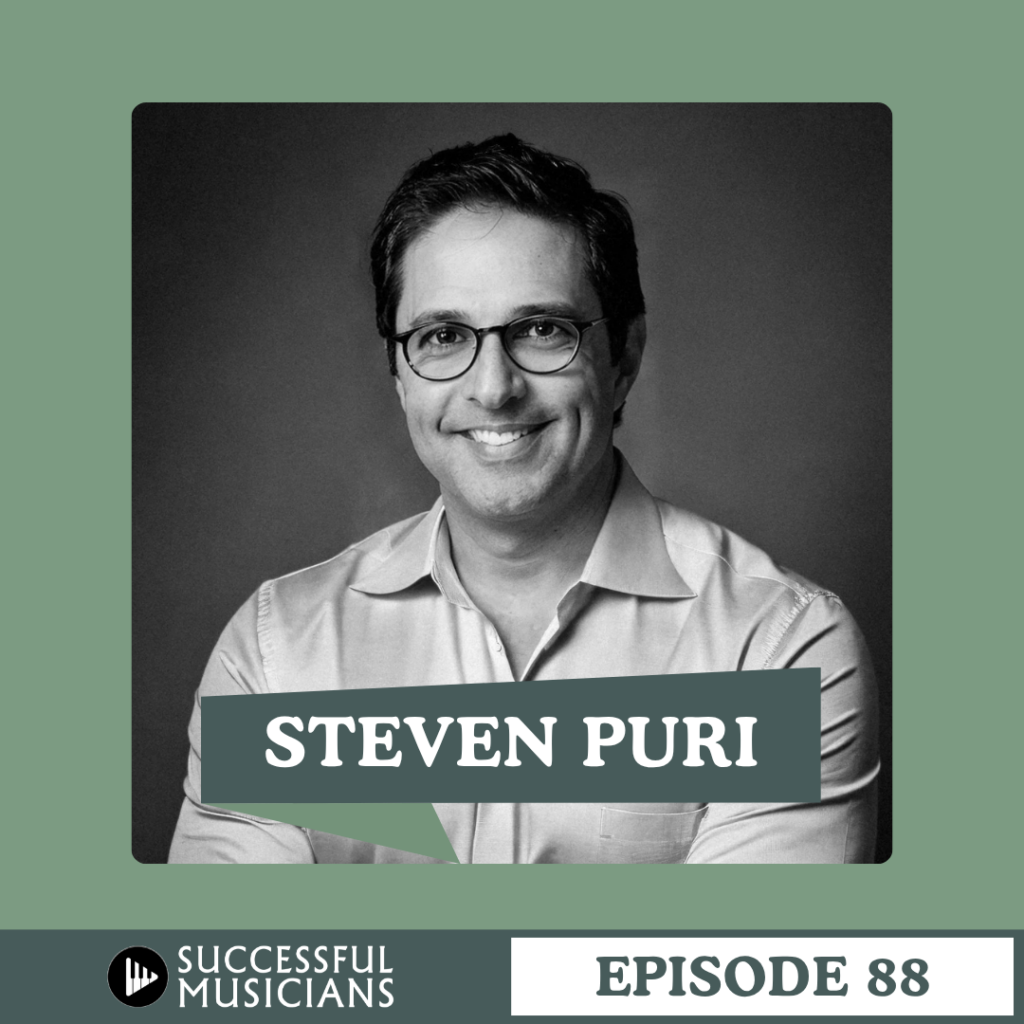
Interviewee: Steven Puri
Interviewer: Jason Tonioli
Jason Tonioli: Welcome to the podcast today. My special guest is Steven Puri. Steven has been in the movie industry and he’s now a coach. But Steven, you have one of the most interesting backgrounds I think I’ve maybe had on this show. if you go look Steven up, you’re gonna see that he worked on or was part of multiple like so many films that you’ll recognize. I think you were you had your hand in Braveheart working with Mel Gibson.
Steven Puri: Ha ha.
Steven Puri: Mm-hmm.
Jason Tonioli: If you go way back, you’ve been working as an executive producer. You worked with DreamWorks. You’ve worked on shows like Die Hard, Wolverine, and probably a hundred other shows that people would recognize. But what I find very interesting is you’ve kind of I don’t know what you call it, graduated out of that, but you’ve been an entrepreneur and tech person now as well. but what I find interesting is you
Steven Puri: True.
Steven Puri: I got my diploma. I walked. I had the mortarboard. It was awesome. It was a great ceremony.
Jason Tonioli: are really spending a lot of time and you’ve for multiple years now s ta focused on finding flow and when you think about flow, you know, a lot of people will picture musicians or athletes and you get in that flow state. And when they’re on stage, it’s just like you lose track of time working, but you’ve gone probably deeper than almost anybody I’ve maybe come across in on that topic. And I think it’d be it’s gonna be fun to share.
Steven Puri: True.
Steven Puri: You know what’s funny? So it’ll be a lot of fun to share. thank you to everyone who’s listening. I hope this becomes one of your favorite episodes of the pod. The thing that Jason is alluding to is the guy who named it Flow is this Hungarian American psychologist, Mihaly Csikszentmihalyi, right? And he had a thesis. One of the things that fed his thesis was observing like jazz musicians and improv, freestyle rappers, like that sort of thing, where it’s like, how do you do that? Well, I just kind of lose myself in the flow, in the I become one with the music, that sort of thing. And he said, you know, it’s interesting because it’s not just these musicians. You can talk to high performers in a bunch of disciplines, athletes and inventors and scientists, and you know, when they talk about the concentrated state where they do the thing that makes them famous. They often talk about it in very similar ways, even though what they’re doing is very different. And he’s like, there’s something there about us as humans. So he did, you know, the research, the interviews, and he wrote the book Flow. It’s why we call it a flow state.
Jason Tonioli: Well and I find just the that name flow, I’m I’m big into whitewater kayaking. I play piano, for those who’ve been listening
Steven Puri: There’s a lot of flow there, yeah.
Jason Tonioli: I love rivers and it’s one of those things where when I was kind of looking at your thing, I find more peace when I mean when you’re on a river, if you’ve ever floated a river, you kinda you have to lose track, especially if you’re going into a big rapid. Like if you’re not on your game, you could get hurt or killed, you know, in certain situations and you’ve gotta completely just dial your mind in or the consequences become so big. So you’re kind of forced into the flow of the river, but you’ve got to be in that flow state or
Steven Puri: If you’re in the moment. Yeah.
Steven Puri: Or you’re forced into the river. You know, it’s funny you say that because Mihaly said a beautiful thing, I think. He said, the reason I chose this word flow, even though many of the high performers with whom I spoke, they have their own word for it. Like Michael Jordan talks about being in the zone. It’s just me and the ball when I’m in the zone, right? Picasso had his thing with the muses, and Einstein talked about, you know, the thought experiments where he’d be lost in his. And he said, even though they all had different terms for it, I chose this word flow.
Jason Tonioli: Right.
Steven Puri: Because it was the most beautiful metaphor for what I found, which is we are all on the river paddling to move ourselves forward. But if we align our boat with the current, it carries us, it magnifies our efforts. And that is what these people have figured out how to do. And that I thought was such a great way to encapsulate this thing of saying, like, hey man, we all have the ability to paddle, but if you want to take advantage of your natural brain state, like it will. Magnify your effort. And when I first experienced a flow state, I just wished someone had told me about that in college. I was like, why did no one tell me about this earlier?
Jason Tonioli: Well, and I think the hard part with and if you’ve been down a river, you’ve got that flow where the line goes and you’re gonna move on its own. But there’s eddies and other things that will pull you away. And it’s I mean it’s just really just like life. And no matter like if you end up getting even a little bit off course, your boat will literally go upstream and backwards, the wrong way. and I think as musicians, a lot of us are guilty of you know, and just creative people in general. a lot of times I call
Steven Puri: And holes and yeah.
Jason Tonioli: chasing squirrels. One of my favorite scenes is from up that Disney Pixar movie when they say squirrel and all the dogs just whoop you know and I find that so often with myself and other creatives where next thing you know they’re doing the thing but all of a sudden shiny object and we’re you know spent two hours chasing the wrong thing going upstream instead of down the flow current where you were yeah I
Steven Puri: Yes. Yeah.
Steven Puri: Right? And you know what you bring up about squirrel and you know distractions and stuff. For those, I know there’s some portion of your audience, they’re like flow masters that are, you know, in flow right now, floating above their desk in Nirvana. There are others who have probably heard about flow states now because it’s becoming pretty popular in the zeitgeist, and they it might behoove us to spend 30 seconds just defining what you and I are aware of, right? So when Mihaly wrote about flow states. He said, here’s some of the characteristics. As you mentioned, Jason, you kind of lose track of time. You’re not staring at the clock, right? You lose your sense of self in the work. Like the jazz musicians, the freestyle rappers were talking about, as you’re not self conscious. You often do your best work in less time than you think necessary. You can feel a sense of uplift at the end of this, as opposed to a sense of like depletion, like, God, that was so hard. I did it. It’s more like, wow. I’m ready for more. This was great, right? So there’s more to it, but I’m being a little reductive. But it’s interesting as he wrote this saying there is this weird phenomenon when you talk to these guys and girls. But some other people challenged it, saying, is this really a thing? This flow state where you lose track of time and you know distractions fall away and you’re in the work. And so they thought, they think this amazing. I think it was Charles Lim at Johns Hopkins said, you what? I’m gonna take some jazz musicians who Report getting in flow. Like there’s a moment in the trio when I just am part of the music and holding it. He’s like, I’m gonna take them and stick them in an FMRI machine and see if there’s anything that’s different between when they start and when they say they feel like they’re in flow. And he came back. He’s like, you know what’s weird? When they report like feeling like they become one with the music, one with their trio, their prefrontal cortex, like behind your forehead, that has a lot of your sense of self and self-consciousness. He’s like, the activity shuts down. And it’s true when you are a lot of the people, you know, in my Sūka community, they are creators. And by that I mean they create code, they create words, they create sounds, they create designs, right? And to get into that flow state and be able to say, hey man, I’m not editing myself. I’m not second guessing myself. I am allowing the muses to like, you know, channel through me. That’s a beautiful, beautiful feeling. And you know, you look up two hours later and you go, This cool what I did. You know, this was a great.
Steven Puri: Thing. Hopefully you remember to eat and go pee and stuff.
Jason Tonioli: For sure. I’ve had that as a musician. I think one of the first times I really realized that is I was at I was working on my first album and I ended up being down at the recording studio. And I think I got down there at like five PM. were supposed usually we try to wrap up by eleven PM. it just happened that were nearly done with the album and I was supposed to fly to Mexico down to Cancun with my wife the next day at around ten AM. And next thing I know, I look up and it was four thirty AM and
Steven Puri: wow, okay.
Steven Puri: Ha ha.
Jason Tonioli: I had like and there was all three of us there in the studio and we’d been working. I was like, crap. I didn’t even call my wife to tell her I was gonna be late. She’s gonna you know, she’s gonna wonder if I did I get in a crash, but then I’m I’m in this like weird zone of like, do I call her at four thirty in the morning and say I’m on my way home? Do I But
Steven Puri: Right. Which one is better? Which is the better option here?
Jason Tonioli: But it was one of those where I you just kinda lose complete track. you feel happy. I wasn’t tired. I just felt pure joy. Once I was done and I got home, I had my first four hour energy drink that was the thing back then. and I had just enough energy to get to the airport and get on the plane and go. I don’t think Stacy talked to me for several hours and I probably slept anyway. It’s probably better we didn’t talk for a bit, but I don’t think very many people
Steven Puri: Yep.
Steven Puri: good lord, yeah.
Steven Puri: Yes.
Jason Tonioli: have that realization very early in their life. You know, it’s very sometimes I think it’s very rare for people to even have that because they just go show up and they do their job and come home and don’t love what they do, I guess.
Steven Puri: No
Steven Puri: I had the universe give me this experience where I had to kind of unpack it. I, as you know, I live in Austin. I was going to San Francisco the next to meet with my team the next day, right? And I thought, okay, you know what, on the flight, I have an idea for a feature that I wanted to kind of mock up with my hacky Figma skills. And tomorrow I’ll present it. And if there’s some enthusiasm in the room, like, you know, one of our designers can pick it up and make it pretty and you know, we can engineer it, right? So get on Alaska runs that Austin to SFO nonstop. Get on the flight, captain’s like, hey kid, sorry, Wi-Fi’s out, you know, see at SFO. Okay, cool, whatever. Take off, start working. Like fifty minutes later, we start descending. And I think, okay, there’s something wrong with the aircraft. They’re gonna land at DFW and it’s be like, the hydraulics, we’re gonna swap the aircraft, whatever. Fine, so we’ll be two hours delayed. Not the end of the world. I looked at the clock on my laptop, over two hours and forty minutes had gone by. I had no concept of that. I didn’t know if the drink cart had come by. I didn’t know the name of the dude in the seat next to me. But my designs were done and I liked them. And I had maybe done this. I’d prepared myself for get in the Uber, grab a sandwich in the hotel lobby, go up to the room, sit at the ugly little desk and try and bang this out and pass out and go to the meeting, right? I got in the Uber, I called a buddy of mine and SF. I was like, I have a free night. Do you want to have dinner? So I’m relating this to him, going, I got off the flight, I felt great, the designs are done. I thought it would take me four hours, took me like two hours, a couple of minutes, blah, blah, blah. And he’s like, yeah, you were in a flow state. I’m what? He’s like, Have you ever like, are you are you an idiot? Like, how do you not know about this? Right. And I was like, Tell me more. And so he sort of said, That was a flow state. These are kind of how it works. And you know, you can research it more, but it was just a casual dinner conversation. I like, I the first thought I had was, why didn’t anyone tell me in college? Man, that would have changed my college career, right? And That led of course to the journey of discovering what is this and all the smart people who have dug in for since Mihaly Csikszentmihalyi sort of wrote his foundational book saying, I’m gonna call it flow, here’s what we found. And then you have, you know, the Kotlers and also the Newports and the Nears and the Allen’s and the Clear, like all these guys who have dug in and said, Let’s do research on some aspect of this. How, how do you get to this place? And that to me is fascinating. And that’s a lot of what I, you know, as you know, that’s what I do now.
Jason Tonioli: Well I didn’t realize I was figuring this out when I was in high school. So and I’m I’m curious to ask to follow up and ask you how to get there, but that as I look backwards on my life, when I was in high school, I was terrified of heights. so I joined the diving team and dove in high school and then I went I went rock climbing and all of like I’m terrif like I’m I get dizzy when I’m high. And all of a sudden I
Steven Puri: Good for you.
Steven Puri: Mm.
Steven Puri: Good for you.
Steven Puri: I’m with you. I have acrophobia like on eleven.
Jason Tonioli: but I found with the rock climbing the exhilaration of like getting to the top and just
Steven Puri: Hmm?
Jason Tonioli: being terrified that you were gonna die. All of it somehow put it put me in this other place where all you could do was focus on what your finger and your toes are doing at that moment. and we would climb to the like we I was climbing five, eleven like crazy hard climbs that would take six, eight hours sometimes, you know, to get to the top of. And you know, by the by when I was kind of in my peak, now I’m old and fat now, and that’s not a thing I’m really wanting to do anymore. but as a high
Steven Puri: Mm.
Steven Puri: Really?
Steven Puri: God bless. Yeah.
Jason Tonioli: Well, I think as I look back, the reason I loved that so much, I hated it and loved it, but it forced me to just
Steven Puri: Mm? Yep.
Jason Tonioli: completely it was almost like you were outside of your body a little bit, you know, in order to be successful at it. As soon as you let it get in your head, as soon as it got in my head, I’d realize I’m hanging a hundred feet up off this cliff and there is nobody to bail me out. Like it is just me. And you’d have to like you’d have to force yourself to get back in that zone and to be sick to not die. And so I’m curious how do how does this work? I mean if you’ve got all these smart people who figured it out, what’s what’s the key? I mean it for musicians
Steven Puri: You have to get into a state to do that. Yeah.
Steven Puri: Yeah. So
Steven Puri: Okay, so let me just say this. Anything smart that I share, I want to acknowledge has come from a lot of people who spent their lives studying this. So I’m here to relay knowledge, but I’m not the smart one. I’m happy to share and let’s move this forward. And that’s you know why I created the community I created. It’s just to share the stuff. So there are some conditions precedent that now there’s enough body of research to say, yeah, these things seem to help clearly. A big one is music, right? Which I think you know something about.
Jason Tonioli: Other
Steven Puri: And the research says there’s a sweet spot for most people that is 60 to 90 beats per minute, certain key signatures more than others, like D minor and a couple of minor key signatures and stuff, that it’s melodic but non-vocal, like long melodic stretches that repeat. And there’s a weird band between music you dislike and music you really love. Both of those don’t work, but that middle band where you’re not like so into you’re going, I love this song. I’m gonna sing along with Britney or Blackpink or whatever, you know, like, but you’re also not going like, I hate country, whatever it is, right? It’s that middle band where you’re like, okay, this sort of lulls my brainto it’s blocking out the world. So there are some fantastic apps that are built around this, like Brain of FM and Endel and you know, Focus at Will and fantastic ones, both around this research. That is not to say we don’t have a friend. I’m sure you and I both do. That’s like, man, I listen to showtunes, 90s gangster rap, you know, like whatever it is. That’s their way of getting into flow. I will tell you a funny thing that I learned though in the course of putting together our company Suka. I happen to work in film, as we discussed. So when I was like, here’s all the research, here are kind of the specs for great flow music. Let me call up some film composers I know who have time on their hands now. Say, hey, could you write like a thousand hours of this? It’s pretty, you know, doable in that a lot of the tracks are 20 minutes long or 30 minutes long, right? It’s not like three minute pop tracks for a thousand hours. So threw this up, you know, and sorted it into playlists. Lo fi, you know, more upbeat, down tempo, you know, binaural beats. And a buddy of mine who is a sound mixer. Up in Marin for LucasArts. He does the Star Wars games, right? He calls me up one day. He’s like, hey man, are you working on Suka? I was like, Yeah, I am. He goes, I got something for you. Okay. He’s like, I was just in Nepal. I was like, good for you. He’s like, yeah, high school, like my his son did really well, I guess, in high school and got into good college. So that was his graduation gift. Where do you want to go? I want to go to Nepal, Dad. Let’s go do it as a father-son trip, right? So go to Nepal. He one in Kathmandu, it rained so hard we couldn’t go out.
Steven Puri: This lush, delicious, like warm rain. But I did have my recording equipment. So I recorded like two hours of rain Kathmandu. I got back and I realized I’m never going to use this in a Star Wars game. I don’t know when I’ll ever use it, period. And I remembered you had that focus app, that flow state app. Do you want it? And I was like, for free? Sure, let’s try it. So he and I agreed to put up a playlist in the middle of all the music, right? Put up a playlist. It was just called Himland Dream Rain. It became our third most popular playlist with no mention, no promotion, just sticking it in the list, right? And I was fascinated because on one side I was like, hey man, we paid all this money for this beautiful custom orchestrated music. And rain is like this huge hit. I was like, okay. So I run the platform. I know a lot of our members. I emailed some and I was like, hey, hey, Jason, I see you’re listening to you know rain a lot. Can I zoom with you for five minutes? I just want to understand that. And I’m telling you this. If you were to reduce down everything that people told me, they basically said this. They said, yeah. It reminds me of a time when I was younger and I had to study and it’ll be raining outside. My I was raised by my grandmother in Georgia. Around finals, it was always pouring rain. Would be inside. It was just this thing. My family has a house, a lake house in Michigan or Wisconsin it was. And it was so interesting going, so your brain was trained that there’s this trigger of rain outside, inside, cloister, do like the deep work. So of course, what does stupid Steven do? Think, Well, rain’s this magical nature scape thing. Let’s throw up playlists of like streams and surf and you know, also Flat line. No one cared. It was a waste of time, right? I was like, okay, fair enough. However, it did get one of our members who’s a pretty well-known blogger in the UK, who lives outside London, and she reached out, she said, Hey Steve, I see you’ve been experimenting, you know, with these other playlists. this non-musical stuff. She said, I gotta tell you something. Everyone knows me as this cool coffee shop blogger, you know, da-da-da. She said,
Steven Puri: Not a lot of people know I had a baby right after the pandemic and I can’t really go to that famous the coffee shop where I where I write with like a one year old to two year old, but I r I really miss it. Is there any chance you would put up the soundtrack of a coffee shop, like coffee shop walla? So yeah, found some dude in Vienna, Austria, who had recorded a couple hours of his local coffee shop, right? The little shh, the espresso machines and the clatter plates and that murmur of people threw it up there, became incredibly popular with writers. A bunch of bloggers, authors, you know, like copywriters we have. They love that sound of the coffee shop. And anyway, a lot of learning about how the music part of flow.
Jason Tonioli: Mm-hmm.
Steven Puri: you know, contributes and gets us there. And you know, there are other things to not be too reductive and or too long. Music definitely helps you get into flow. And if you’re a musician, you’re creating your own music as you go, right? Distractions, the better you can block them. Like I think I got into flow the first time because the Wi-Fi was out on the flight. So there was no Wi-Fi telling me that I had to check my WhatsApp or check my email or watch a YouTube video or social media or anything, right? So it’s sort of self-enforced, no distractions. So when were building Suka, of course, we built a distraction blocker to turn off your phone and all your stuff. So you can just focus whenever you’re doing. And, you know, there are other things like Mihai writes, you really need to have a clear goal, something you think is meaningful. He’s like, none of the high performers that I met they get into flow doing stuff they think is stupid or meaningless. He’s like, you have to believe what you’re doing and you have to have skills that apply. He’s like, it’s not Picasso trying to throw a basketball or Michael Jordan painting. You know, it’s You get into flow because you’re doing something you’ve been training to do and you’re doing it to a level that challenges you. And of course, that’s true, I think, for a bunch of your audience that, you know, are musicians.
Jason Tonioli: I’m curious, I mean, with all that stuff, I find a lot of people procrastinate and they’ll be like an it almost it’s almost like there’s an emergency. Yeah, well, but I’m I’m s if I look back on times where I’m like, okay, that was crazy what I was able to accomplish. Oftentimes some of the best work comes when you’re under the gun and you know, it’s almost like your mind puts things off so far that you get yourself in. I mean, I know a lot of creatives that do that and somehow, you know, something that was gonna take two weeks to do, they get done in two hours.
Steven Puri: I’ve never heard of that. Go on.
Steven Puri: Yep.
Jason Tonioli: and you look back and it was probably better than had they spent two weeks of their time on that.
Steven Puri: I love that you said it that way because I’ll tell you this. I’ve had this conversation talking about time boxing. And for those playing along at home, time boxing is simply the concept. Tell yourself, write it down, put it in front of you how long the thing you’re doing is going to take, right? There is a concept called Parkinson’s Law, which is tasks expand to fill the available time. So if you say I have half an hour to write this blog post or two hours, you’ll be right both times, right? So I’ve had this conversation talking about, you know, time boxing, declaring to yourself how long something will take. You magically will finish in that time. And had, especially, I’m talking about writers now in particular, had writers tell me, you know, you can’t do that. Okay, well, tell me about your process, Jason. well, it always comes down to, you know, like the last three days or when I get all the good stuff done, blah, blah, blah. I was like, okay, so you time box because You know it’s due. The writer’s guild contracts give you this many weeks to write it. You just happen to compress it into the last three days. You time box it in your own passive aggressive way with yourself, right? It’s not that there’s in a time box. You just don’t want to admit there is one. And it was really kind of an eye-opening thing having that conversation. People are like, yeah, I guess you’re right. Yeah, I do. I go sort of make this time box by backing against the deadline. I was like, imagine you took those same three days and you suddenly told yourself you had to be done the Friday before.
Jason Tonioli: Think how many more time you’d get things done, you know, right?
Steven Puri: Right? So it’s funny because you can resist the idea, but if you try it, you’re like, my God, this super, super interesting.
Jason Tonioli: I had earlier this year, and this maybe apply to some of the musicians out there. I got asked by a symphony to r they wanted to have me come and do a concert and play with them. But I play piano. Like I’ve done like two or three songs with an orchestra. And then I’ve had Chuck Myers who’s like the Disney Hogwarts Legacy guy that orchestrates everything for me. And but they asked me to come and do it. And then that’s great I got Chuck, but w I don’t do very many songs with that. And they’re like, well we wanna have like a ninety minute concert. And from January to the end of Janu
Steven Puri: Right? Yeah.
Steven Puri: cool.
Jason Tonioli: really mostly just one month, I cranked out ninety minutes of full score, you know, 70 person orchestra of music that we then performed for the concert. Like and the crazy thing is I’d never done it. And what’s funny is I had put this off and told myself I couldn’t, that I didn’t know how to do it. And so I’d always have other people and I’d pay them to do it. And I had a couple of people step in and help me to get started, but all of a sudden I had this realization like it was almost like I broke through that wall. that I’d told myself in my mind I wasn’t capable and gave myself permission to do the thing. And the next thing I know, I’m, you know, yes, it took twenty, twenty-two hours straight sometimes to do a full symphony on a song, but all of a sudden I had permission mentally to do it and I did it.
Steven Puri: No.
Steven Puri: Which
Steven Puri: But you did it. Which opens up an entirely different and longer conversation around what we believe we’re capable of and what we tell us we’re not.
Jason Tonioli: Yep. What and I would say when it comes to musicians and entrepreneurs, I think the funny thing is if you if you’ve been in the entrepreneur world especially, people will talk about how important it is to believe in your thing you’re working on or that the thing can be successful, or believe in yourself. And you know, all the getcha all hyped up and rah-rah, you can do this.
Steven Puri: Mm.
Jason Tonioli: A lot of these conferences people will go to, I mean, that’s the whole thing. And you it’s like I’ve been doing a hundred of these things. It’s like, okay, what’s I want the tactical, what’s the thing I can do? But the more I’ve been playing this game now, the more I’ve realized that really ninety percent of successfully accomplishing the thing, whatever it is you’re setting out to do, comes down to do you believe you can do it? And
Steven Puri: Mm?
Jason Tonioli: you know, it’s this belief thing. it’s crazy how the abilities have gotta be there a little bit, but it actually doesn’t matter as much as you would think it does.
Steven Puri: You know, when were talking about before we recorded, were talking about what is the most helpful advice for musicians who are coming up, you know, like how do you navigate this? And you’ve done amazing episodes on some very technical things around, hey man, here’s how to think about needle drop and sync licenses, here’s how to think about winning a Grammy, like I mean you’ve done those. I’m not the guy here to talk about sync licenses, but I will tell you this. The best bit of advice that I could give is probably this. When I was just getting into film, right? Twenties, all my friends are young development executives. We’re all kind of like making our way. So you are devouring content. You are continually getting short films from some new film, like you’re in Uruguay, and scripts slip to you from someone’s, and you’re just scouring the town trying to find something good, right? And when you do, you share it with your little pocket of friends. You’re like, Jason, I read this thing last night, you gotta read it. It’s really great, right? Now If you’d asked me in my 20s and my and my group of friends, who of this group is going to be the next Spielberg or the next Cameron, the next Fincher, whatever it is you want, right? We would have been wrong. I live in Austin now, as we talked about. And, you know, there’s the film festival here, there’s South by, there’s a bunch of stuff. So now, you know, 20-ish years later, there are still Friends from the film days who come town, and you know, remember I live here, and like, dude, I’m my film’s gonna be premiering at Austin Film Festival, come down. So you get to see them. I will tell you this. Those people who are reaching out going, like, my film is doing this thing, da. They’re not the ones that in my twenties we would have said they’re gonna make it. Because I suspected that the defining characteristic was talent. And it’s actually not, it’s tenacity. It is the ability to believe in yourself that when you get the no, you say, Okay, so maybe no for this person or no for this day, or no, there’s something I’m gonna learn that’s gonna help make it better for the next submission I make.
Steven Puri: And the talented ones very often took no as a rejection of themselves. And they didn’t have a confidence of saying, like, Jason’s having a bad day, or his company doesn’t like this horror genre, or whatever it is. They just had a flop last week and no one’s gonna buy anything. Like, no, they were like, it’s a rejection of me and talent. And it’s one of the things I’m gonna tell my son and daughter is: hey, strive to refine your talent, make you know, make yourself the best version of yourself you can be, develop your potential, but also. Understand that a lot of times no is not about you.
Jason Tonioli: it’s it’s not yet, right? I mean I think of the dumb and dumber, what’s the one where he says, You’re telling me there’s a chance, right? If you remember that dumb and dumber.
Steven Puri: I don’t know I’m gonna use that analogy with my children, but okay.
Jason Tonioli: But it’s yeah, I mean it’s interesting as you start to look back at who, you know, we call it made it or success. And th I mean the whole premise of this podcast was I started asking what is the definition of a successful musician or what is success to you? I’m curious for you, Steven, as you for you personally, or if you were given your son advice, let’s say you got when your son’s twenty years old, what how would you define success to that? to him.
Steven Puri: straight up. As freedom. Is just for me, it was about the freedom to pursue what you want to do, the freedom for you to wake up and say, What should today hold for me? You know, and it is if you want to be a great actor, if you want to be a great businessman, if you want to be a great doctor, what like what whatever it is, like it’s the freedom to go pursue that. And that is an amazing thing. There really there’s a huge cohort of people in the world that don’t have that freedom to say, I want to be a doctor. They are, you know, saying I don’t know what to do, my rafting company is shutting down. They’re not talking about how do I get into med school or how do I start a company or how do I, you know, any of that. Like so just the privilege of being able to say, I have the freedom to say, What do I want to do today?
Jason Tonioli: And I th and I think a lot of times, just to add to that is having the courage to decide to do it. ‘Cause I think a lot of times, especially when people are young, you know, in your in your early twenties, y there’s all these possibilities. Kids go to school and, you know, they’re un university and, you know, you can be anything you want if you know, at least you can pick your major. But somehow in that twenty-five to thirty-five year old zone, you get whatever your first job or second job was, you get doing the thing and you almost it’s like people feel trapped and don’t they no longer give themselves permission to be brave and say, you know what, I’m gonna take out a loan and go to school type of thing, like we do when we’re in our early twenties, you know, and I think
Steven Puri: huh.
Jason Tonioli: finding that joy is, you know, it takes a lot of courage, I think, for people to do that and just being okay with it not working. You know, I think some of the lessons that I look back on my career, the failures were some of the very best learning experiences for me to have not only the courage, but then to accomplish and, you know, find the right people, find, you know, make the right decisions to be successful at whatever the next thing was that were going after at the time too.
Steven Puri: Mm? Yeah.
Steven Puri: I so agree with you. And that I guess I know we’re drawing us to a close in a moment, but that really speaks to for me, the reason why I do what I do, which is Mihai had his thesis around there’s this magical state where your brain works a certain way, right? My thesis much simpler, which is I believe the question in our lives is not, do we have something great inside? I believe we all do. It is rather, will you get it out or will you die with it? And There’s enough of our world that is designed to distract you from ever doing it, from ever developing that thing. You know, and it’s I think it’s criminal how the biggest market cap companies, their business model is plainly put, steal your life. You know, Mark Zuckerberg doesn’t get another 450-foot yacht. Yeah, unless you scroll and you wake up 80 years old, that guy on the sofa scrolling and double tapping, talking about how you could have written the book, written the music.
Jason Tonioli: Death scroll on Facebook.
Steven Puri: Started the company, done whatever, right? that’s how he gets a yacht by you giving up your life to him. And I think that’s criminal. So that’s that’s why we created Suka. It’s why I do what I do, it’s why Electro Flow states just to say, hey man, if you’re one of the people raises your hand going, I’m not going to take this with me to the grave, find allies, find tools, find a group of friends that support you in going to release your greatness.
Jason Tonioli: Yeah. Well I know I know we’re about out of time, Steven. I would love to kind of go deeper on another episode with you ’cause I think there’s there’s just so many topics. I think the musician world needs I think understanding flow is part of
Steven Puri: That’d be great. This awesome.
Jason Tonioli: being successful at creating your thing. And I think there’s probably a lot more depth that we could go, but if people want to check out, I know you’ve got your software or your the company, you guys, it’s U K H A. We’re gonna put I’m gonna put the link down in the show notes. very cool app that essentially helps you at least be aware of what’s gonna distract you and then hopefully block as much as you can and focus in and get things done.
Steven Puri: Yeah, it gets you into flow. Yeah.
Jason Tonioli: Yeah. but where else, anything else that people oughta where you’d like them to go check out a little bit more about flow state.
Steven Puri: No, no, no. all I want is for you to go do something great with your life. Go find that greatness and release it. You know? It is too easy to sit back on the sofa and scroll and waste your life. Don’t do it.
Jason Tonioli: Absolutely. maybe the best advice we’ve gotten from anybody on the show. So Steven, thank you so much for sharing your time and your wisdom with us. and we I really would love to go get in some of the I think there’s just so much more depth that we could go and this more time. So we will definitely get another episode. So thanks so much.
Steven Puri: Thank you, Jason. Thank everyone who’s listening. Thank you for listening.
Steven Puri: Yeah, we’ll do another one. Done. Sold.