
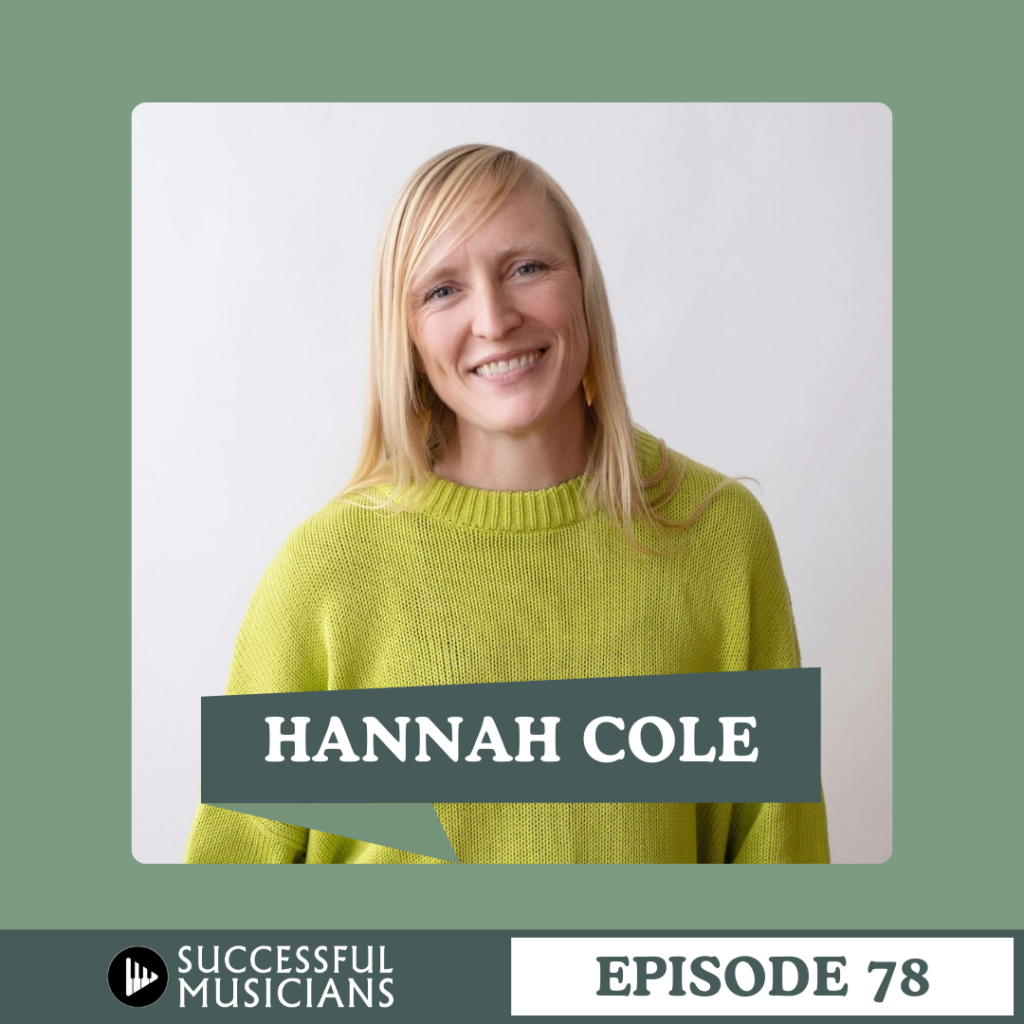
Successful Musician Podcast Episode 78
Interviewee: Hannah Cole
Interviewer: Jason Tonioli
Jason
Welcome to the podcast today. My name is Jason Tonioli. I’m your host and my special guest today is Hannah Cole. Hannah is a multi-talented, we’ll call it artist musician, who also is one of the strange artist type of people that enjoys numbers, math, and helps people with tax and kind of planning out just how to run your business. Am I getting that right, Hannah?
Hannah Cole
Yeah.
Jason
That was probably like the most random intro, it is not normal for artists to love the accounting world, right?
Hannah Cole
Well, yeah, and I wouldn’t say that I came at accounting from a standpoint of loving accounting but actually being failed by it so badly that I was angry. So, I’m an artist first who got mad and went back to school for accounting to be able to help other artists.
Jason
That’s awesome. Well, I think it’s what’s so interesting as artists, we all have this like vision of creating music and making music. And then if you stay in it long enough, you end up having these realizations that business can be hard. It’s going to be expensive. And if you don’t plan and do some things certain ways, it hurts a lot more than it needs to. Right.
Hannah Cole
Yeah, for sure. Pain is a great teacher, but you want to make sure you learn and don’t repeat.
Jason
Right. Well, and we’re just heading into tax season right now. So, I wanted to bring you on here, not only just hear your story, but I think the things and advice you maybe have and just some pointers that is that artists ought to at least be aware of and think about. And I do think there’s so many things that if you just plan ahead and you’ll do a couple of little simple things, it can create so much less pain when it does come time to do taxes. I think my worst nightmare is I had a friend that was kind of an artist type of person and I asked him, so who does your books and who helps you with your accounting? And he says, well, I have this shoe box here. It was this Nike shoe box that had probably like one fourth of his receipts that had probably faded so bad that you wouldn’t even know what they were going to be. And, and I just looked, I looked and I thought, you’re missing out on so much. I kind of want to, do you want to donate money to the government? Like, is that, is that something you…I don’t know. I’m all about being honest, but Uncle Sam, in my opinion, doesn’t need any more money than he should get, right?
Hannah Cole
Fair, yeah. We work so hard as creative people. I really want everybody to be able to get all of the benefits that they’re entitled to. It’s tragic to me to see someone missing them.
Jason
Absolutely. Well, let’s dive in. So, I know you, you’ve just released a book not long ago that I has gotten amazing reviews on Amazon, but let’s maybe just start really quick with your story as an artist and then how in the world did you end up doing what you’re doing with helping artists with their finances.
Hannah Cole
I always knew I wanted to be an artist. I’m a painter. I’m a visual artist, although I actually played cello for 13 years of my life. I auditioned and was in some symphonies and stuff. But at a certain point, I made a choice to focus on one. I basically ended up going back to school for accounting because I found it really difficult to get good information.
There are a lot of nuances and a lot of ways of operating in the creative world that I think don’t translate very well outside of it. For example, I think a lot of artists of whatever kind tend to think about artistic integrity is so important to us, right? And there can be these sorts of false conflations about like going hard after money somehow maligns your counter to having artistic integrity. And I just don’t think that’s actually true. Like probably if you name your favorite recording artists, they’re probably making pretty good money and they’re amazing. And those things are actually connected. So, it doesn’t have to be that one equals not the other. But I do think that we can get really in our head with these like attitudes that really hurt us. So, I think in a way a lot of what I care about is like the mindset things that hold creative people back and truly don’t have to.
Jason
Yeah. I can’t tell you how many, least this was even me growing up is how many times you just had this idea of you can’t make money as an artist or musician. It’s just not, something that can be done. And I think if you think that, then it’s obviously going to be true. You know mindset thing. I think that you’re talking about is absolutely a hundred percent a real thing.
Hannah Cole
Yeah, but ask Dolly Parton how much she’s making. She’s incredible. And she also pays for every single person in her little town to go to college and gives books across the whole United States. I how much good is she doing with all that money that she has made? I mean, she’s great example to me.
Jason
Right. Well, and I think you talk about people not wanting or feeling like they should make money is kind of that mentality. The number of people that know Dolly Parton is an example. How many people can she serve? But so, I mean, you as an artist, you just ask yourself, if I was making money, what good could I do for the world or how much more could I create or, what would I go to the recording studio and actually do that project that you dreamed about. Would I hire the orchestra to, or the symphony to do the thing that I want to do? And without that money, that’s just not going to be possible. So, the whole idea that money is kind of a bad or evil thing is, I think it’s definitely a backwards type of thinking if you’re a good person.
Hannah Cole
Absolutely. Agreed, and I think really a better way to think about money is as an amplifier. Like it’s a tool and it amplifies what you’re doing. So, are you a terrible person? Yes, it will amplify that. But are you a really good person who cares about artistic integrity and wants to do good in the world and also wants to have more reach, wants your music to be heard by more people? Like money can do that too.
Jason
Yeah, absolutely. Well, and so, so getting into the accounting world, what do you like as you work with artists? I mean, what advice if an artist was coming to sit down with you across the table and you were chatting with them, what’s kind of that advice that you feel like though, that artist needs to hear?
Hannah Cole
Yeah, well, because I’m a tax specialist, it’s usually pretty directed around the places where taxes tend to bite people. So, a lot of it is getting good systems in place. I think for musicians, this is actually even more important than anybody else, because what I see with musicians is there are so many different types of income streams and especially touring musicians. You might be making money in multiple states and have to track expenses against income per state. Things can actually get even hairier when you’re a musician. Plus, you know, for example, I have a client who’s like a, she’s kind of the money person for like a, it’s like a 20-piece New Orleans style brass band. And they’re awesome, but you can imagine that the 1099 situation and the payment situation with 20
bandmates are like a little hairy. It’s just like getting some simple systems in place I think is probably the very most important place to start.
Jason
Yeah. Well, and I think taxes in general, if you look at taxes, I mean, it’s the thing you have to do, but if you can step back and look at why the tax law is there or why certain rules, why do they allow you to write certain things off? It’s actually to promote growth in a lot of areas. It’s to allow you to grow. And so, if you don’t take advantage of those things, you’re actually shortchanging yourself, correct?
Hannah Cole
Very much. Absolutely. And I love that you mentioned that because that really is how it’s set up. The tax law really looks at you. You’re a business treated with all the benefits of a business in the US, which is honestly, people come here to start businesses because this is a really friendly environment for that. So, the tax code is actually set up to help you make investments in your business. I mean, everything you spend that is ordinary and necessary for running your music business is deductible. And that’s a huge incentive to invest, to do some professional development work, to buy a book that’s going to help you manage your taxes, to do a paid podcast that is going to, like a podcast subscription that is going to help you, or get better software, get better training, get better equipment, et cetera. So those things are all really there to benefit you. There’s also like another benefit that I think a lot of people, especially early stage, do not take advantage of is the fact that a loss is allowed when you are a business, when you have a profit motive. And a lot of people don’t know the rules because we don’t have a tax education in this country. So that’s not on you really in particular. Its just people don’t know what they don’t know. And there’s a huge incentive in your startup phase where you’re still allowed to take all your expenses even before you have a profit in your business. And it’s a huge tax advantage. And I see a lot of people miss it because they think they don’t count tax wise until they’re making a profit. And then some people even think they don’t count until they make enough profit. And please somebody tell me what enough means.
Jason
You got your normal computer, but you may need a fancier computer to handle whatever is you’re dreaming about doing. That’s a write-off, right? If I need a keyboard, need speakers so it sounds good. It might be a way for you to upgrade your creation space.
Hannah Cole
Yeah.
Jason
I would think even like you got your home office, if you need to renovate it and put carpet on the floor or redo that, all of that probably counts towards the business. And I think in a lot of ways people think of, well, it’s my hobby. And yes, it can be a hobby, but with very few little tweaks, the music that you’d create can very much be a write-off. And essentially, you’re getting whatever your percentages you get for paying for taxes, I mean, it could be 15 to 30%, you know, 30 % off in some cases for people by the time they’re getting that tax deduction. And essentially, it’s like getting a 30 % or more sell on every item you’re buying, right?
Hannah Cole
That’s absolutely true. Just to distinguish, because it’s very important to be clear whether you’re running a business or a hobby, that actually matters a lot in tax law. So, everybody listening knows the difference. A business has a profit motive and a hobby does not. That’s all that you need in the tax world to count as a business. It’s not something more official than that. But it is important that you have the profit motive. You cannot be running a hobby and take losses or business deductions. So that’s super, super important.
Jason
So, if somebody was going to create an album or trying to make money with their album, would that count as a profit motive?
Hannah Cole
So, what counts as a profit motive is the evidence of you trying. So, you actually have to have some evidence. So, for example, if I just record an album and then I let it sit there, no. The answer is no. But if I record an album and then I send demos out to producers or I try to get it played places, I have an inbox filled with correspondence to people where I’m trying to get that listened to by the right people or talking to booking agents, right? Those reach outs, that’s proof of a profit motive. This could also look like applying for grants. It could look like trying to think a lot of what you’re doing is person to person. So, like, are you taking someone in the music industry out for lunch to try and like talk about potential contacts or bookings? That’s some proof of a profit motive. And your inbox is gonna be loaded with that stuff.
Jason
Well, and you’ve got your Facebook and your Instagram, that type of stuff. If you’re doing posts about your music and showing that, I would think that would be evidence as well. You’re trying to promote your music out there, right?
Hannah Cole
Yeah. Absolutely anything. And we might use different words for it. You might call it visibility or getting the word out or making connections or networking, but all of those things are things that would support a profit motive.
Jason
Yeah. You talked about the education side. I mean, there’s so many online courses on how to, whether you’re learning how to get your music placed in sync or, learning how to be a better producer or get your music to sound better. There are just hundreds and hundreds of people that will be happily, happy to take your money, I guess, with those education type of courses. Some are better than others. Obviously. think I’ve spent well over a hundred thousand dollars, I think over my last 10 years I think on just learning and educating but all of those as long as they’re with the purpose of trying to level yourself up so that you can make a profit then that would all count right.
Hannah Cole
Yeah. And if you actually just think about why the tax law exists that way, a business that makes investments in improving, whether it’s improving equipment, improving connections, improving skills, all of the resources you put into improving your skills, equipment, abilities, resources, that helps you grow. And what happens when you grow?
you get more money, right? And then you pay back into the tax base. And you grow the US GDP, which is possibly the single most important thing to the US government, right? So, the government literally wants you to grow, and the incentives are there to try and help you grow. So, making investments in your business, think we can get a little tight with our money sometimes. And maybe that’s fair. Maybe you need to watch it. But actually, you have this big incentive, a big tax-free ability to make those investments in your business, which is, I think, pretty cool.
Jason
I think it’s interesting when you talk with, or you just listen to sometimes people talk about, this person didn’t pay any taxes or that business isn’t doing, it’s one of those where, like you said, there’s a reason to grow that tax, or the GDP to try and get growth to happen. And if somebody is willing to invest a whole bunch of money so that they don’t have to pay as many taxes, the end result is they probably grew a whole lot faster than the other business or other musician that didn’t invest anything. And so, their ability to make a whole lot more money is just through the roof. We need as many of those as we can. So, I always smile when I hear people sometimes and I think it’s a lot of people who aren’t necessarily in business. Oh, they should be paying more taxes. They should pay taxes. Yes, they should pay taxes, but are they doing the things that are going to grow and create jobs? Two jobs, 10 jobs, a hundred jobs, thousand jobs.
Hannah Cole
Absolutely.
Jason
And if I can reinvest that to grow more jobs, it helps everybody.
Hannah Cole
Yeah, and it’s not necessarily linear. Look at startup culture. Any venture-backed startup company is spending aggressively and will have years before they, you where they’re just actually spending and trying to grow their audience, grow their market share as aggressively as they can, basically to be more competitive. I’m not saying that’s necessarily the same kind of MO you want to have as a musician if you’re not a venture backed and subject to all those rules and that scrutiny, but there’s some strategy behind growing aggressively. And that company is spending, they don’t have a taxable profit as they’re in that stage of their business, but that’s so that they can become Uber. Uber notoriously was unprofitable for years and years and years, right? But now. I mean, they dominate. So I realized that’s not necessarily how a musician is like sort of thinking about it, but you can learn a lot from looking at other industries to sort of be like, I could, know, if I become incredibly skilled and my recordings sound amazing and I network better and have a lot of people in my corner with good relationships, like I’m going to do better as a musician.
Jason
Absolutely. Well, and that’s when you can like, I need a better guitar. I need a better piano. There are some really great perks that come when you’ve, when you do run it like a business that, I think people ought to at least be aware of it. If you choose not to take advantage of them, that’s on, on the individual, suppose. You mentioned about kind of the Uber and, made me think of musicians and Kickstarter. So, I think that’s kind of a common thing that’s been around a long time. So, I’m curious, so if a musician wants to go out and raise $10,000 or $2,000, $20,000, I saw one the other day, they’d raised over $100,000. I’m like, holy cow, that’s incredible. What kind of tax implications would come with somebody, let’s say $10,000 towards their album that they want to go do?
Hannah Cole
Wow, that’s cool. Yeah, so assume that any money that comes in towards your business is taxable. First of all, you should always assume that unless you can find in the tax code that it’s not, which will be rare. So, Kickstarter fundraising for sure is taxable income. Grants you again, here’s where you want to be tracking what you spend and have some bookkeeping set up. So, you see the expenses of running that Kickstarter campaign of which I’m sure there are some. So those. The way that your tax return works is you have to report all the income that comes in, but you only pay tax on the profit that you keep. And the deal there, the whole point of bookkeeping is that there’s expenses, ordinary and necessary expenses of your business that you get to deduct from that gross income that you report. So, you have to track all of it and you cannot get away with under-reporting the gross income.
If you underreport that by more than 25%, that’s a felony. So, it’s a really big deal. But your prerogative is you get to take deductions if you have a profit motive. And so that’s what you want to do. And be careful that you track really carefully. And then you only are going to pay tax on this little, the leftover, what you actually keep. And we hope that that amount will grow and grow and grow because of your investment into the business.
Jason
Yeah, interesting. What would you say are some of the biggest mistakes that just that creator, artist, musician mentality probably misses when it comes to doing their tax preparation?
Hannah Cole
Yeah, well, probably one of the, maybe two of the biggest mistakes. One is trying to do bookkeeping from your receipts. So, receipts are necessary. You need them, but they go into cold storage. Their purpose is just if you are audited, they are the proof that you didn’t make things up, right? That’s the proof that says, these expenses really happened. Here’s the proof, right? So, track your expenses by year. Your receipt should just go in a file folder or a folder in your inbox marked by year. And that’s it. You don’t have to touch them. You definitely don’t want to do bookkeeping with a shoe box of receipts because you’ll lose your mind. It’s really messy and painful. What you want to do is have a separate bank account for your business and keep the business transactions and the personal transactions separated from each other by having their own accounts. That’s the way
to make sure that you have a bank statement from your business account that’s going to show all the money in and all the money out and then that becomes the basis of your bookkeeping, much tidier than a shoe box of receipts. So that’s probably the best baseline.
Jason
And if somebody does miss that, we all have things, I’m using accidentally use the other card or you’re still, got to spend money on something that still was that’s something they absolutely can still bring in as a journal entry, I’m sure into their QuickBooks or whatever they’re using in their software, right?
Hannah Cole
Absolutely. I think a lot of confusion comes because bookkeeping and taxes are not exactly the same thing. They overlap by like 90 percent, but there’s a portion where they don’t overlap. So, like what the IRS ultimately cares about is money that came into your pocket and money that left your pocket through the business. So that’s the concern. Did you make income and did you have deductible expenses? Now, the IRS, know, what account you use to do it, IRS doesn’t really concern itself with which account you used. That’s for your benefit and your tracking. And then of course, as you move up the food chain and your business might get bigger and bigger, becomes, know, regulation will start kicking in where you have to have a separate business bank account. So, starting early is not a problem. It’s a really great benefit to you. But that’s the important thing. It is okay to transfer money back and forth from your personal account to your business account. That’s perfectly allowed. But it actually doesn’t affect your taxes at all.
Jason
Yep. Gotcha. What other mistakes would you say get made?
Hannah Cole
Well, I think I mentioned it, but I think one of the biggest mistakes I see is that one, people don’t take startup expenses. They think that they aren’t allowed to count as a business until they’re profitable. And that’s not true. The actual start time of your business is when you have a profit motive, which usually is signaled by the first moment that you advertise. So, you can think about sort of why that would be the case. Advertising exists to tell the world what you’re doing. And like, hey, I just recorded this album. Take a listen. Buy it. Stream it. So advertising is the start of your business for most people.
Jason
Yeah. Well, that doesn’t even necessarily have to be a paid thing. You could even just have an announcement to the world on Facebook, a Facebook post or Instagram post. that’s, that’s your thing, right? Yeah.
Hannah Cole
Absolutely. And email to friends and family just counts just fine. Yeah.
Jason
Cool. Any other big mistakes you see?
Hannah Cole
Well, I think a lot of people and musicians I would put in this category especially, there’s a lot of business deductions are pretty straightforward. It’s just kind of you keep the receipt, you get to deduct what you spent, right? Pretty straightforward. But there are some categories that are a little trickier and they’re actually very generous. And these are things like a home studio or home office and a business mileage deduction and even also client meals. If you’re having a meal for a business purpose with someone in your industry, peer you might form a bandwidth, or some contact you’re doing business with. These are all great and generous deductions that people often don’t take because they’re a little unsure what the rules are. So just that little bit of knowledge about like, all I need is a mileage tracker. If I just put a mileage app on my phone, then it’s actually really easy to
you know, have the mileage log the IRS requires and then those business miles, which are really generous, like I get to take all of them. And that’s a pretty big deduction, especially if you’re a musician and you’re traveling to gigs.
Jason
Well, and I’m even thinking like going to your recording studio session, if you’re going to a studio, you’ve got in order to be more efficient, would think ordering food, you’re ordering Uber Eats or something in to come in. Even sometimes stuff like that could count as, you’re there having a business lunch at the recording session with somebody even, right?
Hannah Cole
It could. I mean, I want to be clear that business meals in where you live have to be with someone. So, you can’t do that just if you go to record by yourself. The answer is no. But if it’s with the whole band or if it’s with the producer, then yes, absolutely.
Jason
So, you have written a book that was really meant to help creators with this. So tell me a little bit about that book and what made you decide you needed to do this book to help people.
Hannah Cole
Yeah. I, yeah, my book is called Taxes for Humans. And it is really just like a plain English, super basic guide to doing your taxes and building systems that just make them easier every year. I actually, partly I wrote the book because it is the book I wanted to see in the world. I mean, it’s the book I wish I had had after art school when I was not getting the answers I wanted from accountants who didn’t seem to understand a world of creative production where money was not the only driver for why I do what I do. But the other answer for why I wrote a book is because I do a lot of tax workshops for creative people and someone in my audience emailed me the next day and she was like, hey, I’m a literary agent. I really liked your talk. Would you consider writing a book? So that’s actually how it happened.
Jason
Awesome. Well, and I’m sure it’s that physical book is something that like, it’s almost like that piece of art. It’s there and you can touch it and feel it. I don’t know for me, when I do music and I have an actual book, even though a lot of its digital, it just feels like it’s got a little bit more impact and it’ll last a little bit longer and help more people. So, congratulations on doing that.
Hannah Cole
For sure. Thank you. I mean, I feel like writing is so powerful. It really crystallizes information. And so, it forces you to organize things. And so, it was really wonderful. Like personally, it was a great experience. I loved writing, but also just like taking the time to make some visuals. I mean, I am an artist. And so, I put a lot of visuals in the book to visualize the way that certain things work in taxes because they are confusing that all your sources of income kind of combine together and are taxed different rates. Like, how does that work? So, I made a visual about that. And I have a lot of checklists in there. Like, one checklist is like, when do you need a tax pro? And when can you do it yourself? I think that’s a checklist that the world needs more of. So that was really, I really enjoyed just like crystallizing a bunch of those like practical things. How does this work? How can this be made visual? And then what’s a checklist that I just know the answer when I’m at the end of it?
Jason
With what you’ve created in that book, when would you advise an artist to kind of seek out a tax professional or how would you have like a checklist on here’s what to look, look for when you’re talking to this person, ask some questions and just find out, they know it? Cause I’ve worked with multiple financial planners and CPA people, like bookkeeper people, and they’re all great. Like I’ve liked all of them. Not all of them you’d want to hang out with per se, if you know, this is different.
But in general, like them all, but I’ve learned over the years that their expertise is different. Sometimes they just don’t understand the creator mindset, like you said. So mean, how does one go about finding a really good tax professional? I’m sure they can reach out to you, but I mean, is there a good checklist or does that book have a list of things that you evaluate? Hey, this is who did my taxes last year. Did we miss anything?
Hannah Cole
Yeah, well, the book definitely does tell you some red flags, and you definitely want to avoid those. And then also some green flags, like things you’re looking for proactively from a tax preparer. But also, I just want to say, a lot of times, people who run a small business, people who have a schedule C, schedule C is small business income on your tax return or self-employment income. A lot of times, you know, our taxes are the hardest because we are the ones who have deductions and therefore have to track with bookkeeping. And we also are the ones who owe self-employment tax. And we’re also the ones who have to once we make good money from that practice, we have to pay quarterly taxes. So, there’s quite a lot to get your head around when you’re self-employed. And I just wanted, you know, even if you have a great tax person, their job isn’t to teach you how your taxes work.
I wish it was, I really wish it was, but I wrote this book because that is what I wanted to cover. It’s like, here’s how it works. Here’s what self-employment tax is. Here’s how your quarterly taxes work and how to get on top of that. Here’s how to set up bookkeeping. Those are the things you won’t get when you hire someone for tax prep. So that’s also important.
Jason
Well, so they can go find your book on Amazon and we’ll put links down in the show notes. Where should they go if they want to find out more about what you do and if I’m sure you got these checklists or other things they can download for free somewhere or find somewhere where would you, where would be the best place for them to go check you out?
Hannah Cole
Yeah, you can find everything at sunlighttax.com, including a link to the book and also my visual guide to your tax deductions as a performer, which is a helpful, free place to start if you just want to see what some of those visuals look like.
Jason
Awesome. Well, Hannah, thank you. I know you said you did do some workshops and things like that. It sounds like you need to for the musicians out there for people to learn a little bit more. And I know this is not the most exciting topic or even the topic that most musicians even want to talk about. But I think if, as a musician, if somebody would have told me 20 years ago, like, hey, you can get a nicer piano or you can get that plugin that you needed to do to create to do the music notation. If you want to write music, like all of that, all of a sudden, let’s say it’s a hundred-dollar system or a thousand-dollar thing you were going to buy. The fact that it is literally a write-off is pretty dang awesome. And, and it really is the kickstart that you might need to kind of level yourself up. So don’t just take the mentality that you can’t afford it because the tax system really is set up to help creators just like us that. Don’t sell yourself short when it comes to those opportunities that are sitting right in front of your face, right?
Hannah Cole
I agree. I love that. I think that’s great. Yeah.
Jason
So, Hannah, well, thank you so much. Definitely go check her out in the show notes and thanks so much for sharing with us today.
Hannah Cole
Jason, thank you so much for having me. I love what you’re doing here, and it was really great to talk to you.
Jason
Thank you.