
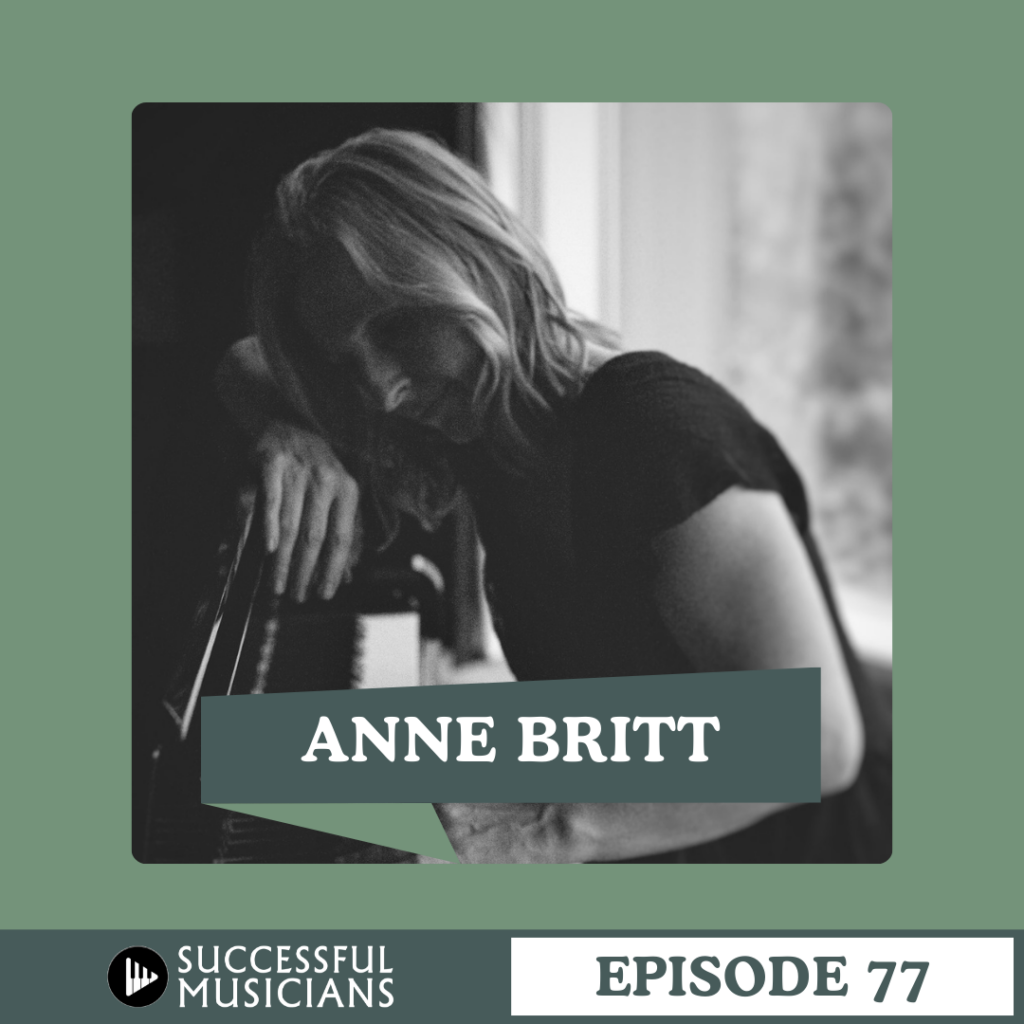
Successful Musician Podcast Episode 77
Interviewee: Anne Britt
Interviewer: Jason Tonioli
Jason Tonioli
Well, welcome to the podcast today. My name is Jason Tonioli, and my special guest today is Anne Britt. Anne and I are very similar in a lot of ways where Anne has more than a dozen piano books that she sells and they’re fantastic. And she’s done several album recordings and that are a lot of piano type stuff. But I know Anne, you’ve done a lot of piano duet books as well, which has been, I think there’s a special spot for those types of people as well. It’s hard to do piano duets well, I think you’ve done it. Just your music in general is fantastic. So, I’m excited to have you today. And you were also part of the Hymn Sampler book that we did, both the Hymn Sampler books that we just barely released, which have been super well received. I’ve kind of been blown away with how many of those… I think we’ve hit a thousand sales now of that book within just a few short weeks of launching that. I think I’m to run out of books actually. So, congratulations. it’s probably because your music’s so good.
Anne Britt
Awesome. I’m in good company for sure.
Jason Tonioli
That project actually, what happened with that one for anybody who’s listening to this, we had put a request out for people to share a piano solo and we were going to basically do a Costco or Sam’s club sampler of everybody’s song and I had more than 50 people send in really great piano arrangements and Anne’s was one of those that made the cut and was in one of the books and we had so many great people that shared songs that we ended up doing two of them and it’s been it’s been so fun I think we’ve got 23 artists that are in in those books and anyway definitely something worth checking out. Anne thank you for being here I’m excited to chat with you and share your story with the with the world here
Anne Britt
Yeah, thank you for having me.
Jason Tonioli
So, Anne, let’s kind of start. So, this is the successful musicians podcast and you’ve, anybody who does even one book I consider successful because that’s a lot of work, but you’ve done close to 15 books or so I think now. So, let’s rewind all the way back to the beginning. When you started music and I mean, tell us a little bit about growing up and did you always think, I want to be a piano artist and share sheet music with people or just recordings with people.
Anne Britt
Okay, all right. So, well as the child of two pianists I mean music was really kind of part of me from the beginning. My mom got me started in piano at a young age and I’d love to play as much as I could. From the age of 10 or 11, I could play for primary. I was playing for our word choir and play for school choirs and did a couple of high school music competitions. When I went to BYU, I ended up getting my bachelor’s degree in math. But I stayed active with piano on the side. Then, in the middle of raising a family, I discovered that I really enjoyed being involved in musical theater as well, in the pit, not on the stage. And as my kids got into middle school and high school, I started playing for their school plays and their choirs.
And now I’m a collaborative pianist, a staff accompanist at one of the local universities. Music isn’t a side thing for me anymore. And then as far as composing goes, it was through a 2007 high school production of Guys and Dolls that I became friends with Dana Libonati. He was the high school jazz choir director and a college music professor. When I asked him how can I learn more about music theory? Because that’s something I hadn’t really studied much. He generously offered to give me some lessons and assignments that I could do at home at my own pace. In my whole life, I had never felt like I had the creativity to actually compose music. But with his encouragement and the composition assignments that he gave me as part of that; he proved me wrong. And then two years later, I had written enough pieces that I could put together a little CD and songbook for my family. I started my own website. And then as I got more comfortable with finding my own voice in doing him arrangements, getting some positive feedback from other pianists and encouragement to try and get those out there in music stores. I looked at what other successful LDS arrangers were doing, reached out to some of them for some advice. One of those was this guy with a kind of a weird last name. It sounds like some sort of pasta, Tonioli. Anyway, yeah, you were so helpful and gave me some great advice, some contacts to get in touch with music stores and I’ve always really appreciated that kindness and support that I felt from you and others in the LDS music community. I always try to pay that forward as much as I can whenever I get a chance.
Jason Tonioli
Awesome. Well, I didn’t even realize that that was one of the reasons you’ve done that. That’s, that’s super cool. Awesome. So, you talked, you mentioned that you didn’t think you could do it. And, and I think that’s a symptom that a lot of people have is they don’t feel like they’re capable or they don’t know how to, you don’t know what you don’t know, but a lot of people are like, I could never write music or record music or even make it into a career. If you could go back and talk to yourself, even back when you were in school, what advice would you have for yourself, that you wish you could have maybe had given to you a little bit sooner in life to help you believe in yourself.
Anne Britt
Yeah, well, someone who ended up being mostly self-taught, I would encourage my younger self to find a teacher or a mentor, someone who could help me learn more about the things that don’t come naturally to me like improvisation skills, reading from chord charts, those things are not my strengths. And to start learning music theory and composition at a younger age instead of waiting until I was in my 30s. Sometimes I wonder what my journey would have been like if I had opened those doors earlier in life instead of writing off music as a hobby and getting a degree in math.
Jason Tonioli
Did you end up teaching school and math, or you just do music because of the math?
Anne Britt
No, I never wanted to be a teacher. I don’t like being up in front of people. That’s not me. But I loved math. I like computer programming, that kind of stuff. I’m a tech person too. But I don’t know, it resonated with me and I thought, well, I don’t know if I’ll end up needing to use it in a career, but I did, it did get me a job in an accounting department of a tortilla factory when I needed to go out and get a job. So, and then just having a degree is a plus. But yeah, I’m not doing a whole lot of math-y kind of stuff right now other than rhythmic stuff.
Jason Tonioli
Well, once you started believing in yourself, if you just look back on some of those inspirations you had and desires that you probably had some sort of nudge or urge to start doing, recording or writing some songs out. What was it that made you really want to do that? I mean, did you have kind of spirit nudged you to do it or somebody yell at you and say, yeah, and you’re so good. You need to do this. What are you doing? Why aren’t you doing this?
Anne Britt
Well, you know, probably both, yeah, other people saying, you should, that’s good enough. You should get it out there more. Cause I’m, I would be more just happy. Like I want to have it for myself because I like to play what I like to play. What’s fun. And I’ve always was on the look for new music and being able to, Ooh, I can create my own music that I like too. But it’s been fun to be able to connect with other people and broaden that world.
Jason Tonioli
Yeah. I think, you know, as I look at my trajectory, I had some great piano teachers myself, but I was kind of classically trained and just taught to play, play the music that was written. And I was kind of a on reaching teenager at times and, didn’t practice near as much as I should have, but nobody ever told me what a chord sheet was. Like that was just foreign language. I didn’t even know that existed, until all of a sudden, I found this like fake book. Somebody says, oh, you don’t have a fake book. I’m like, fake book, what’s a fake book? Is it a real book? And you know, it has the chords and the melody line. I had a good ear, but I think having teachers today are a lot better at kind of bridging the gap and helping kids learn to play by ear, it’s become a thing. Thanks to YouTube and all of the resources there are, but I think, you go back 20, 25 years and chord sheets were not even… Like a lot of their old guard piano teachers that existed out there didn’t even know what a fake book or a court sheet was. They had their Mozart go tos, Beethoven and just everybody played through the same, you know, 20 songs as they came up the line through piano lessons, right?
Anne Britt
Yeah, yeah, there’s so much more out there now. Well, and what I do, my collaborative piano side is, you I don’t need to do the chord charts and that. I’m learning what’s on the page and there’s a lot of it to learn. But every once in a while, like in a situation where she’s like, that would be a nice skill to have.
Jason Tonioli
Oh yeah. But I think my big takeaway, and I love hearing this from you, I mean, you’ve done a lot of books and for anybody who’s listening that doesn’t feel like they know the theory or they don’t know how to write music, that’s no excuse for, if you’ve got ideas in your head, there’s no excuse to not sit down and try and work at it.
Anne Britt
Exactly, yeah, it doesn’t have to limit you.
Jason Tonioli
Right. And I, and you probably can confirm this, but I mean, the first time I started right now music or trying to do sheet music to something, I can still remember sitting with a tape recorder. Those old tape recorders. And it was a Boyz II Men song that we wanted to do for choir in high school. And I would hit rewind and hit play and rewind and play. And like, there was no notation software that even existed at the time where I’m scribbling down a manuscript paper, and it was so tedious. I hated it. It was so hard to do. But you just struggle through and it gets a little bit easier the next time and a little bit easier, a little faster. By the time you do 100 of them, you’re almost good enough or feel like you maybe can do it. But it just takes a lot of repetition. I’m sure you feel the same way. It’s not easy ever. It still isn’t easy. Probably to this day for you.
Anne Britt
No, and there’s always the challenge too. It’s like you don’t want to be in a rut and everything sound the same. So how can I bring something new to this piece, right?
Jason Tonioli
Actually, speaking of that rut, the Hymn Sampler book that we did, have you had a chance to play through that book yet?
Anne Britt
I played through the one, yeah, then I’m in.
Jason Tonioli
Okay. mean, it’s been fun. mean, there’s so many styles in there where, mean, some of them are very kind of easy to play through. And then there’s some where it’s just got a little bit of jazzy kind of rub in them, which it’s just been really fun to just see some different takes. There’s even a song in the book that I can’t play myself. I probably won’t ever be able to play it. I’m just like, this is way too hard for me. I’m not rock Mononauth Ninja style anymore. And so, yeah, but, awesome.
Well, so.as you’ve done all of these books and you’ve kind of grown, I mean, it’s taken you several years to do it, obviously, but as you look back on success now, I mean, what do you look at when you hear successful musicians to you now with where you evolved into today, what would you call a successful musician?
Anne Britt
That’s a good question. Well, so 12:52 music is a language. So, like with any language, I think being successful with it means being able to communicate effectively. Sometimes that’s just being able to express our own thoughts and feelings through our instrument, even just at home by yourself with nobody else listening. And sometimes it’s being able to use music to hear what God wants to communicate with us. As a performer, it’s being able to communicate with your listeners. And as an arranger, it’s being able to take a melody or an idea that somebody else has come up with and add our own thoughts and ideas to it and then hand that off to another musician to present it to an audience with their interpretation. And I love being part of that collaborative form of musical communication because it really spans time and distance. I think that’s so cool.
Jason Tonioli
I think connecting with that audience and just what you’re talking about is, is there any time in particular that you’re like, man, that was, if like just really touched you or that it was really special type of thing that you’ve had with your music. Maybe it was somebody reached out and said, you know, hey, thank you. Your music helped me. Or, you know, is there some performance you’ve done that you just, you just remember because it was so special.
Anne Britt
Yeah, I mean, I get people get in touch with me every once in a while, to say, we used music for this and it’s always fun to hear that. I love that. There was one time I remember there was someone reached out to me because it was a prospective missionary and he really wanted both of his piano playing grandmas to play a particular song at his mission farewell. And they couldn’t find a duet arrangement of it out there. So, I was able to write a piano to an arrangement that they were able to use, and it was really amazing to be able to help make that happen for him. So just one example.
Jason Tonioli
Hopefully they snuck you a video or an audio recording of it.
Anne Britt
I didn’t get that one, but I have had people share videos. Sometimes when people ask, can we use this for this performance or this live stream? It’s like, yeah, but send me a video too, because I always like to see. It doesn’t matter if it’s perfect or not, I just love it.
Jason Tonioli
Well, totally. One of my favorite things is when people will record themselves playing my songs and putting them on YouTube. It’s so cool. Like it can be a total train wreck and it’s, but it’s just cool to see that they’re that one person liked your stuff enough that they…I mean, I’ve had some people that do some really great arrangements of my stuff too, but, I think my favorite are like the little kids even that just, I mean, it doesn’t sound great, but it’s so fun to see them trying.
Anne Britt
Yeah, it is. Yeah. I had a guy ask, can I, he likes to do orchestration. So, he’s like, I really like your arrangement of America the Beautiful. And he asked if he could put some orchestration to it. And he sent me, sent me a link to that after he finished. It was really fun.
Jason Tonioli
Yeah. And stuff like that. think even that one moment to know you helped somebody with your music to me, think is that’s success. It’s successful if you, if you can play and enjoy it yourself. But I, I think there’s like that next, it’s almost like the next level of the video game when you’re willing to share your, your recording, your song, whatever it is with somebody else. Cause it’s, it’s a very vulnerable type of thing. And I think that’s probably what holds a lot of people back with their music is they’re kind of those closet guitar player, piano player people, they, you I only play at home and I think it takes, it takes some bravery to kind of put, especially when it’s your own arrangement or song out there. It’s scary. I think that first one is always the hardest and it gets a little bit easier each time, but it’s…
Anne Britt
Yeah, you have to get used to everyone’s smile. You get a thumbs down on one of your songs. It’s like, okay, it’s not everybody has to love everything.
Jason Tonioli
Well, and you know what, if there’s, there’s probably, hopefully somebody does give you a thumbs down, but don’t pay attention. It’s like, so what it’s like, it always makes me laugh with social media when people, I mean, you get the Karen’s out there that want to just be grumpy and tell you your music stinks. And I just want to like turn around and tell people like, well, are you doing this? Did, were you willing to put one of your songs out there? You know, even, even if it was bad, at least you did it versus just being the person that wants to criticize or put somebody down, right?
So anyway, I’m just curious, what projects have you got in the future that are kind of what’s on your radar at the moment? And we’re getting kind of close on time here. But what have you got exciting things that are coming from and where should people go check out what you that you have done?
Anne Britt
Well, let’s see. I’m always doing piano duet arrangements because they’re just fun and I like to play piano duets now that I have a good piano duet partner. So, I’ve done a few songbooks of piano duets and, but I keep adding more like Christmas ones and Easter ones. And so probably the next one to come out will be another holiday collection of piano duets that will hit Easter and some patriotic ones and Christmas. So, kind like the holiday sampler with a few different holidays in there. Yeah, so that’s like it.
Jason Tonioli
So those piano duets, I’m just curious what level of piano is it? mean, is intermediate, more advanced level?
Anne Britt
I’ve done most of them in the intermediate, a few late intermediate. I did a couple that were more in the early intermediate side, the easier collections. Some people are like, I love your music, but it’s a little bit hard. You can still make it accessible and fun to play. And I enjoy playing those ones too. And then as far as how to find me, my website, AnneBrittMusic.com, all my stuff is on there. I’m on Facebook. I’m not great at posting a lot of social media stuff, but I have a husband who is really good at social media. And he’s hilarious and he’s a good photographer. So, I make sure he tags me and stuff about our lives. And then you can listen to a lot of my music too on the streaming platforms and look me up on YouTube. I got a channel on there too.
Jason Tonioli
Awesome. And it, and I’m just telling you, it’s, it’s really good. Like if you like piano music, you really should go whatever, when you get off this podcast, go look up Anne Britt and just say, Siri or Alexa play Anne Britt music for me. You’ll, you’ll find some really, there’s some great arrangements there. So, yeah. Well, Anne, thank you so much for sharing. This is, this has been fun. I’m excited to kind of share this with people. It’s fun to meet other piano players and just kind of, mean, a lot of times I’m not interviewing piano people on here, so I feel like I’ve got my people now.
Anne Britt
Yeah, yeah, no, I love that you put this project together to bring us all together. It’s great.
Jason Tonioli
It’s been fun. awesome. Well, thanks so much and look forward to sharing more on the next podcast. Thanks so much, guys.
Anne Britt
Okay, thanks Jason.