
Jason Tonioli
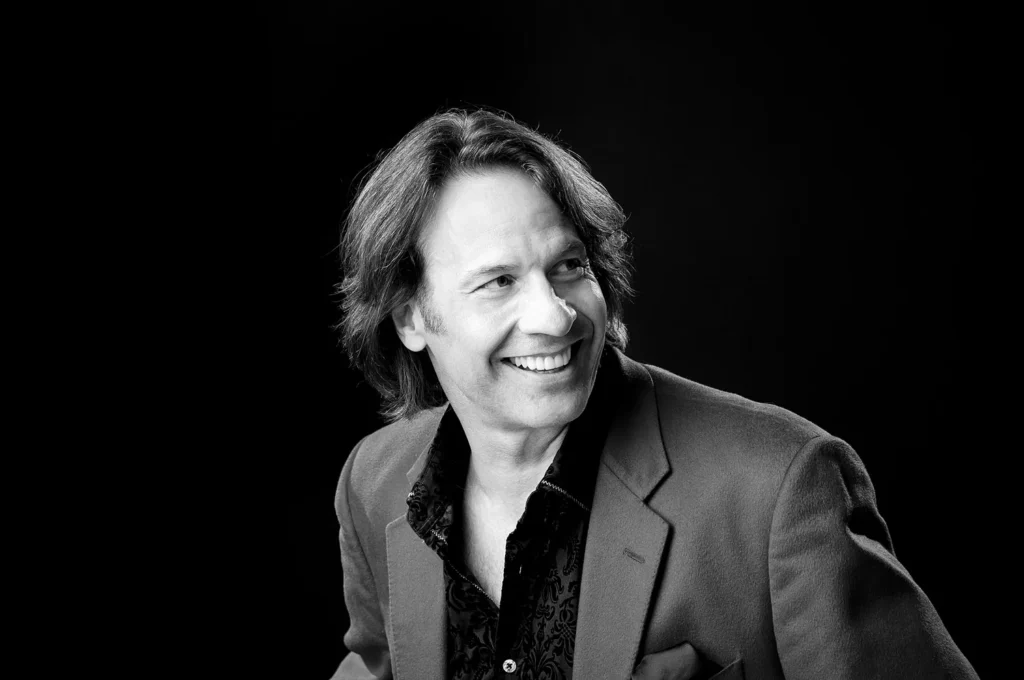
Welcome to podcast today. My special guest is Kurt Bestor, a long time person I have looked up to as a friend. Kurt is one of those almost Renaissance man-type of people that has been doing this music thing forever. I remember going to your concerts back when I was in high school and junior high. And now, over the years, I don’t even know how to introduce you, but I mean, you’ve got a Grammy and all kinds of award stuff on there and full collaboration you can.
Kurt Bestor
I like Renaissance, man. I mean, I’ve been around since the Renaissance, so I guess that works.
Jason Tonioli
Right? Kurt, you’re an innovator. And the funny thing is the very first time I ran across your music was your innovators CD. That’s going to date both of us.
Kurt Bestor
Well that’s 93, but I did my first album in 87.
Jason Tonioli
Anyway, welcome to the show. I am excited. One of the reasons I am doing what I’m doing today is because of your time spent back in the 90s to share with some younger people like myself. I attended a kind of an event you were doing. I think there were maybe a dozen people in the room and you talked about writing music and I can still remember you sharing the story about your mom telling you to play at sunrise and literally that story is one of those things that made me start writing music.
Kurt Bestor
Well, it made me start writing music when she told me that story. Jason, I’m glad that you’ve continued on. You didn’t have any hair back then either. So, you know, looks like we’ve both been able to. It’s a cheap trick. Being a musician has all kinds of travails, but it also has some incredible blessings for lack of a better word that I don’t regret choosing my career. I’ve done it now for over four decades. So yeah, there’s a lot to talk about. I’ll let you kind of just ask me what you think you want to know or what other people want to know. I’ve got things to say.
Jason Tonioli
Well, let’s go all the way back to you as a kid. I’m thinking if we go back to when you’re sitting at the piano with your mom telling you to play a sunrise, now, kind of talk about how you ended up where you are today. Just give us that whole story arc.
Kurt Bestor
My mom has that story and I’ve told that story many times. For people who haven’t heard the story, I was really a chronic piano practicer. I hated practicing piano. To this day, I don’t trust people that like to practice piano. I think they’re weird. But I didn’t want to play and I was gonna quit. I was gonna quit piano, but my mom said, Kurt, put your music away. I said, what? I get to quit? No, no. I want you to just play me a sunrise. She had seen me sit down on the piano like probably you did and other musicians. We just like to sit down and fiddle around. And she could see that that was something that got me excited.
And so she said, just play me, play me what you think a sunrise sounds like. And after I kind of thought about it for a minute, I just played something and it probably wasn’t great to be honest. But in my mind, I thought, wow. It’s okay to be a composer. It’s okay. I don’t like practicing Bach and Beethoven, but I certainly like composing besters. So that was the story from my mom’s side.
Now my dad was actually genetically musical. His dad played trumpet in a big band back in the 1930s and 40s. My dad played trumpet and was a very good singer, trumpet player, did a little bit of arranging for barbershop quartets, believe it or not.
When you combine my dad, who was also a coach, he was an athletic coach, and so he was the one that kind of cracked the whip, and then you’ve got my mom who’s saying, play a sunrise, put those two together, then nobody talked me out of it. That was the other thing. They let me just play a sunrise. My dad wanted me to practice and pick up trumpet later on, but nobody said, you know, you probably ought to think about getting an accounting job so you don’t starve to death. Nobody ever told me that.
I don’t know, maybe they should have, but no, I’m glad they didn’t. As I grew up and I went to school, and I’m sure a lot of people listening can identify with this, that’s kind of how I got attention. I would sit down and play piano and I could see the girls kind of liked it and the teacher thought it was cool that I played piano in class. So oftentimes the teacher, I remember in sixth grade, the teacher would say, all right, everybody pull out your books. We’ll get Kurt to play some music while everybody kind of settles down and relaxes. So that was one of my first gigs. It didn’t get me any money, but it probably got me an A.
So that really is how I got into it, genetically. And then I had very creative parents that could see that I had a little something extra. I don’t like the word that people use to describe people who are talented. Certainly we never want to use the term genius, but some people have a little natural ability. I think anybody can learn to play piano. Anybody can learn to write music. But there are certain people that have a little something, just like a quarterback or anybody. I think I kinda had that based on what my mom and dad say. so, put that all in a pot and cook it up and you got a composer.
Jason Tonioli
Well, as you were growing up there, when did you start like putting music down on paper or thinking, I can sell this or was it doing gigs that you did? What was it that kind of got you from being a teenager to, my gosh, I can make money.
Kurt Bestor
Well, the first song that I ever wrote down on paper was a song for a girl in seventh grade. Her name was Nancy and I wrote a song and I put it down on music paper. I’ve got it somewhere. I have to remember where it is. But I called it Pasantino. But that was the name of the music paper. Down at the bottom it said Pasantino and I know that sounds like kind of an Andante or some sort of name. So I just called it that and then I gave it to Nancy.
She didn’t respond the way that I thought. I thought that I would be just this amazing thing, but I think it scared her a little bit. All the other boys were pulling her pigtails and I was writing her a song. That was seventh grade and I got the flags wrong and backwards. I really started writing music down more seriously in high school where I would write for the jazz band. I remember writing a song called, it’s a jazz tune, kind of a funky jazz tune. One of them was called Funkin’ Wagnals. And then I wrote another one called To All Beef Patty Special Sauce Lettuce Cheese Picking Bunions on a Sesame Seed Bun or something like it was the McDonald’s. I just thought that’d be a cool title. But then I also wrote a song called Genesis for my high school band. And they played it in competition. And I kind of realized at the time that not a lot of high school kids were doing that. And I was getting experienced. I mean…
I don’t know how long it took me and today I could probably do it in a couple of days but back then I think it took me a long time but I wrote it down by hand. There wasn’t engraving software. It was all pencil and paper and I wrote it down and wrote all the parts out, handed it to everybody and they played it. So kudos to my band teacher. It starts with my mom telling me to play sunrise, then the girl and then the band teacher. So my whole story is full of people like that, that kind of shepherded me to the next step. And I mean, there’s something to be said there, I guess.
Jason Tonioli
That’s so interesting. I look back and I had the piano teacher and the mom. In my senior year of high school, I’d been writing a little bit of stuff as well. And they had an AP music class and it was the first time anybody had to explain chords like one, four or five. And one of the assignments was to go into like a hymn book and just write out the chords. And I had just had this mind blowing, my gosh, why did I not know this before? It’s just me trying to listen and…
Kurt Bestor
I have to say, I probably followed the same path. I did take music AP my senior year of high school, but I never really liked the technical side of music. That didn’t resonate with me except as it’s usable to put down what I have in my head on paper. I’ve never really loved theory like that. I just like the art of music learning, I had to write things down. We’ll get into technology as we go on, but in those days, it was tough. You had to write it down. It took a long time to write it down on paper. It was really tedious. I did a whole film score in 1987, 86, that everything was written out. There was no synthesized, well, they had synthesized, but I couldn’t do an orchestra. So I had to, you know, hire a little orchestra in the studio. Technology has been great. And it certainly allows us to get our art down a lot faster than it used to. But I’m older than you are, but you still probably remember those early days when it was a little more difficult to write stuff down.
Jason Tonioli
I can still remember in high school, I mean, this would have been 95, 96, 97 when I was in high school. And it was a big deal that they’d gotten a computer in the music department that had Finale on it. it was the old Windows 3.1 you’d click and nobody could figure out how to use it, but they were excited that they’d spent money on a license to be able to allow somebody to do it. I really don’t think anybody ever did use it, but yeah.
Kurt Bestor
Well, I’ve been using Finale since the first day, pretty much the first month it was out. And it started off with a Mac Classic. You know, I’ve been a Macintosh guy all these years, but it started off with a Mac Classic, Mac SE, super slow. And of course now I’m, I want a new computer, but it’s pretty speedy. So yeah, that gets me up to high school. And up to that point, music had been kind of this attention getter for me. It was a passion. I loved it. I listened to lots of different music. I really didn’t listen to a lot of rock music in those days. I listened to funk. I listened to jazz. I listened to classical music, loved piano music, and Baroque style music. I didn’t listen to a lot of pop music. I don’t know why that just didn’t.
I like it now, but at the time I really didn’t listen to it. But music was kind of, it was just kind of in my life. It was who I was in high school, my senior year. All but one of my classes was a music class. I took jazz band, acapella, symphonic orchestra, symphonic band, chamber choir, and English.
The next step, if you’ll allow me to continue. The next step for me was I got an opportunity. Now I’m out of high school. I’m going to Brigham Young University where I was attending on a music scholarship, playing trumpet. And I got called to write music for a jingle library, big, huge, jingles. I don’t have people to use that term anymore, but music for advertising. And I was with my friend and fellow composer, Sam Cardon, that some of your viewers will know, and he and I got asked to write hundreds of songs.
So I dropped out of college to do that. Hold on to the college thought, back up to my junior year of high school. I’m at Orem High School. My student teacher was a guy named Kenny Hodges and Kenny was a percussionist for the Osmonds. The Osmonds had a show down there and I was a trumpet player. He was my student teacher and one day he said, hey Kurt, our trumpet player got sick. Would you come and play trumpet in the recording studio? And I said, when is it? He says, well, it’s like 11 o’clock during the night. Well, I got to school. He said, Kurt, it’s 40 bucks an hour. I said, okay. I’ll cut class.
So I went and played a recording studio with guys from Los Angeles, arrangers from there who had come to Provo where they had a studio, and I was recording music. I was in heaven. I mean, I thought I’d never really been in a recording studio. Not just a recording studio, this amazing recording studio with a SSL board, an engineer from LA. These players were great. I was frightened, but I was able to play the third trumpet. And after that, they called me a couple of times whenever they needed a third trumpet player.
Then one day Kenny said, hey Kurt, you I know you write some music. Have you ever arranged music? So, well, what does that mean? He goes, well, you take a song and you kind of do it your way. What he really meant was, can you arrange some music for the Donnie Marie Show? And he said, “Dick Van Dyke’s coming in. Would you be able to arrange a little one and half minute song for Big Band for Dick Van Dyke?” I mean, this stuff doesn’t happen in one’s life every day.
Jason Tonioli
You’re some nobody high school kid that you’re like you don’t even know that’s a big deal probably at that point right?
Kurt Bestor
It was a big deal. But I will say I had some fetal position moments as I never wrote music for a big deal like that. And now I’m writing for alto sax, tenor sax, bari sax, what’s the transpositions, you know, I was, and then chords, I kinda knew chords, but nothing like a, you know, C, Ogg, seven or something. I just maybe knew C major seven, but anyway, I got it done. It got recorded, sounded great. I must probably listen to it a hundred times. It was just some dumb little song that Dick Van Dyke sang on the show.
So that’s high school. And that right there was the moment I knew I was gonna do something in music. At the very same time, Jason, I watched the movie Jaws. It was my junior year in high school, and suddenly I’m listening to the music and I’m hearing bum bum, bum bum, bum bum, and I’m thinking, man, somebody made music for right two notes. It was more than that.
That’s when I got introduced to John Williams, his music. I realized there was a job called film composing. So all of these things came crashing into my life at the same time. And I just thought, man, this is what I want to do. This is what I want to do. So that gets you up to high school. And then when I was in college, I’m taking the classes. And it was fine. I didn’t really enjoy theory. Orchestration was interesting, but the way they did it in those days was a little like I had learned a lot more about orchestration doing that song for Dick Van Dyke than I did going back and studying the history of the crumb horn and all this. I think college was great, but I was on that fast track.
Anyway, when I was in college, now we go back to the story. I was asked to write hundreds of jingles that could be used in a music production library. And so I left school and I did that and that was arranging, composing on crack for a whole year. I did nothing but that. I didn’t have a diploma. I got that later. Be what you’ve called and said, hey, we want to give you a diploma. What do you need to do? And I said, well, now I’m a professional. Can you just waive that class? So don’t tell anybody, but they waived it.
Okay, I got a diploma now. Anyway, Jason, so I’ll stop and see if they have any questions up to that point. But that kind of gets you from earlier days till when I started professionally.
Jason Tonioli
You’ve kind of lived through the evolution of film scoring where almost nobody could do it because there weren’t the tools up until now where we’ve got AI and seems to think it can, I and it’s pretty amazing. mean, we’ve kind of gone this whole gamut of, they’re all the in-between. I’m curious, as you look back, if you were sitting in that, if you were a 20 year old now, sitting at a college class, and could give yourself advice if you were living in today’s world, what would you kind of coach yourself along or tell yourself?
Kurt Bestor
Well, I would say don’t be afraid of technology. Don’t be afraid that there’s not going to be a job. Don’t be afraid that a computer is going to write music. You brought up AI, and that’s everybody’s topic of conversation these days. I look at AI, and I’ve used it for different things. But to me, it’s just making me create faster. It’s taking the tedium out of some tasks. I always think to myself, what do humans have over computers? And I already gave you the answer. We’re human. The human experience of enjoying it, the human experience of sitting there writing music and going, wow, that mistake I just made, that’s cool, I’m gonna leave it in there. The human experience of going to a concert and reacting to music, I don’t care what a computer can do in eight with AI, it won’t be going to the concert and enjoying it. So it’s the human making of music. It’s changing, but it changed when we went to the computer writing music. It changed when we started engraving music instead of using pencil and paper. It’s a pretty big change, but I just look at AI.
So anyway, don’t be afraid, just adapt. There will always be a place for human beings in the human creation of music. That’s not really a lesson, that’s more like a little thing you put, that’s a mantra. Don’t be afraid. The other thing, Jason, the other thing, sorry, I get excited when I have these things blast in my mind. I told you the story of my first writing experience being for Dick Van Dyke. Had I thought to myself, I don’t think I’m ready yet. I don’t think I’ve learned enough yet. I don’t have a business card. I just said yes and figured it out later. I know you live by that principle because I’ve seen how you work. You figure a lot of stuff after you’ve already said yes, but that’s what I would say. Just be confident enough to be an opportunist, say, sure I can score your film and then figure out how to do it. It’s scary, but like I said, don’t be afraid.
Jason Tonioli
And I think the other thing is a lot of people look and say, well, I got to do this film score, but I got to be at John Williams level. The thing is, no matter how good you are, you’re not going to have 50 years of experience doing that. And to expect yourself to do that, but just trying and putting in the work and trying to be as good as John Williams is going to push you to levels you didn’t realize you even had capacity to do.
Kurt Bestor
There’s always somebody better. I mean, even John Williams probably looks up to some of the greats in history. And I still look at John Williams, he’s still writing music. He’s in a wheelchair now, which just happened in the last six months or so. But he’s still writing music and he’s 93. And I still look up to somebody like him. So be teachable. In other words, don’t think you have reached a place where you’re done. Well, I know everything there is to know. There’s always something. And even if you know how to write for every instrument and you know everything there is about technology, you can still be a better you. And I think that’s the other thing I love about music is, you’re never done learning. So be inquisitive and you know, don’t be afraid of just being better. There is something that’s, I don’t know who taught me this, but in the book that you and I are doing, we’ll talk about that later, the music book that I’m a part of with all the other composers.
You asked me for a tune and I chose something that goes way back to 1987. Now most people would go, wow, aren’t you a lot better now? I’m probably, but I’m not embarrassed by that piece. But I do a song and then I move on to the next song. I don’t go and spend all my time reworking a song and reworking it because I’m better and reworking it because I’m better. Even a song like Prayer of the Children was written 30 years ago, I could probably do something that would be a little easier for the voice in some regards or maybe better for choir, but you know, I did it, leave it alone and move on to the next piece. That’s something that I think would be good advice.
Jason Tonioli
Yeah, that’s great advice. So let’s kind of go back again to you finishing up with college. You’ve been doing a Christmas concert for, I don’t even know how many years, you may not even, how many years?
Kurt Bestor
38 years.
Jason Tonioli
38 years of a Christmas concert that’s a big deal. You’re spending, you know, what most people would consider a small fortune putting on just the most incredible concert…
Kurt Bestor
I didn’t think that I would be doing a Christmas concert. That wasn’t my plan. And I think another piece of advice I would give to somebody is to be adaptive. I don’t do a lot of film composing anymore. At one spot of time, I thought that’s all I was going to do. But then when everybody started doing it and the price went down because people could do it on their computers. It kind of lost its luster for me. Even John Williams the other day said, and I know it’s going to shock everybody, he said, you know, I’d never really considered film music, great classical music. It’s for a film. And I think everybody kind of went, my gosh, because film composers would like to think that, yes, well, someday we’ll be the next Mozart. John Williams, and I’m not saying he’s right, but that’s his opinion.
I did an album. Christmas album and I did that album in 1987 when I wrote it, 1988 it came out. I did Christmas because nobody knew who I was. So I did the Christmas concert because I thought well people love Christmas music. At the time there wasn’t a Christmas place in the music store. There wasn’t a website to go find Christmas music. There was Mannheim Steamroller, who I liked, and then there were all these singers like Johnny Mathis and different people that had Christmas albums. The Osmonds, I don’t know if they had, yeah, I think they may have done their Christmas album. But there wasn’t a big, huge thing of Christmas music. But I thought, I like Christmas music. So I did this album and then somebody told me, well, you gotta do a concert. You gotta do a concert to promote your album.
Okay, well, why don’t we just book a Abravanel Hall? Which was pretty gutsy, probably stupid actually. But I don’t know, it set me up to dream a little bigger. And that was the first concert. I did it with Sam Cardon and Mike Dowdle. It wasn’t a Kurt Bestor Christmas that first year, little known fact. It was an Airus Christmas, which was the name of my first album. But those two guys shared a concert with me.
And then the next year, I think Sam dropped out, Mike still was there. And then the year after that, I just kept doing it and then hired Mike as my guitar player and he still plays at my concerts. But it’s a lot harder now. There’s wall to wall y’all in the Christmas music world. But yeah, that’s how it started. And I was an opportunist for 38 years, long time.
Jason Tonioli
I don’t know which year I ended up going to my first concert. I honestly think one of the very first big concerts I went to was with my mom going to watch your show at Abravanel. And I still remember you had this weird digital thing that connected to a keyboard and you’d sing into the mic and sing your prayer to the children. I mean, it was just one of those cool new technology things that nobody had seen with music and all of sudden, wow, I want one of those and you probably sold more digital pianos for Yamaha than everybody else than you realized.
Kurt Bestor
They never gave me one but I think you’re right. Yeah, it’s you know technology has always been a part of my world to be honest. It’s something that helped me. I bought that machine before I wrote Prayer of the Children and messing around with it is kind of what playing around with the machine is kind of what got me thinking of the song Prayer of the Children because I could hear my voice. I was singing these multiple notes. It’s a bow quarter technology and so I just, I didn’t even have words. I was just kind of messing around with this little kind of Celtic Gregorian chant thing. And then in the other room, CNN was talking about this war that had broken out in the Balkans. And so then I started writing the song about the children and it rose pretty quick. But technology is very good to inspire creativity.
Jason Tonioli
With those concerts, I think, for somebody to even do 10 years in a row of a concert, I think as you look at, know, and evaluate what you’ve done over the years, a lot of the connection that people make. One, it’s a tradition that people have come to, but I think for any musician out there, the storytelling aspect is absolutely critical. And I still remember, you know, in the several shows I’ve been to over the years from you and others who are really good at what they do. They tell the story behind their song or there’s a meaning behind it. Like your prayer to the children you were sharing, there’s something behind that. And yes, it’s nice to listen to a really cool song, but all of a sudden when you can understand how it came about or where it came from, it now emotionally hooks.
Kurt Bestor
It’s my style. I was listening to Andrea Bocelli. He doesn’t say anything in his concerts. He stands up and sings one song, then sings another song. He might say something briefly one time or two times in a concert, but it works for him. I started talking in my concerts, because as you can tell, I’m kind of a blabbermouth anyway, but also I was writing instrumental music and I wanted people to know, I wanted to paint the story for them so that they would know. I remember the very first one I ever did, was bringing towards Jeanette Isabella and it was all about going down on a toboggan in Wisconsin. And when you say that to people, then suddenly when they hear the song, they go, I can feel it. Yeah, I can tell. That connects them to the music in a way that if I just played it, they might like it, but they wouldn’t connect. We wouldn’t meet at that place where the story takes you.
Jason Tonioli
It’s funny, my wife and I have differing opinions on going to concerts. She’s one that just wants the artist to get up there and play the song and don’t tell me anything, don’t talk. And I’m the same way. I love to share the story behind it. And hey, this composer in 1600 was thinking this thing or this person had just lost their son to World War I. To me, it just makes you feel the music different. And I don’t know, I think that’s so important. I think that’s one of the reasons. You look at Taylor Swift and I think that’s
Honestly, of the reasons she’s been, I mean, she’s amazing, but she tells stories.
Kurt Bestor
Yeah. Yeah, it’s, I’m not saying that my style is right for everybody. There may be people who go, wow, man, Bester talks a lot. But I’ve also heard from people that like to come to my concerts, they say, don’t, you know, you’re kind of funny, you’re kind of, you’re self-deprecating. We feel like we’re in your front room, which is exactly what I want them to feel.
Jason Tonioli
And I think from a fan base for any artist out there, whether you’re young, old, I think having those fans that feel like they’re connected to you and that feel like they are in your living room and that they know Kurt well enough that they’re sitting on his couch and he’s just playing him a song. That’s what gets people to stick around long term.
Kurt Bestor
I think that, you know, being a musician on stage, you can get this even if you’re not on stage, but especially when you’re on stage and you’re playing something that you wrote that’s very special to you. It’s very vulnerable. Then you wonder whether people will like it. It’s a vulnerable place to be. So if I can make people feel comfortable, it makes me feel comfortable. I can trust the audience. They trust me. And it’s a much more friendly music experience.
I always enjoyed classical conductors when they would turn around once in a while and say something about a piece, that’s like a, that’s a no-no. Your conductors aren’t supposed to talk. Well, Bernstein did, and I think that’s one of the reasons why people related to him.
Jason Tonioli
Well, and I look even at myself as a young person in the audience when somebody explains, hey, there’s this flugelhorn or listen to the second, you know, these violins are going to do this really cool thing or, know, there’s some weird, I still remember one of your Christmas shows, you had these, bells, like tube bells thing that people were playing to start the concert. I like as a musician, I’m like, my gosh, that’s so cool. Just, you know, to, you know, going into it. It’s almost like you’re able to teach. And when you learn what’s happening in music, you appreciate it and you enjoy it.
Kurt Bestor
Well live concerts are, and first of all I’m one of the few guys left in the world that plays a totally live concert. There’s no click track, there’s nothing on tape. I’m just playing music with, and going faster, slower each night. So for me, you come to a concert, maybe you’re looking at my drummer. Maybe you’re looking at my percussion guy, because he’s got a lot of stuff. Maybe you’re looking at Darren Bradford, he’s playing all these instruments. Maybe you’re looking at Mike Dowdle and thinking, man what a cool set of guitars he has. It’s a visual experience, it’s an audio experience, it’s looking around and seeing other people kind of respond to the music. It’s live music and I think that now especially, nobody’s making money selling, well you know you can, but nobody’s making tons of money selling audio. Unless you’re Taylor Swift or somebody like that. But people are making money playing live.
It cycles. When I was growing up, the concerts weren’t very expensive because they wanted you to buy the CD or the LP. Then it changed around until now because of Spotify and streaming. They can just listen to anything on YouTube or wherever, but they can only come to a live concert. And so people are spending a lot more money, too much in my estimation, but a lot more money on a live concert experience.
Jason Tonioli
And then you throw all the ticket servicing fees that all happen in there and you just like…
Kurt Bestor
Yeah, don’t get me started on that. I hate that stuff. That drives me nuts. Those middle, those guys in the middle.
Jason Tonioli
We have no control over them either. It’s just when I was like, they’re just going to charge more than the artist even makes it feel like most days.
Kurt Bestor
Well, it’s a business and business is always going to be people in there trying to find between the artist and the final listener. There’s tons of people and sometimes they do good things for you. Sometimes they promote your music. Sometimes they are some of those kinds of guys hiding in the dark shadows. Those are the guys that drive me nuts. But you know, it’s all part, it’ll change too, it’ll change. Music is.
Jason Tonioli
One of the things I’ve heard a lot of musicians get, I don’t want to call it defensive or just funny, is they’ll say, I just want to play my music and I don’t want to do the business side. And as you look at, I mean, you’ve seen a lot of musicians come and go and you’ve seen people succeed, whether that’s monetarily or just happy to play the music. What, what do you tell people when they’re like, Oh, I don’t want to make it a business.
Kurt Bestor
Well, then you don’t want to really do music. Then go make some money selling something else. If you want to do music full time, then you have to think of it as a business. Now, I’m not the best businessman in music. I have had a company, I did back when I was selling CDs, it was quite lucrative, but I had a harder time kind of staying on top because I’m really, really busy at arranging. I mean, every day I keep thinking, I need to get on social media, I need to do this, do that. And I try really hard, but it’s frustrating. So my advice to anybody, If you want to do music full time, you’ve got to figure out a way to make it make sense financially. I mean, that’s just the reality.
Now there are people that you can trust to do that. And I think that was one of the mistakes I have made, perhaps one of the reasons why maybe I’m not as financially as successful as others is that I haven’t always trusted other people to do it because I’ve been penny wise and pound foolish. It’s like, I got to pay that money. I don’t have that much money. How am I going to do it? Whereas I should have said, if I do this, it’s going to make me a lot of money. Now that you have to trust, you have to trust those people that are going to distribute your music or are going to promote you are going to do this or that and everything else.
But my advice too is the world of AI can help you tremendously with that. Jason, you’ve taught me some things about that that really, I mean, kind of the sky’s the limit in some of those areas. So be as creative in your financial, your music finances as you are with your music writing. You have it in you to do it or trust somebody, trust somebody, that’s the other thing.
Jason Tonioli
I see a lot of artists that, I mean, they’ll go spend a bunch of money on a fancy new guitar. I mean, some of us spend stupid amounts of money on new pianos. When people are young, they’ll go spend crazy amounts of money on their education. You’ll go to some university to teach you how to do that. And, somehow when you graduate or it just seems like somehow in that early stage, they quit doing lessons ,they quit investing in themselves and think, oh, I’ve, I’ve passed. I’ve got the badge or the thing on my wall that says, I now know something. And then they stop investing. I look at my trajectory and I have spent crazy amounts of money on lots of things. I’ve tried a lot of things, throwing stuff against the wall. And the reality is a lot of those things don’t work out. But the one thing that did, if I wasn’t trying 10 different things and having one of them stick, I would have never gotten to the one that stuck at all.
Kurt Bestor
Yeah, you’re kind of a rare combination of someone who’s creative in music, but also has some creative ideas in the financial world, and that’s a rare thing. And I think it’s to your credit. But you said something there that I’m going to combine with what I said earlier. Don’t be afraid. You can’t be afraid and create. When you create music, you can’t be afraid that somebody’s not gonna like it. I remember writing music with Sam Cardon and collaborating is actually essential in music. Very few people can make music.
I would venture a guess nobody can make music, market music, do the whole thing by themselves. I don’t care if you’re playing solo piano, you record it yourself, you market it yourself, you’re still using tools on the internet that somebody else did. But in most people’s worlds, especially in mine, I have to rely and I get to rely on musicians to play my music. I rely on an orchestra on stage to play the sound guy to make it sound good. I rely on people to push my music. Somebody like you Jason, or we’re doing some of the sheet music stuff together. We’re collaborating. And I think there’s something about music that’s totally reliant, and thank goodness, on collaboration. That’s not a bad thing. That’s gonna make your pie bigger, not make you lose more pieces of your pie.
Jason Tonioli
I look back, one of my very first recording experiences was at Chuck Meyers Studio and Sandy. I mean, Chuck’s one of those amazing, amazing guys. I know he’s done a lot of stuff over the years with you as well. Good friend of yours, but I was recording, I think it was probably my first album and that was a big deal. It was a huge investment on my part. I mean, it was like a sixth of what I’d earned during the year of working at a full-time job in a bank and he told me, “Look, most people need to write at least a hundred songs before they have one song to be good. And he says, don’t, don’t like feel bad if any of these 10 songs or whatever number of songs we were doing, they’re going to need to most normal people have to do at least a hundred songs before they get one.
Kurt Bestor
That’s actually pretty good. That comes from, and I appreciate Chuck, he’s really a, he’s a very collaborative, good creative guy. That is kind of the formula for someone in the pop world. I would say just write music. Even if it’s your mom that you play it for. That’s your audience, play it for your kids, play it for your wife, play it for your friends. Go play it in a coffee shop. Don’t look at Taylor Swift and say I got to get that good before I let anybody listen to my music Again, I’ve been saying don’t be afraid this whole interview just go out and and and let one person or a few people listen to it and then and then don’t sit on the song and go well they somebody responded this way. Maybe I’ll rework it, I’ll rework it. Take that offering, put it aside, and start your next piece. I learn things from musicians all the time. I’m still learning about string. I’m not a violinist, but I’m learning about string crossings, fingering, bowings. It’s a very difficult part of the music business to understand and I think I’m getting there. But I’m ancient of days and I’m still in school and that’s okay. I’m getting a graduate, graduate, graduate degree.
Jason Tonioli
Well, one of the big takeaways when Chuck told me that you got to do 100 is he basically encouraged me to keep writing and sharing just like he said, but I applied that to the marketing side and thought, you know what, if I’m going to invest in doing 100 songs, I need to also invest in 100 different ways to market or share my music, whether that’s doing free house concerts or whether it’s paying. I mean, back when Facebook first came out, spending one penny would get me like 100,000 views on Facebook.
You wouldn’t sell anything at this point, It’s one of those where you just, think I’ve just really tried to apply, trying something new and investing in something new, whether that’s education courses, cause you are always learning or otherwise you’re not going to be successful.
Kurt Bestor
Be teachable. Use your creativity in every aspect from writing it to marketing it to collecting the money, to use it. I mean, just be creative. That’s what I love. The people that are watching this are most likely all creative people. I would venture to say that every one of us, musician or not, has the ability to create, to make things better. I don’t know how you do that if you’re an insurance salesman, but I’m sure they can do it too. But everybody can be creative, and that’s how we make progress. That’s why we’re not writing Gregorian Chan anymore, because somebody said, hey, what if we did two notes? Hey, you know, and the impressionist era, what if we put in a seventh or a ninth or an 11th? Hey, what if we put a drum beat with that? And little by little, the Beatles, when they were doing their album, they were trying stuff, trying things that we’re pushing forward, which is something that AI won’t be able to do. AI can’t say, hey, let’s try something in the future. It can only go backwards and do the best of what it can gather from its trillions of ones and zeros, which is cool, but we humans have to push things forward.
Jason Tonioli
Well, Kurt and I know we’re getting close on time, I want to just have you, maybe even just share a little bit of what it’s been like to collaborate with some of these really big name people? If you’ve had people at your concerts. I know with your Christmas show, you’ve got some amazing people coming. You got Alex Sharpe from Celtic Woman and Maíréad.
Kurt Bestor
Maíréad who’s from Ireland. Over the years, starting with Dick Van Dyke when I was in high school, I’ve always collaborated with artists. I’ve had amazing people play my music. A guitar player like Grant Geisman. I’ve written music for Andrea Bocelli. I’ll tell you what’s cool about writing with people that are at a high level.
When you’re early in your career, you know, you might be, you don’t have enough money to pay for the world’s greatest sax player. So you get some friend who’s pretty good, but it just doesn’t sound quite like it does in your brain. When you work with people that I get a chance to work with, Jenny Oaks Baker, Caroline Campbell, and some of these great musicians, Andre Bocelli, they are taking your notes beyond what you thought you could do.
When I’m in the studio working with a great group of musicians like I do here where I live in Salt Lake City or when I’ve gone to Prague and other places, they’re at the top of their craft. Your music sounds even better than it did in your mind. And that’s a drug that I never get tired of.
I know that not everybody can do that and it took a long time to get to the point where I could do the kind of work where I could afford somebody else to pay me to go into the studio. But that’s what you get when you work with great people. So if you’re doing an album and you need a guitar player, maybe you’ll buck up, get a little extra money and get one of those guitar players that can take your music beyond or at least to where you thought it was and maybe even beyond.
Jason Tonioli
So last question for you. As you look back, I’m sure this definition has changed over time, but what would you consider, what would you call a successful musician?
Kurt Bestor
They kind of stumped me on that. Everything I say is going to sound goofy. Well, music is not the way I make a living. So I’m not going to judge being successful by the amount of money in my bank account. I mean, I’d like to have a little bit more, but that’s not how I judge. The purest way that I judge is if I can write something and the people that receive it love it or are moved by it or dance to it or something. When the listener of my music is, their day is better because they heard that piece of music. They come to my Christmas concert and they go, I feel so much better because of it. It sounds goofy. It sounds like I’m in church or something, but honestly, that to me is, it’s communication. Music, and I know I talk a lot, Jason, but I am a better communicator without words than with words, and I do that with music. So when I wanna communicate something so important, Prayer of the Children is a communication about peace.
30 years ago I wrote it, but one could use it to describe the children in Gaza now, for example. One could use it toward the Ukrainians. My message that I wanted to portray went out in music form, it’s much more powerful than what I could say with my mouth. That to me is a success. It may not be a successful career, but that song is a successful moment. And my career is just lots of successful moments for 40 plus years. And hopefully, I couldn’t say 40 more, but a few more decades. I’ll take a couple more decades.
Jason Tonioli
And I think the beauty of it is you keep showing up. I think that’s really what matters. You talked about John Williams being in a wheelchair. There was a Disney documentary. I don’t know whether you’ve seen that or not.
Kurt Bestor
I saw it, a great documentary. It’s composed by John Williams. You got to watch it everybody.
Jason Tonioli
Go watch it. One of my big takeaways there is that every day he sits down at the piano and he writes out music still to this day. You just think, okay, If you really did spend 90 years or however many years he’s been able to play piano or whatever he does, how good would you really be if you’d spent 90 years, you know, 350 some odd days a year? That’s amazing.
Kurt Bestor
If you’re like me, Jason, and I bet you are, this, right down below me here is my keyboard. You know, I’ve got other keyboards here too. I’m surrounded by keyboards. It’s when I’m feeling stressed out, I come down here. When I’m feeling happy, I come down here. Music is just, it’s a safe place for me to be. It’s the place where almost everything emanates from it. I don’t know, don’t talk to my wife, she might say, it’s kind of obnoxious because he’s always down there, but it’s just great, the fact that I make a living at it is a necessity. The fact that I do it is just who I am.
Jason Tonioli
And I think that the true definition of success is like finding who you are and being good with it and just getting better and better at your craft every day to impact people. Well, Kurt, this has been.
Kurt Bestor
Yep. I like to say getting bestors every day.
Jason Tonioli
There you go. Well, Kurt, thank you so much for sharing. I think we’ve got some real gold nuggets that I think you’ve shared. My hope is that maybe we’ll inspire the next one that’s coming along like I was back 20, 30 years ago, and that would be amazing.
Kurt Bestor
They’re all coming. They keep coming and thank goodness.
Jason Tonioli
And hopefully they’ll surpass us and be, you know, it’d be fun to look back when we’re 90 years old and be like, wow, that’s awesome.
Kurt Bestor
No, don’t get past me. I don’t want anybody to get past me.
Jason Tonioli
Awesome. Kurt, if people want to, if you’re out in Utah, you’ve got to come to this Christmas, your Christmas show. If people want to find out about your music or your Christmas shows, where’s the best place for them to go?
Kurt Bestor
KurtBestor.com, that’s the easiest way. Just look for me there, all the socials. Not as much TikTok, I don’t dance around, but you can find me. KurtBestor.com, it’s easy.
Jason Tonioli
Awesome. Well, Kurt, thank you so much.
Kurt Bestor
Thanks Jason.