
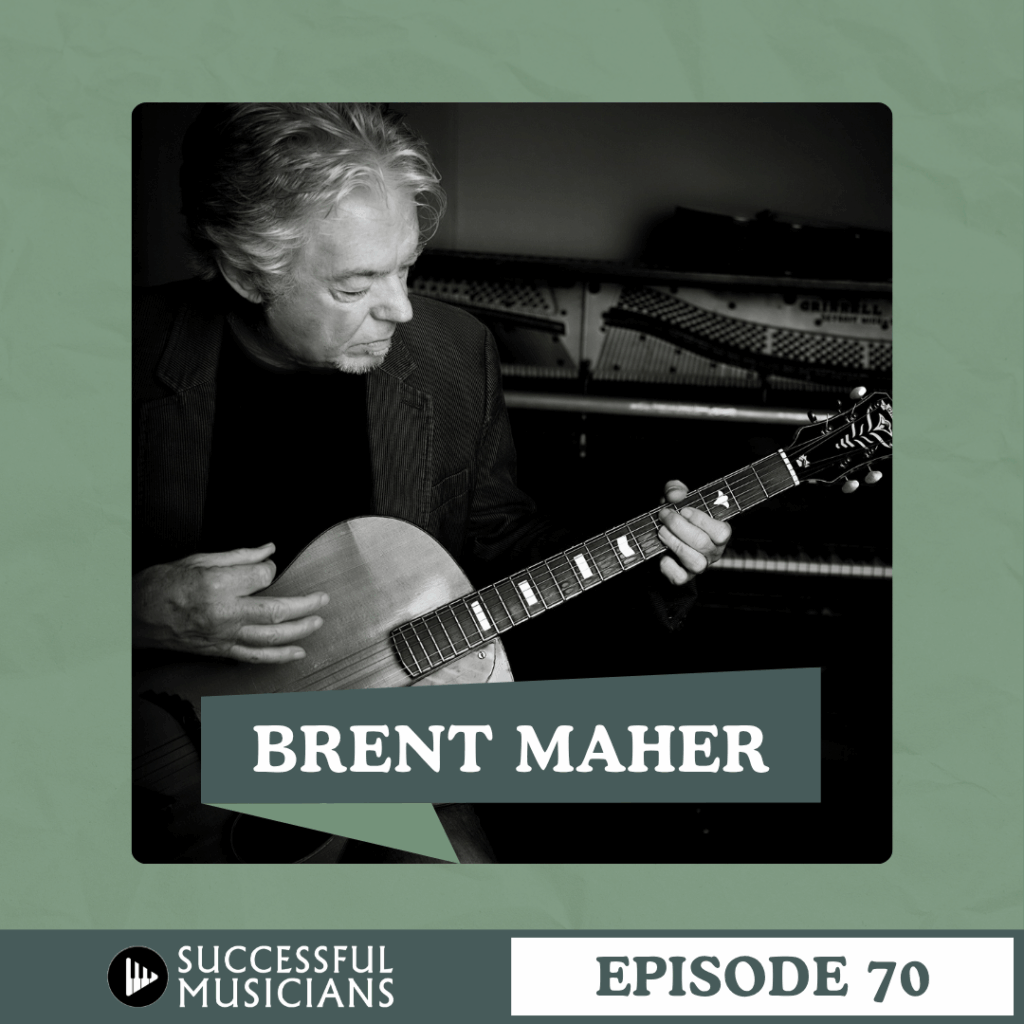
Successful Musician Podcast Episode 70
Interviewee: Brent Maher
Interviewer: Jason Tonioli
Jason Tonioli
Welcome to the podcast today. My name is Jason Tonioli and I have an amazing special guest with me today, Brent Maher, who is a seven time Grammy winning producer, engineer, songwriter. I think you’ve got over 20 songs that were multi-platinum singles. You’ve worked with the Judds and Dolly Parton, Kenny Rogers, Willie Nelson, Merle Haggard, Tina Turner, Laney Wilson. The credits went so long and the amount of songs when I started looking you up, you literally took me back to like my growing up days with some of these songs from the Judds that I had just played. It was just like nostalgia all over and it also from what I see you you were able to help work on Elvis Presley’s last big hit as well I believe too.
Brent Maher
Yeah, Well, he recorded and engineered his last number one record,
Jason Tonioli
That’s amazing. So Brent, welcome today to the podcast. I am so excited to talk with you and kind of share your story with people. And then we’re gonna for sure talk about what I think is one of the coolest music projects I have seen in a long time. That’s a book that you’ve put together that it’s incredible. But let’s do this. Let’s kind of start with your kind of beginning journey and kind of where I mean, how did you first fall in love with music and end up getting into the music scene. Because I believe you were an Air Force mechanic when you started out your career. And that was probably what you thought you were going to be when you grew up.
Brent Maher
Yeah, well, my family always had music in the house. And my first instrument was trumpet, that was like, I guess, in the fifth grade, something like that. And then my family relocated to Denver, actually. And then the trumpet went away, and I discovered guitar. And so, you know, we’d have our little two-man bands and three-man bands and stuff like that and playing basement parties and stuff like that. Once I got out of high school, I decided to join the Air Force. And so, my buddy that I joined with was my little friend, guitar player Eddie. Once we got into our tech school out of basic training, we had our little guitars and our amps shipped to us. And we just picked up where we left off, sort of in high school. And we’d go play in basements and any place we could play. And then when I got stationed in my permanent party, I put together a pretty good little combo, cover band of course. And it was nice for the weekends, bringing in that extra 40, 50 bucks a month was a big deal back then. But when I was about a year out, I realized that making a living as a guitar player would be a stretch to say the least.
And so I got thinking, well, you know what? I don’t see myself as a career Air Force man. I didn’t see that in my future. And I have had this deep love for music ever since I’ve been a child. And so one night I was listening to Curtis Mayfeel and The Impressions. And Janelle, my wife and the kids were in bed and I looked at this record jacket. And on the bottom right hand side, it said recording engineer and this fella’s name. And it was just like a light bulb went off. It was just like, well, there, problem solved. I’m going to be a recording engineer. And you know, oh my gosh, if anybody would have told me like, do you know what the chances of that are? But I started taking some courses during my last year from ICS, I think it was called acoustics electronics and things like this. Did not learn anything. But I got within about a week before I was going to be discharged after four years. And I felt it might be a good time to go get me a job. And I was stationed in Nashville. That’s how I got to Nashville.
This was my permanent party station. And so I looked in the phone book. And at that time, there were only about five studios in Nashville, if you can imagine that. Now there’s probably 60, if not more. So anyway, I tore out the yellow page. On the first page, there was a garage studio. And I went inside there and I was shown the door to go back out probably in less than a minute. I said, well, we’ll just check that one off. And then I went to RCA and they were much more polite. And in about four minutes, I said, well, thank you, but no thanks. And then I checked that one off and I said, God, I’ve only got two more doors. One was Columbia Records.
So I went in there. That probably took about four or five minutes and I was back in my car. Now, I’m getting really worried because there’s one more door, just one more door to walk through. And it was called Foster Recording. And I, you know, was quite depressed. And so I got to the address and it was downtown on 7th Avenue and you had to go into this alley and big signs everywhere saying if you block this alley your car will be towed before you can even take a breath. Anyway there was no place to park but I figured you know what, I can go upstairs, I can be told no, and I can get back to my car before anybody toes it off, I’m sure. So I block the alley, and I get in this elevator and I go up to the third floor, and I’ll tell you, Jason, I was really worried. I was really, really concerned. And it opens up to this beautiful foyer and this real attractive brunette gals behind this totally hip desk. And she says, well, may I help you?
And I said, well, yes, I’d like to apply for a job. And she says, as what? And I say, as a recording engineer. And she said, you’re a recording engineer? And I said, no, but I want to learn how to be a recording engineer. And then she says, well, let me get one of the engineers out here and talk to you.
Wow. So anyway, this wonderful guy, Tommy Strong, a very, very successful engineer came out and I told him, I’m getting out of the Air Force next week and I’m a musician and of some sorts. I’ve been taking courses in acoustics and electronics and things like this. And I want to learn how to be a recording engineer. And he goes, huh. He says, well, oddly enough, the studio manager and chief engineer.
Bill Porter, whom I’d never heard of, of course. Little did I know, he was literally one of the most famous engineers, not just in Nashville, but the whole country. And he said, Bill and I were talking just last night that we have a young fellow here that we’ve sort of been trying to groom to be an assistant engineer and grow into being an engineer. But he’s really a songwriter.
If he has a spare moment, he’s in some office somewhere trying to write a song. And we really need somebody. He said, so can you come back tomorrow and do an interview with Bill Porter?
And I said, of course. So anyway, I come back the next day, give Bill the same story. And, you know, it was just one of those magical things, Jason, when I look back on it. And they said, well, I’ll tell you what, we desperately need somebody. We’re very busy. And we can give you three months. And in three months, we’ll have an idea of whether you have the aptitude to put you in full training and et cetera. And I was just beyond grateful and so thrilled. And when I went home and told Janelle, man, she was so excited. And I knew in my heart of hearts, these guys ain’t letting me go in three months. I’m gonna, whatever I have to do.
You know, I am not going to disappoint anybody. And so that’s how I got my start. And really at that time, that was my career path. I had an open door to my career path, and I was putting my guitar under the bed and it could stay there. So that’s how I got my opportunity to be in the business.
Jason Tonioli
That’s amazing. Well, and I think what I love about hearing that is the first two and three doors you went through, showed you the door. And most people after one or two rejections like that are going to quit. Right. And, and I think sometimes you just have to be willing to show up as half the battle and not give up. So thank goodness she didn’t stop at the third, third one and just say, I’ve never heard of this foster group and not even showed up. Right. And luckily you’re
Brent Maher
Yeah!
Jason Tonioli
Your car didn’t get towed either, probably, right?
Brent Maher
No, I got down in the car and I’d been up there for probably 30 minutes. No, no, no, was the whole thing. When you look back, I was just like a miracle. And you know, so when that three month trial ran its course, we went down to this place called Morrison’s Cafe to have lunch. And I was counting the days. And so I knew that, my God, I think today’s today. Well, I knew it was.
So Bill and Tommy and myself, we went to Morrison’s and we’re going through, they’re getting our trays and roast beef and mashed potatoes, green beans, whatever. We sat down and we ate and nobody’s talking about anything except what’s on the books for next week and who’s doing what sessions. And then Fine says, Bill says to me, you know, Brent, your trial period is pretty much, it’s up today. This is today. And I went, yeah, I thought we were getting pretty close, you know? And he says, well, I’ve got something for you. And he reaches into his pocket and he pulls out these little business cards and it said, Brent Maher, assistant recording engineer, Foster Recording. And I’ll tell you what, I almost, it was all I could do to keep from crying, you know? I was so, so moved and so happy. And then that was that.
Jason Tonioli
So you obviously had some incredible mentors early on in your career. I’m curious, are there any specific lessons that have really stuck with you from those early days? I mean, you were doing your very best and trying to work, over-deliver everything you could, but I’m just curious if there were any specific lessons that you can think back on with those early days that have stuck with you.
Brent Maher (25:38.95)
Attention to detail is absolutely paramount in the whole process of recording. And back when I started in digital recording, there’s these little buttons everywhere that say undo, where you can always fix something where you made a mistake. When I started, of course, it was all tape machines and analog. There were no undo buttons. And so you had to be on top of your game all of the time, you know? And so I don’t know. just, that has never left me. I love setting up for my own sessions. I mean, I have a great young engineer that has kept up with all the technology changes, which I’ve let kind of slide because now I’m more of a producer and a songwriter, which is a whole other story. And so, but still, and I take absolute pleasure. And when the session’s over, I like to tear down. I like to coil the cables just right. I like to put them up. And so, as simple as that sounds, but it means a lot to me that I never want to lose that connection of where I first started.
Jason Tonioli
That’s amazing. I think as I talk with people, when people become a bit, we’ll call it a big deal or whatever you want to call, when people think you’ve arrived, I think it’s interesting to see how nearly everybody who’s kind of worked their way up through that path still is just fine getting down. I still take out the garbage and clean the toilet. It’s just what it’s like. It’s just being a real human being and not… curling those chords up is super important because when you have to pull them out, there’s nothing worse than having a chord that’s tangled and cut as you’re trying to put on a good, be ready and prepared, right? Yeah. That’s some great thoughts. So with your career as you kind of went on, know you, I believe you kind of helped discover the Judds was, and that was one of your main groups that you really have worked with over.
Brent Maher
Yeah, absolutely.
Jason Tonioli
You know, I think they’ve done around 10, 10 albums with you and the sound you were able to get with them is incredible for any music, audio nerd. You need to go listen to some of the guitar stuff that you were doing with that group because it’s incredible. I mean, that stuff is timeless and probably a master class on sound. People try to, to even recreate it still to this day. But I’m just curious, what, what do you remember about, you know, how that came to be and, and what would people find interesting with that story there?
Brent Maher
Well, you know, there again, think sometimes some of the projects that you plan and you work on so hard and you feel like, man, all the cards are in place and stuff like that, this is really going to happen. And then for some reason, things sort of just get just, you know, they get off the rails over along the line, right? And then some of the things that have been sort of like the most successful, they just like appear, they just kind of like
different avenues that you weren’t really going down show up and those turn out to be some of your most successful ventures. And the Judds were certainly one of those. I discovered the Judds from, unfortunately, my daughter was in a terrible car accident and she was at the Williamson County Hospital for about three weeks in Franklin, Tennessee here.
And Naomi Judd was a registered nurse. And she was assigned to Diana’s floor. And I had heard of Naomi and Wynonna because they used to be on this morning show, the Ralph Emory morning show here in Nashville. And my wife, of course, was getting up at the crack of dawn to get the kids to school. I’d be still in bed, but she would yell at me, Brent, you gotta come down here and hear these girls. And I’d stumble down to bed once in a while. And I like to, okay. But anyway, I knew who Naomi was. So when Diana got released from the hospital, Naomi came up to me and said, could I give you a tape that my daughter Wynonna and I have just recorded in our kitchen on like just a portable cassette deck? And I said, well, sure. And she said, she is graduating from high school in a few months. And, you know, I just love your honest, honest opinion on whether this is something we should sort of maybe pursue or maybe we just, get upon our life the way it is and just do whatever comes in front of us. And I said, well, I’ll be glad to listen to it. So anyway, I was really busy that at that time I was working on an album with Kenny Rogers. And so it took me a couple of weeks to actually listen to the tape.
I had it sitting sort of next to the telephone in the kitchen and was going to work and Janelle, my wife, said to me, is that Naomi’s tape? And I said, yeah. She says, well, what’d you think of it? And I said, well, I haven’t listened to it. She said, excuse me? You haven’t listened to it? And I said, well, hon, I’ve been working with Kenny every day. She said, it’s a 30 minute drive to work. You know, you’re telling me you’re so busy that you can’t find a few moments after how sweet and how caring she was to our daughter. That is despicable. And she pretty much said, don’t come home tonight if you don’t listen to this thing. So anyway, I took that reprimand to heart. As soon as I pulled out the driveway, I stuck it in the car and I listened to it. And by the time I got into the studio, I couldn’t wait to get on the phone. Naomi had her number written there on the tape.
And I called her and the first thing I did was apologize, number one, for taking so long. And then secondly, I said, I would love for us to get together and just talk about music and kind of get to know each other. And so she was so happy. So literally, I think in just a day or two, I went over to their house and had my guitar with me and we broke our guitars out and started playing music and they had some, some records they wanted to play me of some artists that inspired them.
And so that’s sort of what we did for about close to nine months. I would go to their house maybe two, three times a week and we would just play music or talk about music. But we were forming sort of an idea of what we might be able to chase down. And then eventually we wound up doing a little demo tape in the studio with just playing guitar and her singing and Naomi singing harmony.
Jason Tonioli
Yeah.
Brent Maher
That was it. And that, you know, eventually winds up in front of Joe Galante, who was the president of RCA Records. And he liked it enough to where we had a sit down with myself and why and Naomi and their manager at that time. And we played about three songs. Mama, He’s Crazy was one of them.
John Deere Tractor was another one. And I think the other one’s actually our first single, a song called I A Dream. All quite different, but you could see how they could all work together. And when it was over, Joe Galante came up to me and he said, ” Brent, said, what kind of records are you gonna make with these girls? ” What are you thinking? And I said, Joe, not a whole lot different than what you heard today.
I want to base it around acoustic guitars. And if you could think about the song, Mrs. Robinson by Simon, you know, by Simon Garver. Remember the energy and the power that that had with just those acoustics and that acoustic bass and drums and things like that. And I said, then it started slipping to the Everly Brothers world about how they would feature the acoustics, now, Don’s rhythm playing. And I said, somewhere in the middle there, there’s some common ground that I think we can land in. And he just said, brilliant, I love it. And we wound up getting a deal that night. And then about, I don’t know, three or four months later came the first single, had a dream, and it just set everybody upside down. I mean, I would get phone calls from program directors from around the country saying, what is going on with these girls?
We play this record and the phone lights up, you know, for 30 minutes. And it was a fast moving train, I can tell you.
Jason Tonioli
Yeah. And I’m just curious as you bring them into the studio, was there anything, was there any unique process or anything that you felt like was different than any other artist you were bringing in and doing? mean, was it just, was their personalities different or, you know, was it just a really trusting relationship you’d already built with them that just really brought out the best in them? Do you feel like?
Brent Maher
Well, I think what happened for sure is I spent so much time and even recording things on the portable deck they had there with just why playing guitar? Sometimes I play with her and I got so used to that sound. That was one thing and her voice and the only harmonies would just jump out at you. Then I introduced them to a guitar player in town named Don Potter. And Don was not even a session player in town. He was a New York player from Rochester, but could play country music, could play jazz. In fact, he was in Chuck Mancioni’s band for probably 10 years. And he came to town and we became really good friends.
And I love the way he played it because it was just coming from a different place than anybody else. And the sound of his guitar and his touch and everything was just amazing. So I introduced him to the girls. And of course, they just fell in love with him. And I felt, you know what, man? This is the thing. Don’s guitar playing, Wise playing, then singing.
We are building everything around that. And so what we would do on virtually every song that we recorded, we would do a pre-production demo. And it would be just Don and myself, the girls. And we would basically audition, so to speak, the songs that either I had written or had gathered from other songwriters and people like that or a song that Naomi wrote. And we’d try them on to see how they fit just with us.
And if that worked, then plugging in bass drums and steel and whatever else we were going to do was just like piano was just like a cakewalk. And we would play those demos and we’d have all the harmonies worked out and everything. Most of the signature guitar licks like that incredible lick on why not me, you know, that, we all that got worked out in pre-production. And so when the rest of the band would show up, it was like the recipe was half done. It was so obvious to them what they needed to play. And so the sessions were pretty much effortless, and we just kept growing in with that sort of a platform.
Jason Tonioli
I think that’s super, super smart to keep it just simple and clean. And if it works when it’s simple, it’s like you said, it’s super easy to put the frosting and sprinkles on top
Brent Maher
Absolutely. Well, I was gonna say when we did a box set the third or fourth CD in the box set is all of those demos, all of those pre-production demos and you listen to those like why not me and mommy. He’s crazy and songs like that rock with your rhythm and then you hear the regular record. It’s just like you can see how they’re just how they dovetail,
Jason Tonioli
Yeah. Well, and then some of them, if you’re a big fan, I think for any artist out there doing something like that, where you do have that, you know, original track, the, the, the MTV unplugged, we’ll call it type version. I think, you know, those are really fun. And I think for independent artists, you know, from a marketing standpoint, the creation process, I think oftentimes is your fans are as interested in that, if not more interested than the final product, maybe that.
Brent Maher
Yeah. Yeah.
Jason Tonioli
It gets produced because your personality comes through, the stories behind those songs are much more meaningful when they’re kind of in the creation birthing phase of the song, right?
Brent Maher
Yeah, sure. the other thing too, Jason, it a lot, you know, there were some songs that we felt that we all liked that man, we got to like getting down to the meat and potatoes. They didn’t live for whatever reasons. They just never caught that spark of, my gosh, when this is done, I can’t wait. And some of them turned out to be hit songs for other people. Like I wrote this song with Mike Reed, it’s called Some Kind of Trouble. And we wrote that for the Judds. And we went in to do a pre-production demo and we messed with that thing for probably three hours. And the girls loved it and it just laid there like a lame duck. And so finally we just said, you know what, enough’s enough. This just isn’t working.
And so we just put it aside and that was that. And then Mike Reed called me, I don’t know, two months later and said, hey, Jerry Crutchfield just heard some kind of trouble and he wants to cut it on Tanya Tucker. And I said, great, perfect. That turns out to be a number one record on Tanya Tucker. So it wasn’t the fault of the song. As much as we thought it was, it just didn’t fit the girls. And it says, That was as important to know about what songs did work and which ones didn’t work, you know.
Jason Tonioli
Yeah. I’m curious. This is a problem I see happen with lots and lots of creative people, musicians, artists, whatever in that creative field. We often get in a kind of a zone where we’re creating something and then it’s very easy to get distracted. call it, now, chasing squirrels, you know, how do you keep artists in the studio or just artists in general? How do you help keep them focused enough on getting a finished product versus like chasing the next one and the next one and the next one on there. Do you have any tips that you’ve seen over the years to keep artists on task?
Brent Maher
Well, I’ve never known, I’ve never had that issue with artists, but this is a really good question, Jason, because I’ve had people say to me as a producer, because for how many hours most artists will spend in a studio, an engineer and producer will triple that, if not more, right? And so, I can’t tell you how many people have asked me, so you’re telling me that when you work on a song and a basic track, you may be working on that one thing for months? I said, well, yeah, but not every day. No, of course not every day, but a lot of energy and a lot of time. And it could be, you could easily spend, you know, a hundred hours easily. And listening to the same song. And I said, yeah, this is the same song.
And well, how do you do that? How do you not just get sick and bored to death of it? And so here’s what I’ve always done. Somehow I can go back to the original first moment that I ever heard that song. Whether it’s another songwriter that is playing something for me like, hey Brent, can you check this out? And it just lights me up. Just lights me up. I can revert and go back to that exact feeling just like that. And so anytime, and I really don’t, I enjoy…and love this process so much, Jason. I mean, in a room with two or three players, this monstrosity behind me, those are just matters from heaven for me. But any time that people ask me that, and the best way I can answer them is that I just don’t ever fall out of love with the tune. I don’t. I stay in love with that tune until it’s out there. And I’ve always been able to do that. I don’t know if they believe me, but that’s what I say.
Jason Tonioli
Awesome. So, you’ve worked with so many great artists over the years. I’m curious to get your take on what you feel like are some similarities or common things that these great artists all have in common? You know, mean, what do you feel makes, a great artist?
Brent Maher
Well, perseverance. Perseverance and pretty much this feeling that if I wasn’t doing this, I have no options. I don’t know what I would do. I had one artist, I won’t mention his name, but he’s a star, and people would ask him, like, man, you know, I’ve been playing guitar and writing songs for years.
I’m actually a banker or I own a chain of grocery stores, whatever I do. But you know, sometimes I think I just need to really follow my heart and forget all of that and just be an artist. And my friend would say, no, no, no. The only way that you can survive in this business is it’s the only thing you can do. Because the ups are ups and the downs are way downs. And the only way that you can survive that is just who you are.
The first time he told me that, said, well, God, that’s kind of cold. And he said, don’t bring us the truth. He said, do you disagree with me? And I said, well, I guess I don’t really. So that’s one thing. I think it has to be something that drives you so much. And then to get to the superstar level, Tina Turner is one of my favorites artists that I had the chance to work with. I can Tina and then Tina by herself. And, you know, they all had that. They all have that. But when you get to there’s different levels of success we can have in any form of business, right? No matter what you’re doing, there’s always sort of like the elite. And to me, that’s just a God giving gift. You know, it hadn’t been coached in. It hasn’t been X amount of hours of doing this repetitive exercise, whatever it is. Some people just have this extra gift. And then you put that together with perseverance and dedication, then you’re on your way. And those are the things that I’ve set back and looked at, at all of the artists that we would consider stars, you know?
Jason Tonioli
Yeah. What if you are sitting in front of the 20 or let’s even say 25, 30 year old self, if you could go back and give yourself some advice, what advice would you give yourself? Your younger self.
Brent Maher
Advice that I would give myself. Jason, that’s a question. Nobody’s ever asked me that. What advice? I don’t know. If I have anything that I think I could have done better is probably, there’s a good amount of sacrifice. That’s the other thing, I guess, that you have to tie into that type of success. There’s a certain amount of sacrifice. And there again, not just in the entertainment business or me as a producer and engineer, stuff like that, everybody. And a lot of that, you take away time from other people. Sometimes you take away time from yourself that you would like to have back, right? But you’re so driven, you don’t see that. And so, if I could give myself some advice 25, 30 years ago, as an example, when I was working at United Recording in Las Vegas, which is where I did Proud Mary and a bunch of those records, I would work all day, I would come home with the kids and then we would have dinner and I would help put them back to bed and then I’d go right back to work. And I would work till maybe two in the morning and I would probably do that three, four, five times a week, you know, working on different projects. Looking back, I wish I’d done that one or two days a week, not four or five days a week, right? Little things like that. Make time for a few other stuff to weave in and out of your life, guess. But all in all, I don’t know. I think it worked out okay.
Jason Tonioli
I would say it definitely did. I think it’s interesting that as I talked with a lot of people, the finding balance with your personal life, family life, relationships, whether that’s friends, think oftentimes when we get into the, the thick of pursuing whatever we think is the important project, it’s sometimes hard to, you lose focus sometimes of that balance that is needing to be there. And I think sometimes you can lose focus on what actually is important and is going to matter long-term versus. it was important you stayed till 2, 3 in the morning sometimes for those projects. But then I think of others, when you look back, you’re like, well, did that really matter or did being at my kid’s ball game or, you know, some of those things that we take and we just think, there’ll be another one of those. There’s some simple things. And I do see a lot of times when somebody’s super, super driven that we, sometimes prioritize a little bit. I don’t know it’s wrong, but sometimes the priorities may not be exactly where they ought to be. And you may have some regrets sometimes, on decisions we made there as artists. So, yeah, that’s interesting. That’s what came up. I’m curious. So, I mean, you’ve worked with all of these super, super successful people. Now, when you hear the word successful musician, what would you define as a successful musician today? If you were giving some advice to the kind of younger musicians that are up and coming, what would you tell them, you know, to consider maybe as a definition for success?
Brent Maher
Oh boy, definition of success. Well, I think that’s so varied. I think the definition is, are you happy?
Are you happy with what you’re doing? I know people who are unbelievably successful, but they’re not happy because they will always put things in front of them or they’re always worried about whether they will ever be able to duplicate what they’ve already done. Opposed to just living in this particular moment and being grateful for wherever you’re at as a player or as an artist or whatever, record producer. That’s sort of what I would say about that.
Jason Tonioli
I think that’s a brilliant answer. And it’s so simple and what a measure. I think that’s one of the best answers I think I’ve ever had. There’s the gold nugget for anybody listening to this. Go back and listen to that again. So, I want to dive into this new project that has really got me excited. The Night of the Orphan Train. So you’ve put together this, it’s an audio book.
Brent Maher
Well, I’m glad I didn’t walk on it.
Jason Tonioli
It’s a whole lot of songs and just cool projects. And I don’t think a lot of people are even aware of what the orphan train maybe even was. So I, you know, for those that aren’t familiar with it from the body, I think it was like 1854 or so, into the early 19th century, there was, basically a, a group of kid, they would ground up orphans and move them from the big cities and New York.
Brent Maher
Yeah.
Jason Tonioli
I think a big hub of that, but they would move them out to the West to be adopted essentially. And I think it was close to a quarter million kids who were moved, which is just a crazy number of people. And I think it’s kind of one of these stories that, you know, I don’t think people even realized happened. I just think, mean, tell, share a little bit about what that, you know, historically, what was that and what is it that moved you to make you want to write songs and, you know, pursue what you’ve done over the last several months or years. Yeah.
Brent Maher
Yeah. Well, I’ll tell you what, Jason, this, you talk about something coming out of the blue or something that, you know, was it fate? Was I just supposed to do this? I don’t know about that, but so here’s the story. My wife and I were driving back home from Estes Park, Colorado, back here to Franklin and about right in the middle of Kansas on I-70.
I just look to my right and I see this huge road sign and it says, exit here, visit the orphan train museum, Concordia, Kansas. You know, I’m going 70, 75 miles an hour and I look in my rear view mirror and there’s this little waify child, very period, you could tell back, way back in the day, and orphan train museum. And I just went, I’ve never heard of any such thing.
So my wife, you know, hops on the computer and types in, Orphan Train Museum, Concordia, Kansas. It pops right up. It’s a Smithsonian Museum.
We had a day and a half of travel in front of us. And practically every second of it was taken up by reading all of the information that that museum has there to study and to learn about. And then all kinds of other links to other websites that are connected to that whole movement. And you pretty much said it.
During that period of time, which is about 60 years of time, the problem that we had in our country is we had, well, no social services. That hadn’t been developed yet. So when families would come on to hard times, whether it’s death or whether it’s World War I, whether it’s all kinds of economic downturns, whatever it was, if you hit rock bottom, there was no safety net of any kind.
Well, during that period of time, we’ve all heard of the Spanish flu that would ravage these big cities, especially New York. And then there were variations of that. Well, what happened, Jason, is when like the Spanish flu would come through, let’s say New York, tens of thousands of people would die because nobody even knew what it was, right? They didn’t know, the medical profession had no idea. And so, a lot of times, parents might survive, kids didn’t. Well, if you didn’t have any family apparatus to help you or something, you could be a nine-year-old that has no mother and father and you have no home. You have nothing. And so for that period of time, you could basically go to most corners of the city.
And you would see little starving kids huddled up in corners and alleyways and things like this. And my wife and I were down in Brazil about 15 years ago. I was going to work with a Brazilian artist down there. And so they wanted us to come down and spend some time with it, which we did. Spent time in Rio, spent time in Sao Paulo. And it was so disturbing because you could be in the most beautiful parts of Rio or a Simpolo, and you come to a stop sign, and you’re stuck in traffic, and these little kids are trying to sell you, beating on your windows to sell you one stick of gum. And you can’t, we were told, do not roll down your window, because if you do, and give them anything, then they’re just going to crush the whole car, and we won’t be able to move an inch. And it was very depressing. In fact, I couldn’t wait to get home, really. But anyway, that’s sort of, I could revisit the feelings of what I felt there a few years ago in Brazil to what it was like back in the day in New York. Because we’ve never seen that here, where I have never seen that before.
So anyway, that left such an impression on me. And by the time we were three quarters of the way home, which would have been past St. Louis, heading south on, 64 and 24 back to Nashville, I started this song. It’s simply called Orphan Train. And I had the first verse, and I’ll be able to have a guitar thing just in my head. And I had the first verse and the first chorus written. And in that song, three little kids were sort of given birth. three little orphan kids, Caroline, Billy, and Jacob. And by the time I got home, just, those little critters were alive and well in my head. And the next day I was working with Trey Hensley and Rob Ikes on one of their records. And we were supposed to be writing towards their record.
We started talking, well, how was your vacation, Brent? I said, it was great and great and great. And I said, but you know what? I found out some information about our country I had no idea about. So I told them about this story. And they were flabbergasted, because I told them what they would do. There was this Methodist minister. I’m sort of changing gears here. Anyway, I’ll go back to the story of the song.
So I played them the song and they said, man, maybe we could write that today and maybe we could put it on our record. I figured, let’s do it. So the three of us finished up that tune. So backing up a wee bit now, there was this Methodist minister back in the day, we’re talking back in the early 1900s now, William Lorne Brace. And this dilemma with all of these children was just killing him. And then finally, he came up with this idea and ran it by some other successful businessmen and businesswomen in New York City about what if all of these immigrants that are coming into our country now, a lot of them are heading west. They’re not just satisfied staying here in the city. They want land.
And what if we could put together these kids off the street in this family that could use a son, could use a daughter, could use an infant, could use a teenager? How could we put them together? And so they came up with this idea of like, well, let’s just say we scoop some of these kids off the street. We put them in a train car or start off with the boxcars. And let’s just say we’re going to send them to Topeka, Kansas.
We’re going to call the Methodist Church there and some other churches and say, there’s a boxcar full of 50 kids heading your way. We’re going to send you a bunch of flyers that say, I need to be adopted. I need a home. I need to be loved, whatever they put on them. Put them in barbershops, grocery stores, wherever. And get yourself vetted if people say,
I’d like to maybe show up and get one of these kids where they supposedly got vetted, which is a hit and miss situation, as you can imagine. But these train cars would find their destination and people would show up. And they would look these little kids over and sometimes kind of check them out like cattle. Look at their teeth, look in their ears, look in their hair.
Jason Tonioli
I’m sure.
Brent Maher
You know, have you got any muscles to help out on the farm? And, like you said, over that period of time, as it started to really develop, it went from one box car with 50 kids to taking over a quarter of a million kids off of the streets of New York City into every state in the union. So, I couldn’t really figure out how to write about 250,000 kids. And so, you know, we settled on, I settled on three. And there again, was Caroline, Billy, and Jacob, fictitious little kids. And so I wrote this, it’s a fictional story, but it’s based on all these historical facts. Going back to, we meet the kids when they’re at 1911, when they happen to be 11 years old.
And then we follow their lives from 1911 until like 1922 or something like that. And by then they’re like 22 years old. And at the end of Act 1, you meet them at 11. At the end of Act 1, they’re like 14. Then there’s a time jump when Act 2 starts. And then they’re 18. And then you follow them until like around 22. And so that’s the…
Jason Tonioli
And this is, this has kind of become, I envision this is all like a stage play that could be done with a lot of the stories, the way, you know, at least there’s so many directions you could go.
Brent Maher
Yeah, I’ve heard a lot of people have said that. Yeah, well, yeah, some of the folks that have read this said, God, this is just a blueprint for a movie or a blueprint for, you know, a stage play of some sort. But right now, you know, it’s just an audio book. I wrote it as if you were sort of listening to a radio play. Like it’s narrated.
And probably a third of what you hear as an audiobook is the narrator setting up a scene. Then all of a sudden, the children are speaking through the narrator’s voice, first person. And then all of a sudden, there’ll be a song that needs to be sung to wrap something up or to finish up some emotional moment, right? And so there are 20 songs that are embedded in the storytelling. And there songs that are like, you know, we’ll put
a tear in your eye, more than likely. And there are some other ones that just celebrate the strength and the resiliency of these little kids, you know. And the three main characters, Caroline, Billy, and Jacob, do, fate brings them together at the beginning of the book, and they sort of form this little family nucleus that is the one thing that they want more than anything in the world is a family. And so they make that, their little family. And you follow them through the ups and downs. And of course, World War I winds up being sort of in the middle of the second act. there’s a, comes quite a bit of ground. I think most people will feel it’s pretty entertaining and educational.
Jason Tonioli
I’ve not had a chance to listen to all of it yet, but the music is just phenomenal. Obviously it’s going to be world class if you’re hands in it and you’ve written all these songs as well, people need to go check this out. So if somebody wants to go check out that book, where’s the best place for them to find it and kind of experience it in the right way.
Brent Maher
Yeah, it’s on Amazon. It’s on Audible, Barnes and Noble. And it’s an audiobook, so you stream it however you want to. If you’re an audiobook listening person, however, whatever you’re streaming that from, it’s all there available. And all you have to do is type in the night of the orphan train and go to Amazon or Audible, whatever, and it pops right up.
And it’s all right there. Oh, and we also, well, I was going to say we also just released a CD of the soundtrack. And it’s, you know, all the kids that are singing the songs and the narration, it’s, well, the narration wouldn’t be there. It’s just all of the songs. And I love listening to those too. I love listening to just the music. Go check it out.
Jason Tonioli
Well, and so I’m going to, I’m going to kind of look at this from a marketing perspective just to, for any artists that’s listening. So what I think is so unique with this is, you know, as an artist, go make 10 songs or 20 songs and you put the, you know, you used to put this CD out and the hard thing is, is nobody, you know, you have one or two good songs and most of the time, nobody ever would listen to the whole album or, know, and they, certainly, a lot of times didn’t care about what was on the album, it might get a little hit or a pop on a news thing, but that was it. But what I think is brilliant in this and as an art, if you’re an artist listening, I think it’s very, very important that we recognize the stories that lead to the music that we create that means something to us. I think more as an artist where you can kind of tell that origin story or the emotions or you talked about earlier, the feelings that you had when you first heard that song.
If you can help people tap in and connect with those feelings and then bring them into that song that I look at a lot of these superstar people when they, you know, people want to go hear their songs, but at concerts, some of the very favorite parts of those concerts are when you have that artist tell you about being in the studio or how that song came about. And I think as musicians and artists, especially today with all of these social media platforms and YouTube and all the things that exist. We need to be sharing those stories behind the music and just kind of leading your people along, you know, because you literally have a worldwide audience for your concert and you do need to tell those stories. I think what you’ve done with this is an absolute master class on how to weave in the story with the songs. And I’m sure there’s always things we can do better to help engage the audience and kind of have it mean something to them. But I think anybody out there listening should go look at what you and your team have done with this and kind of observe kind of as a debrief to say, wow, this is a really good idea. Maybe that fits with the song I’m working on or the project I’m working on. But mean, phenomenal job on this. The quality is just through the roof, but I think there’s so many lessons to be learned from observing and kind of watching this from afar as well.
Brent Maher
Well, you know, we created four videos of songs. Three of them are actually in the audiobook. And the one song that’s called Orphan Train that Trey Hensley and Rob Ickes did, along with Tammy Rogers, Tammy came in and sang some harmony, played some fiddle on. That’s not actually in the play because it actually tells too much of the story.
But we did some really wonderful videos, and those can all be checked out too. I think you just check out Orphan Train. How would you find those videos? It’s on YouTube.
Jason Tonioli
So I will put these in the show notes. Wherever you’re listening or if this on YouTube, if you go down in the show notes, we’re going to put the link so they can go and find all of those and we’ll put the audible links as well. But we’ll need to go listen to this.
Brent Maher
Great because those stadiums are really cool. They really turned out great.
Jason Tonioli
Absolutely. Well, Brent, this has been an absolutely amazing chat with you. I think we could go for another hour. We need to maybe do this again, because I know you’ve got dozens and dozens of more stories that I think are just incredible takeaways and lessons people, know, just artists in general can learn. We didn’t even get to talk about Elvis Presley, but we’ll maybe get that on the next one. have your time. But I think, you know, definitely go check out.
Brent Maher
We can do that. We can do it.
Jason Tonioli
Go listen to Judd’s music if you’re a musician and just go listen to some of the sounds. I enjoyed listening to that. But this orphan train project that you have, the Night of the Orphan Train, there’s so many lessons to be learned just about being a good human being and how it really took the worst of humanity in a lot of ways and has shown the best of humanity. I mean, what a cool story arc for, like you said, a movie or stage play, but I think it’s just one of those today more than ever. think being a good human being and being, as you mentioned, being happy, that’s, that’s the definition of, of success. And maybe I’ll add one more thing to that definition after my conversation with you is I think the, the, find fulfillment in helping others be happy. So being happy yourself is definitely success, but I think that lasting success that really makes a difference is in that fulfillment, which is making others and helping others to be happy as well.
Brent Maher
Yeah, I agree. I agree 100 % with Jason.
Jason Tonioli
So, well, Brent, I feel like I’ve made a new friend and wow, this was incredible. I hope anybody listening has just had so many takeaways and we definitely need to do this again. So thank you so much for sharing your time. I know you’re a really busy guy at the studio and continue doing amazing things and impacting the world in such positive ways. So thank you.
Brent Maher
Well, thank you for having me on your show, and I’ve enjoyed every second of it.